Discover how a sintered ceramic filter optimizes mining dewatering, delivering superior moisture control and sustainable water recovery.
At a Glance
A sintered ceramic filter is a solid-liquid separation technology using microporous alumina membranes to achieve high-capacity dewatering, low cake moisture, and exceptional water recovery in mining operations.
By the Numbers
- Up to 94 percent water recovery : Filtered tailings achieve higher recovery than paste tailings (University of Western Australia, 2026) [1] .
- 80-90% reduction in energy consumption vs traditional filters (CEC Mining Systems, 2026)[2].
- Below 200 ppm turbidity in filtrate quality, suitable for direct process reuse (CEC Mining Systems, 2026)[3].
- 15% less installed power : A ceramic vacuum disc filter requires ~15 kW vs 170 kW for cloth systems (Toncin, 2026) [4] .
Introduction
Mining operators face mounting pressure to minimize water consumption, eliminate tailings storage facility risks, and reduce energy costs across mineral processing circuits. The sintered ceramic filter addresses these challenges by replacing conventional cloth media with durable microporous alumina membranes, delivering superior dewatering performance and consistent filtrate quality. CEC Mining Systems provides advanced solid-liquid separation solutions that use this technology to help mines achieve sustainable mass and water balance targets.
This guide examines the mechanics, applications, and commercial advantages of sintered ceramic filter technology in modern mineral processing. We will explore how these systems operate, compare their performance against traditional alternatives, and outline the practical steps for integrating them into greenfield or brownfield projects. From tailings dry stacking to metallurgical concentrate filtration, understanding this technology is important for engineering teams aiming to optimize circuit efficiency and lower operational expenditures.
What Is a Sintered Ceramic Filter and How Does It Work?
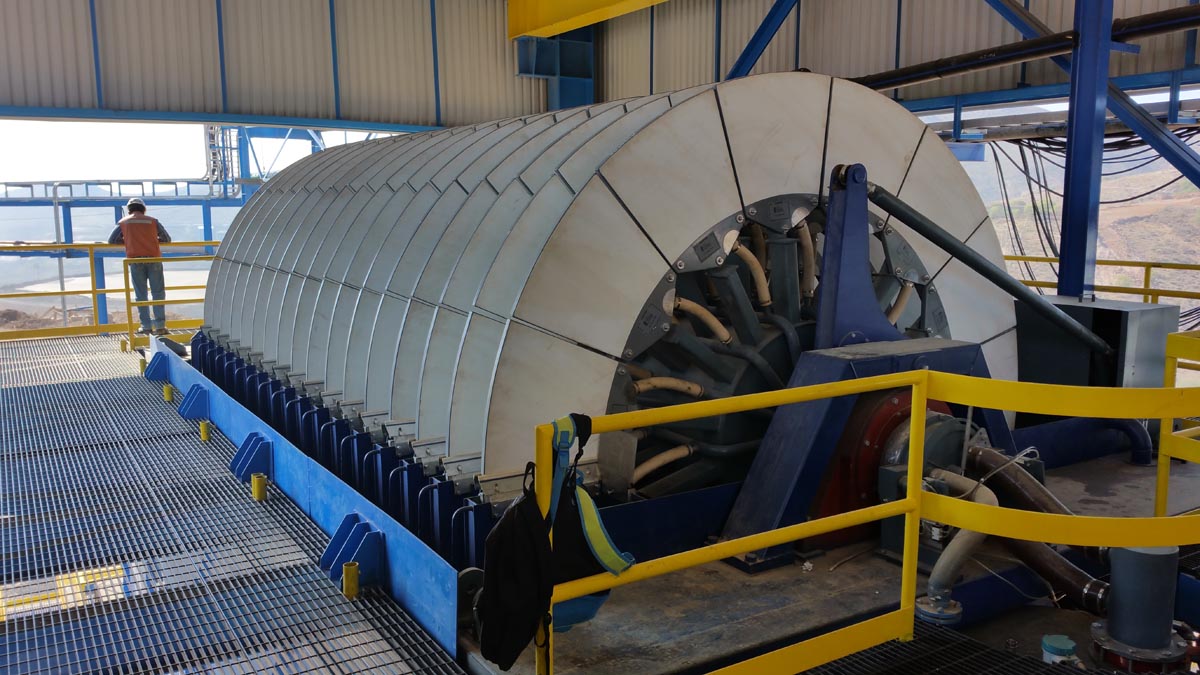
A sintered ceramic filter is a rotary vacuum filtration system that uses rigid, microporous alumina membranes instead of flexible woven cloth to separate solids from liquids. The core component is the ceramic disc, manufactured by compacting and heating aluminum oxide powder at high temperatures to create a uniform, highly durable pore structure. As the discs rotate through a slurry basin, a vacuum draws liquid through the microscopic pores while retaining solid particles on the surface, forming a filter cake that is subsequently scraped off before the next cycle.
The fundamental advantage of this design lies in its capillary action and structural rigidity. Because the pores are extremely fine-ranging from 0.75 to 3.0 microns-the membrane prevents fine and ultrafine particles from passing through, resulting in exceptionally clear filtrate. Unlike cloth filters that blind or tear under abrasive conditions, the sintered ceramic filter maintains its integrity over long operational campaigns, lasting up to 24 months before requiring replacement. This durability drastically reduces maintenance downtime and eliminates the recurring costs associated with filter cloth procurement and installation.
The vacuum requirements are significantly lower than those of conventional systems. Because the ceramic membrane only allows liquid to pass through the pores while blocking air once the cake forms, the vacuum pump operates at a fraction of the capacity needed for cloth-based drum or disc filters. This translates directly into massive energy savings, making the sintered ceramic filter a cornerstone of modern, energy-efficient mineral processing plants aiming to reduce their carbon footprint and utility costs.
Top Advantages of Sintered Ceramic Filter Technology for Mining
The primary advantage of deploying a sintered ceramic filter in mining operations is the dramatic reduction in both capital and operating expenditures, yielding 30 to 40 percent savings compared to conventional filtration technologies. This cost efficiency stems from multiple factors, including lower energy consumption, reduced maintenance requirements, and the elimination of filter cloth replacement cycles. For large-scale tailings dewatering projects, these savings compound rapidly, improving the overall net present value of the mine plan and accelerating project payback periods.
Water recovery is another important benefit, particularly in arid jurisdictions like the Atacama Desert in Chile or Western Australia, where freshwater availability dictates production limits. Modern sintered ceramic filter installations recover 80 to 90 percent of the water contained in the feed slurry, returning it directly to the process circuit without requiring additional clarification. This closed-loop water management not only reduces the strain on local aquifers but also minimizes the environmental impact of the operation, aligning with stringent ESG mandates and community expectations regarding resource stewardship.
The quality of the filter cake produced by a sintered ceramic filter is superior for downstream handling and transport. In concentrate filtration applications, achieving low moisture content is important to prevent material degradation, reduce shipping costs, and meet smelter specifications. The uniform capillary action of the ceramic membrane extracts moisture more effectively than cloth, yielding a drier, more stable cake that handles better on conveyors and requires less thermal energy if subsequent drying stages are employed. This consistency ensures that product quality remains high even when feed conditions fluctuate.
How Does a Sintered Ceramic Filter Apply to Tailings and Concentrate?
In tailings management, the sintered ceramic filter is the enabling technology for filtered tailings or “dry stacking” methods, which eliminate the need for hazardous wet tailings dams. By dewatering tailings to a high solids content, mines can stack the material geotechnically stable, recover vast quantities of water, and drastically reduce the physical footprint of the waste storage facility. This approach is increasingly mandated by regulators following high-profile dam failures, driving a global shift toward filtration-based tailings disposal where the reliability and throughput of the sintered ceramic filter are paramount.
For paste backfill operations in underground hard-rock mines, the sintered ceramic filter serves as the important upstream dewatering step. The filter must produce a cake with sufficiently low moisture to mix with cement and return underground without segregating or causing ground control issues. The precise moisture control achieved by the ceramic membrane ensures that the paste plant operates efficiently, reducing binder consumption and lowering the overall cost of backfilling. This integration is important for maximizing ore recovery and maintaining safe underground working conditions.
Metallurgical and refining plants also rely heavily on the sintered ceramic filter for concentrate dewatering prior to shipping or smelting. Minerals like copper, zinc, and lead concentrates must meet strict moisture limits to avoid liquefaction during ocean transport and to optimize furnace efficiency. The strong nature of the alumina membrane handles the abrasive nature of crystalline concentrates without degrading, ensuring continuous operation and consistent product specifications. When paired with downstream drying technologies, the ceramic filter forms a highly efficient dewatering circuit that maximizes throughput and minimizes energy use.
Your Most Common Questions
What is the lifespan of a sintered ceramic filter membrane?
A sintered ceramic filter membrane lasts up to 24 months per campaign, significantly outperforming conventional cloth media that requires weekly or monthly replacement depending on abrasiveness.
How much energy does a sintered ceramic filter save compared to cloth filters?
A sintered ceramic filter consumes up to 85 percent less energy than conventional vacuum filters because the microporous ceramic membrane prevents air from passing through, reducing the load on vacuum pumps.
Can a sintered ceramic filter handle ultrafine particles?
A sintered ceramic filter is exceptionally effective for fine and ultrafine particles, using pore sizes as small as 0.75 microns to retain solids while producing filtrate with suspended solids below 200 ppm.
What is the typical moisture content of cake from a sintered ceramic filter?
The filter cake moisture from a sintered ceramic filter ranges from 8 to 16 percent depending on the mineralogy, which is 1.0 to 4.0 percentage points drier than cloth-based alternatives.
Sintered Ceramic Filter vs Alternative Filtration Methods
When evaluating dewatering technologies for mineral processing, engineers must weigh the performance characteristics of the sintered ceramic filter against traditional options like rotary drum filters and filter presses. The choice impacts not only the immediate capital cost but also the long-term operational sustainability, water recovery rates, and maintenance overhead of the plant. The following table contrasts the key operational metrics of these prevalent solid-liquid separation methods.
| Feature | Sintered Ceramic Filter | Conventional Cloth Disc Filter | Filter Press |
|---|---|---|---|
| Energy Consumption | Low (up to 85% savings) [2] | High | Moderate to High |
| Filtrate Quality | <200 ppm suspended solids [3] | >10,000 ppm (requires clarification) | Clear (but batch process) |
| Media Lifespan | Up to 24 months | Weeks to Months | Months (cloth replacement) |
| Operation Mode | Continuous | Continuous | Batch (cyclic) |
| Cake Moisture | 8-16% (mineral dependent) [5] | Higher (18%+ average) | Low (but variable) |
The data clearly indicates that while filter presses offer batch dewatering with low moisture, their cyclic nature and high labor requirements make them less suitable for high-throughput continuous mining operations. Conventional cloth disc filters suffer from high energy use and frequent media blinding. The sintered ceramic filter bridges this gap, offering continuous operation, superior filtrate clarity for immediate reuse, and massive energy reductions, making it the optimal choice for modern, sustainable mining circuits.
CEC Mining Systems Filtration Solutions
CEC Mining Systems Corp. (CECMS) is a leading Canadian manufacturer specializing in the design and delivery of advanced solid-liquid separation equipment, with the CX-Series Ceramic Disc Vacuum Filter at the core of our portfolio. Since 2011, we have installed over 650 systems across eight countries, providing mining, metallurgical, and industrial clients with turnkey solutions that address the most complex dewatering challenges. Our proprietary microporous alumina membrane technology delivers measurable CapEx and OpEx advantages, ensuring your operation remains competitive and environmentally compliant.
Our approach extends beyond equipment supply; we offer full lifecycle project support from initial bench-scale testwork at our CCMR laboratory in Kamloops, BC, through to EPC/EPCM execution and commissioning. By using AI-assisted benchmarking and extensive operational data, we de-risk your project from the earliest feasibility stages. Whether you require a greenfield tailings dry stacking plant or a brownfield upgrade to replace aging cloth filters, our multidisciplinary team designs a sintered ceramic filter circuit tailored to your specific mineralogy and site constraints.
We invite you to explore our comprehensive range of technologies, including the CX-Series Ceramic Disc Vacuum Filter for superior dewatering and the MIR Steel Belt Dryer for precise moisture control in concentrates. Contact our technical team today to discuss how our sintered ceramic filter solutions can optimize your water balance and reduce operating costs. Visit our Contact Us page or call +1 604 685 7823 to schedule a consultation and request a customized proposal for your next project.
How to Implement a Sintered Ceramic Filter in 4 Steps
Conduct Bench-Scale Testwork and Characterization
Begin by submitting representative slurry samples to a specialized laboratory to determine filterability, particle size distribution, and specific resistance. This important first step establishes the design criteria for the sintered ceramic filter, ensuring the selected membrane pore size and disc configuration will achieve the target cake moisture and throughput rates under actual operating conditions.
Engineer the Circuit and Select Equipment
Use the testwork data to size the filtration area and select the appropriate number of ceramic discs required to meet your production targets. Integrate the sintered ceramic filter into the broader process flowsheet, designing the feed pumping, vacuum system, and filtrate recovery piping to ensure smooth operation and maximize water return to the process circuit without bottlenecks.
Execute Procurement and Site Installation
Proceed with the manufacturing and procurement of the modular filter units, followed by systematic site installation and mechanical completion. Ensure that the foundation, electrical connections, and ancillary systems like the filtrate tank and vacuum pumps are installed to exact specifications, preparing the sintered ceramic filter for wet commissioning and initial performance validation.
Commission, Optimize, and Train Operators
Initiate wet commissioning with water followed by slurry feed, adjusting vacuum levels, disc speed, and scraper alignment to optimize cake discharge and moisture content. Conclude the implementation by training site operators on routine maintenance, membrane cleaning protocols, and troubleshooting, ensuring the long-term reliability and efficiency of the filtration plant.
Before You Go
The transition to sustainable mining practices relies heavily on efficient solid-liquid separation technologies that minimize waste and maximize resource recovery. The sintered ceramic filter stands out as a proven, cost-effective solution for tailings dewatering, concentrate filtration, and paste backfill, offering unmatched energy savings and operational reliability. By adopting this advanced filtration method, operators can secure their water supply, reduce environmental liabilities, and improve overall circuit profitability.
Do not let outdated filtration technology constrain your production or inflate your operating costs. Partner with CEC Mining Systems to use our expertise in ceramic disc filtration and turnkey project delivery. Reach out to our engineering team via our website or call us directly to start optimizing your dewatering circuit today.
References
- Ceramic Filter Disc. CEC Mining Systems.
https://cecminingsystems.com/ceramic-filter-disc/ - Mining Filtration. CEC Mining Systems.
https://cecminingsystems.com/mining-filtration/ - Rotary Vacuum Filtration. CEC Mining Systems.
https://cecminingsystems.com/rotary-vacuum-filtration/ - Rotary Disc Filter. CEC Mining Systems.
https://cecminingsystems.com/rotary-disc-filter/ - Concentrate Filtration. CEC Mining Systems.
https://cecminingsystems.com/concentrate-filtration/ - Filtration in Mineral Processing: A Complete Guide. CEC Mining Systems.
https://cecminingsystems.com/filtration-in-mineral-processing/ - Advancing Ceramic Membrane Technology for Sustainable Treatment of Mining Discharge. PMC.
https://pmc.ncbi.nlm.nih.gov/articles/PMC12029168/