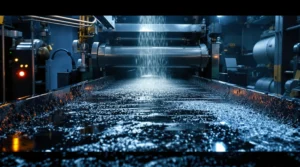

Concentrate filtration is the solid-liquid separation process used in mining and metallurgical operations to remove moisture from mineral concentrates before shipment or smelting – this guide covers technology selection, performance benchmarks, and best practices for achieving compliant final moisture.
Article Snapshot
Concentrate filtration is the mechanical dewatering process that removes interstitial moisture from mineral concentrates to meet smelter specifications and shipping moisture limits. Ceramic disc vacuum filters and horizontal belt filters are the primary technologies, with ceramic systems delivering filtrate quality below 200 ppm suspended solids and cake moisture 1.0-4.0% drier than conventional cloth-based alternatives.
By the Numbers
- Filtered tailings and concentrate dewatering systems recover up to 65% additional water beyond conventional thickening alone (CEET / water reuse conference paper, 2017). [1]
- Filtration-based dewatering improves immediate process-water reuse to between 68% and 85% at operating mineral processing sites (CEET / water reuse conference paper, 2017). [1]
- Filtered tailings and dewatering filtration reach approximately 90% water recovery in water-scarce mining applications (Anglo American, 2026). [2]
- A ceramic filtration system at one fine flotation tailings project produced filtrate with less than 200 ppm suspended solids and offset approximately 25% of fresh process water consumption in the gravity concentration circuit (CEC Mining Systems case study, 2017). [3]
What Is Concentrate Filtration?
Concentrate filtration is the mechanical solid-liquid separation step in mineral processing that reduces the moisture content of a mineral concentrate to levels acceptable for safe transport, smelter contracts, or further downstream refining. CEC Mining Systems designs and supplies ceramic disc vacuum filtration systems engineered specifically for the performance demands of concentrate dewatering, where consistent final moisture and continuous operation are non-negotiable. The filtration step sits at a critical juncture in the processing flowsheet – after flotation or gravity concentration produces a saleable product, and before the concentrate moves to a smelter, refinery, or export terminal. Getting this step right determines whether a mine meets its smelter specification, avoids cargo liquefaction risk during shipping, and recovers process water for reuse rather than losing it with the product.
Concentrate dewatering differs from tailings filtration in several important ways. Concentrate slurries carry higher-value solids, finer particle size distributions, and tighter moisture specifications than tailings streams. The consequences of under-dewatering are financial and logistical – smelter penalties for excess moisture, liquefaction risk in bulk concentrate carriers, and additional drying costs. The consequences of over-dewatering are rarer but real – excessive energy expenditure and potential product degradation for some mineralogies. Effective concentrate filtration means hitting a precise moisture window reliably, every shift, across variable feed conditions.
Ceramic disc vacuum filters have become the technology of choice for many modern concentrate filtration circuits because of their ability to deliver drier cake moisture at lower energy consumption than conventional rubber-belt or cloth-drum vacuum filters. Their microporous alumina ceramic membranes hold liquid by capillary action rather than applied vacuum alone, which translates directly to lower energy draw per tonne filtered. In applications where a copper, zinc, or iron ore concentrate must meet a strict moisture specification for a long-term smelter contract, the ability to hold 1.0-4.0% drier cake moisture than a comparable cloth filter is a commercially significant advantage.
How Concentrate Filtration Works in Mineral Processing
Concentrate filtration in mineral processing operates by drawing a slurry of fine mineral particles against a permeable filter medium under an applied pressure differential, forming a consolidated filter cake that is then discharged and conveyed for storage or shipment. The three dominant technologies used in modern concentrate circuits are ceramic disc vacuum filters, horizontal belt filters, and conventional rotary drum vacuum filters – each using a different filter medium and pressure mechanism to achieve dewatering.
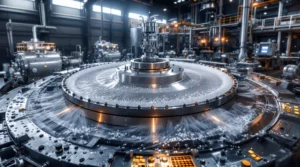
In a CX-Series Ceramic Disc Vacuum Filter – proprietary ceramic membrane filtration technology for tailings dewatering, concentrate filtration, and paste backfill; 30-40% CapEx/OpEx savings versus conventional technologies, microporous alumina ceramic segments are mounted on hollow rotating discs submerged in a concentrate slurry tank. As each disc segment rotates through the slurry, vacuum applied through the disc shaft draws liquid through the ceramic membrane while fine particles accumulate on the outer surface to form a filter cake. The ceramic membrane’s pore size – ranging from 0.75 to 3.0 microns – is matched to the particle size distribution of the concentrate being processed. When the cake-laden segment rotates out of the slurry, it passes through a drying zone where residual moisture is reduced further. A scraper blade then discharges the dry cake onto a conveyor belt. The filtrate collected through the ceramic membrane contains suspended solids below 200 ppm – a filtrate quality clean enough for direct return to the process water circuit.
Horizontal belt filters use a continuously moving porous belt that carries filter cake through sequential zones of cake formation, washing, and drying. They are well suited to applications requiring counter-current washing of the filter cake – for example, where residual reagents or soluble metals must be removed before the concentrate proceeds to smelting. The washing capability makes horizontal belt filtration a strong complement to ceramic disc filtration in circuits where product purity requirements go beyond moisture content alone.
Conventional rotary drum vacuum filters use a woven cloth medium that requires periodic replacement when blinding reduces filtration rate. Their operating costs are higher than ceramic alternatives because cloth replacement is a recurring consumable expense and scheduled replacement creates planned downtime. For operations running continuous three-shift production, the maintenance cycle of a cloth-based filter translates directly to lost throughput. The shift toward ceramic disc filtration in concentrate circuits is largely a response to this operating cost and availability difference.
Feed preparation before the filtration step has a significant influence on performance. Concentrate thickener underflow density determines how much work the filter must do to achieve a target cake moisture. Research from the University of Chile found that increasing thickener underflow density – from 35% to 50% solids – saves approximately 120 litres of water per tonne of ore, representing around 24.5% of typical makeup water use (University of Chile, 2025).[4] A denser thickener underflow reaches the filter with less free water to remove, which increases filtration rate and reduces energy consumption per tonne of product.
Why Does Moisture Control Matter for Concentrate Shipment?
Moisture control in concentrate filtration matters because mineral concentrates transported below their flow moisture point carry a serious liquefaction risk in bulk cargo vessels, while concentrates above smelter moisture specifications attract financial penalties that materially affect mine revenue. The International Maritime Organization’s IMSBC Code establishes flow moisture point limits for concentrate cargoes, and shipments found to exceed these limits are refused by port authorities or loading terminals. For mine operators shipping copper, zinc, lead, or iron ore concentrates, staying below the flow moisture point is a safety and commercial compliance requirement – not an optional target.
Smelter purchase agreements for mineral concentrates specify a maximum permitted moisture content, with penalties applied for every percentage point above the contracted limit. For a mine producing several hundred thousand dry metric tonnes of concentrate annually, a 1% improvement in filter cake moisture represents a substantial reduction in moisture penalties and, in some cases, a meaningful reduction in shipping costs because dry tonne yield per wet tonne shipped improves. These economics make the choice of filtration technology a financial decision as much as a process engineering decision.
Water recovery from concentrate filtration is a secondary but increasingly important benefit, particularly for mines operating in water-constrained jurisdictions such as the Atacama Desert in Chile, the Andes mining regions of Peru, or arid parts of Western Australia. A filtration system producing filtrate below 200 ppm suspended solids returns that water directly to the flotation circuit, reducing freshwater draw from surface or groundwater sources. In one documented case, a ceramic filtration installation offset approximately 25% of fresh process water consumption in a gravity concentration circuit, delivering annualized savings equal to 15% of total water consumption (CEC Mining Systems case study, 2017).[3]
Regulatory pressure on water use in mining is intensifying across key concentrate-producing jurisdictions. Water scarcity, community expectations, and environmental permitting requirements are converging to make water recovery from filtration a licence-to-operate issue rather than simply an operational efficiency measure. Mines that recover and reuse filtrate from concentrate circuits reduce their environmental footprint, strengthen their social licence with local communities, and lower their exposure to water-related operational disruptions.
Choosing the Right Filtration Technology for Your Operation
Selecting the right concentrate filtration technology requires matching equipment capability to the specific combination of mineralogy, throughput, moisture target, and operating environment at each site – and no single filter type is universally optimal across all concentrate applications. The three primary evaluation criteria are target cake moisture, filtrate quality requirements, and total cost of ownership over the operating life of the plant.
Ceramic disc vacuum filters are the preferred choice for fine-particle copper, zinc, and polymetallic concentrate applications where the target cake moisture is 8-12% and filtrate quality must be below 200 ppm suspended solids for process water reuse. The ceramic membrane’s capillary dewatering mechanism produces drier cake than cloth-based alternatives at comparable or lower energy consumption, and the absence of filter cloth eliminates the recurring consumable cost and scheduled downtime associated with cloth replacement cycles. For large-capacity plants, the modular architecture of ceramic disc systems – scalable up to 204 m² of filtration area in the CX12-204, the world’s largest ceramic filter – enables phased capacity additions as production ramps up.
Horizontal belt filters are the preferred choice where cake washing is required in addition to dewatering. Counter-current washing on the belt removes soluble impurities, residual flotation reagents, or wash solutions from the concentrate cake in a single continuous pass, eliminating the need for a separate repulp and re-filter circuit. This makes horizontal belt filtration well suited to certain metallurgical concentrate applications – for example, where residual cyanide or acid must be reduced before smelting – and to high-capacity coarser-particle concentrates where throughput rather than minimum moisture is the primary design driver. The Horizontal Belt Filter – heavy-duty washing and high-capacity dewatering for demanding mineral processing applications complements ceramic disc technology in complex multi-step filtration circuits.
Conventional cloth drum or disc filters remain in service at many established operations, particularly where capital constraints prevent replacement and existing cloth filters are performing acceptably against current moisture specifications. Tightening smelter moisture requirements and increasing water recovery obligations are pushing more operations toward brownfield upgrades to ceramic or belt technology. A brownfield audit quantifies the gap between current filter performance and target performance, providing the data needed to justify a technology upgrade business case.
David H. Pincock, Chief Executive Officer of CEEC International, noted that “filtered tailings maximize the total water recovery to 31% of the desalination base case at the theoretical mine site” (CEEC International, 2025).[5] While this finding relates to tailings filtration, the underlying principle applies equally to concentrate filtration circuits – filtration is the dewatering technology that achieves the highest water recovery of any mechanical approach, and that recovery has measurable value in water-constrained jurisdictions.
Bench-scale and pilot-plant testwork on representative concentrate samples is the most reliable basis for technology selection and filter sizing. Testwork quantifies filterability – the rate at which a specific concentrate forms a filter cake under applied vacuum – and establishes the relationship between cake thickness, cycle time, and final moisture. Without testwork data, filter sizing relies on generic industry rules of thumb that do not reflect the specific rheological behaviour of the concentrate being processed, increasing the risk of under-sized or over-sized equipment. Bench and Pilot Testing – giving you the data and confidence to power your project from the earliest stages is a critical de-risking step for any new concentrate filtration installation.
Your Most Common Questions
What moisture content does concentrate filtration achieve?
Concentrate filtration using ceramic disc vacuum technology achieves final cake moisture between 8% and 12% for copper and polymetallic concentrates, depending on mineralogy, particle size, and feed density. Ceramic disc filters consistently deliver cake moisture 1.0-4.0% lower than conventional cloth-based vacuum filters operating at comparable throughput and vacuum levels. This performance advantage is explained by the capillary dewatering mechanism of the microporous alumina ceramic membrane, which holds liquid by surface tension rather than relying solely on applied vacuum pressure. The practical implication is that a ceramic filter meets a tighter moisture specification – for example, a 10% maximum specified in a smelter purchase agreement – that a cloth filter at the same scale may struggle to achieve consistently across variable feed conditions. For concentrates requiring moisture below what vacuum filtration alone delivers, integrating a downstream thermal dryer – such as the MIR Steel Belt Dryer, which combines vacuum with medium-wave infrared radiation – brings final moisture to a precise target without dust generation or product degradation.
How does concentrate filtration affect water recovery at a mine site?
Concentrate filtration recovers process water from the dewatered mineral product as clean filtrate returned directly to the flotation or grinding circuit, reducing the site’s freshwater demand. Ceramic disc filtration produces filtrate with suspended solids below 200 ppm – a quality standard clean enough for direct reuse in sensitive process circuits without further treatment. Research documented by a CEET water reuse conference paper found that the insertion of filtration allowed an extra water recovery of up to 65% compared to thickening alone (CEET / water reuse conference paper, 2017).[1] For mines operating in arid or semi-arid regions – such as copper producers in the Atacama Desert or gold mines in Western Australia – this recovered filtrate has measurable economic value and is a determining factor in meeting environmental water licence conditions. In one documented concentrate and tailings filtration installation, the recovered filtrate offset approximately 25% of fresh process water consumption in a gravity concentration circuit, and the project delivered annualized savings equal to 15% of total water consumption (CEC Mining Systems case study, 2017).[3]
What is the difference between ceramic disc filtration and conventional cloth filtration for concentrates?
Ceramic disc filtration and conventional cloth filtration differ primarily in the filter medium used, the dewatering mechanism, the filtrate quality produced, and the long-term operating cost profile. Ceramic disc filters use microporous alumina ceramic membranes with pore sizes between 0.75 and 3.0 microns and dewater by capillary action, which requires less applied vacuum and produces drier cake and cleaner filtrate than cloth-based systems. Conventional cloth disc or drum filters use woven fabric media that must be replaced regularly – typically every few weeks to months depending on the abrasiveness of the concentrate – creating recurring consumable costs and planned downtime for cloth change-outs. The filtrate from a cloth filter contains suspended solids well above 200 ppm, often above 1,000 ppm, which limits its direct reuse in process circuits without further treatment. From a capital cost perspective, ceramic disc filters carry a higher initial equipment cost than comparable cloth filters, but the 30-40% reduction in operating costs and the elimination of cloth consumables mean that the total cost of ownership over a five- to ten-year plant life is lower for ceramic systems. Ceramic membrane lifespan reaches up to 24 months per filtration campaign, compared to the frequent cloth replacement cycles required by conventional vacuum filters.
Does concentrate filtration performance change with varying feed conditions?
Concentrate filtration performance changes with varying feed conditions – specifically with changes in slurry density, particle size distribution, mineralogy, and reagent carry-over from the flotation circuit – and managing these variables is required to maintain consistent final moisture. Feed density is the most directly controllable variable: a denser thickener underflow delivering higher solids percentage to the filter reduces the volume of free water the filter must remove per tonne of solids, which translates to higher filtration rate and, in many cases, drier cake. Research from the University of Chile confirmed that increasing thickener underflow density reduces water consumption by approximately 120 litres per tonne of ore, equivalent to around 24.5% of typical makeup water use (University of Chile, 2025).[4] Particle size distribution affects filterability because finer particles form a denser, less permeable cake that slows filtration rate and raises residual moisture. Flotation reagents – particularly frothers and collectors – affect cake surface tension and filtrate clarity. Managing these variables requires regular monitoring of feed characteristics and adjustment of filter operating parameters – cycle time, vacuum level, and scraper gap – to maintain performance within specification. Remote monitoring and predictive analytics programs, such as those offered by CEC Mining Systems through its Remote Access and Operational Services – predictive analytics and remote monitoring for any project, anywhere, provide real-time visibility into filter performance and enable proactive adjustments before moisture exceedances occur.
Filtration Technology Comparison
Selecting a concentrate filtration technology involves trade-offs between capital cost, operating cost, achievable cake moisture, filtrate quality, and maintenance requirements. The table below compares the three primary filter types used in modern concentrate circuits across these key performance dimensions to help operations identify the most appropriate technology for their specific requirements.
| Technology | Cake Moisture | Filtrate Quality | Filter Medium Replacement | Energy Consumption | Washing Capability |
|---|---|---|---|---|---|
| Ceramic Disc Vacuum Filter | 8-12% (1.0-4.0% drier than cloth alternatives) | Below 200 ppm suspended solids [3] | Ceramic membrane up to 24 months per campaign | Up to 85% lower than conventional vacuum filters | Not applicable – dewatering only |
| Horizontal Belt Filter | Competitive with ceramic for coarser feeds | Moderate – dependent on cloth condition | Belt cloth periodic replacement | Moderate | Yes – counter-current washing capability |
| Conventional Cloth Vacuum Filter (Drum or Disc) | Higher moisture – 1.0-4.0% wetter than ceramic | Above 1,000 ppm suspended solids | Frequent cloth replacement (weeks to months) | Higher vacuum draw required | Limited |
CEC Mining Systems and Concentrate Filtration
CEC Mining Systems Corp. (CECMS), headquartered in Vancouver, BC, has designed and delivered over 650 solid-liquid separation systems across eight countries since 2011, with concentrate filtration representing one of the company’s core application areas alongside tailings dry stacking and paste backfill. CECMS builds its concentrate filtration solutions around the proprietary CX-Series Ceramic Disc Vacuum (CDV) filter – a microporous alumina ceramic membrane technology that delivers measurably drier cake moisture, cleaner filtrate, and lower operating costs than conventional cloth-based vacuum filters.
For metallurgical and refining operations producing copper, zinc, polymetallic, or iron ore concentrates for export or smelter feed, CECMS offers a complete project pathway: bench-scale and pilot-plant testwork at the CCMR laboratory in Kamloops, BC characterizes concentrate filterability and provides engineering design inputs; conceptual and FEED-level engineering studies develop the filtration circuit design and capital cost estimate; and EPC/EPCM/BOOT project delivery takes the installation from procurement through commissioning and into production operation. The company’s Engineering Studies, Turnkey and Integrated Plant Supply – save time, reduce costs, and build greater efficiency through full-cycle project execution service covers every stage of this lifecycle under one responsible party.
For operating mines with existing conventional filtration circuits that are underperforming against current smelter moisture specifications or water recovery targets, CECMS provides brownfield audit and optimization services that quantify the performance gap and identify the most cost-effective upgrade path. In documented brownfield concentrate filtration upgrades, replacing conventional cloth filters with CX-Series ceramic systems has delivered 35% reductions in filter-related operating costs and eliminated scheduled cloth-change downtime. Post-startup, the CECMS Remote Access and Operational Services program maintains filter performance through remote monitoring and predictive analytics.
CECMS is ISO 9001 Quality Management and ISO 14000 Environmental Performance certified, reflecting the quality and sustainability standards embedded in its technology design and project delivery approach. For operations in Latin America, Australia, Africa, or Canada seeking a concentrate filtration partner with both proven technology and full-cycle project delivery capability, reach out to the CECMS team at info@cecminingsystems.com or call +1 604 685 7823. You can also explore Metallurgical and Refining Solutions – driving benefits on productivity, cost savings, and smooth operations for concentrate filtration and drying on the CECMS website.
How to Optimize Concentrate Filtration in 5 Steps
Step 1: Characterize Your Concentrate Through Testwork
Before selecting or optimizing any concentrate filtration technology, commission bench-scale filterability testing on representative concentrate samples from your operation. Testwork quantifies the filtration rate, achievable cake moisture, and filtrate quality for your specific mineralogy and particle size distribution – data that cannot be reliably estimated from industry averages alone. Use testwork results to set realistic performance targets and establish the sensitivity of filter performance to changes in feed density, particle size, and reagent concentration.
Step 2: Optimize Thickener Underflow Density Before the Filter
Maximizing the solids density of the concentrate thickener underflow feeding the filter reduces the volume of free water the filter must remove per tonne of solids, improving filtration rate and reducing energy consumption. Target thickener underflow densities at the upper end of the operational range achievable without causing rheological problems in the feed piping. University of Chile research confirmed that improving underflow density saves approximately 120 litres of water per tonne of ore, or around 24.5% of typical makeup water use (University of Chile, 2025).[4] Flocculant addition optimization in the thickener directly supports this density target.
Step 3: Match Filter Operating Parameters to Feed Conditions
Adjust filter cycle time, vacuum level, disc submergence depth, and scraper gap to maintain optimal cake thickness and drying time for the current feed conditions. Concentrate feed characteristics – density, particle size, and reagent content – change with ore type, flotation circuit performance, and shift-to-shift variability; filter operating parameters must be adjusted in response rather than left at fixed set points. Establish a standard operating procedure that specifies parameter adjustment triggers and target ranges for each key feed condition encountered at your site.
Step 4: Monitor Filtrate Quality as a Performance Indicator
Track suspended solids concentration in the filter filtrate on a regular basis – ideally continuously using online turbidity monitoring – as an early indicator of ceramic membrane condition or cloth blinding. Filtrate quality deteriorating above 200 ppm suspended solids in a ceramic filter system signals membrane fouling that requires acid wash regeneration; catching this early prevents a moisture exceedance before it reaches the shipping or smelting stage. Clean filtrate below 200 ppm is also the prerequisite for direct return of recovered water to the process circuit without further treatment, so filtrate monitoring supports both quality compliance and water recovery goals.
Step 5: Integrate Remote Monitoring for Continuous Performance Assurance
Connect your concentrate filtration circuit to a remote monitoring and predictive analytics platform to maintain performance visibility between scheduled site visits, particularly for operations in remote or complex jurisdictions. Real-time data on filter throughput, cake moisture, filtrate quality, and energy consumption allows process engineers to identify developing performance issues and implement corrective actions before they affect smelter compliance or shipping schedules. Remote monitoring is especially valuable for multi-filter installations where maintaining consistent moisture across multiple filter units simultaneously is the primary operational challenge.
The Bottom Line
Concentrate filtration is a commercially critical step in the mineral processing chain – the technology and operating practices selected here determine whether a mine meets its smelter moisture specification, avoids cargo liquefaction risk, and recovers process water for reuse rather than losing it with the product. Ceramic disc vacuum filtration has become the benchmark technology for most modern copper, zinc, and polymetallic concentrate circuits, delivering drier cake, cleaner filtrate, and lower operating costs than conventional cloth-based alternatives. For operations in water-constrained jurisdictions – from the Atacama to the Pilbara – the water recovery value of high-quality filtrate is an increasingly important part of the concentrate filtration business case.
If your operation is scoping a new concentrate filtration plant, evaluating a brownfield upgrade, or troubleshooting moisture exceedances on an existing installation, CEC Mining Systems can help. Contact the CECMS team at info@cecminingsystems.com, call +1 604 685 7823, or visit Find Your Solution – interactive guide to matching your solid-liquid separation challenge to the right CEC Mining Systems technology or service to start the conversation.
Sources & Citations
- Water in Mining – Challenges for Reuse. CEET / water reuse conference paper, 2017.
https://www.cetem.gov.br/antigo/images/congressos/2017/CAC0008-00-17.pdf - HDS: delivering desaturated tailings management without the capital cost of filtration. Anglo American, 2026.
https://www.angloamerican.com/~/media/Files/A/Anglo-American-Group-v9/PLC/our-stories/innovation-and-technology/hds-delivering-desaturated-tailings-management-without-the-capital-cost-of-filtration.pdf - Fine Flotation Tailings Dewatering Case Study. CEC Mining Systems, 2017.
https://cecminingsystems.com/wp-content/uploads/2017/06/Fine-Flotation-Tailings-Dewatering-Case-Study.pdf - The relevance of water recirculation. University of Chile, 2025.
https://repositorio.uchile.cl/bitstream/handle/2250/150453/The-relevance-of-water-recirculation.pdf?sequence=1 - The environmental and economic case for valuing water recovery and its relationship with tailings storage conservation. CEEC International, 2025.
https://www.ceecthefuture.org/resources?task=download&file=publication_file&id=4113