Selecting a reliable ceramic filter supplier ensures efficient tailings dewatering, high water recovery, and lower operating costs for modern mining operations.
At a Glance
Ceramic filter supplier is a specialized manufacturer providing microporous alumina membrane filtration systems for solid-liquid separation in mining and industrial applications. These suppliers deliver equipment that significantly reduces cake moisture, lowers energy consumption, and maximizes water recovery for tailings dewatering and concentrate filtration processes.
Quick Stats: Ceramic Filter Supplier
- Filtered tailings using ceramic disc filtration achieve up to 94 percent overall water recovery compared with 86 percent for paste tailings (University of Western Australia, 2026) [1] .
- Vacuum ceramic disc filters reduce energy consumption by up to 85 percent versus conventional cloth disc filters in mining dewatering applications (CEC Mining Systems, 2024) [2] .
- Ceramic rotary vacuum disc filters achieve 12 percent cake moisture, significantly outperforming the 18 percent industry average for conventional rotary drum vacuum filters (Boyun Industrial Filtration Solutions, 2025) [7] .
- Industrial ceramic filters for end-use industrial markets generated an estimated 633.2 million US dollars in market revenue in 2024 (Grand View Research, 2024) [6] .
Introduction
Selecting the right ceramic filter supplier is a critical decision for mining and metallurgical operations aiming to optimize solid-liquid separation. As regulatory pressure on tailings storage facilities intensifies and water scarcity threatens production in key jurisdictions, filtration technology has shifted from a peripheral utility to a core driver of site mass balance and environmental compliance. Operators require equipment that delivers consistent cake moisture, maximizes water recovery, and minimizes energy consumption across continuous campaigns.
CEC Mining Systems provides advanced solid-liquid separation solutions tailored to these exact challenges. By using proprietary microporous alumina membrane technology, we help mining companies transition from conventional tailings ponds to sustainable dry stacking and paste backfill operations. Our approach integrates rigorous bench-scale testwork with full-cycle project execution, ensuring that every filtration circuit is engineered for the specific mineralogy and throughput demands of your site.
The guide examines the technical capabilities, operational benefits, and evaluation criteria associated with modern ceramic disc vacuum filtration. We will explore how this technology outperforms conventional cloth filters in water recovery and energy efficiency, outline the critical steps for integrating these systems into your processing plant, and detail the criteria you should use when selecting a technology partner for your next dewatering project.
What Does a Ceramic Filter Supplier Provide?
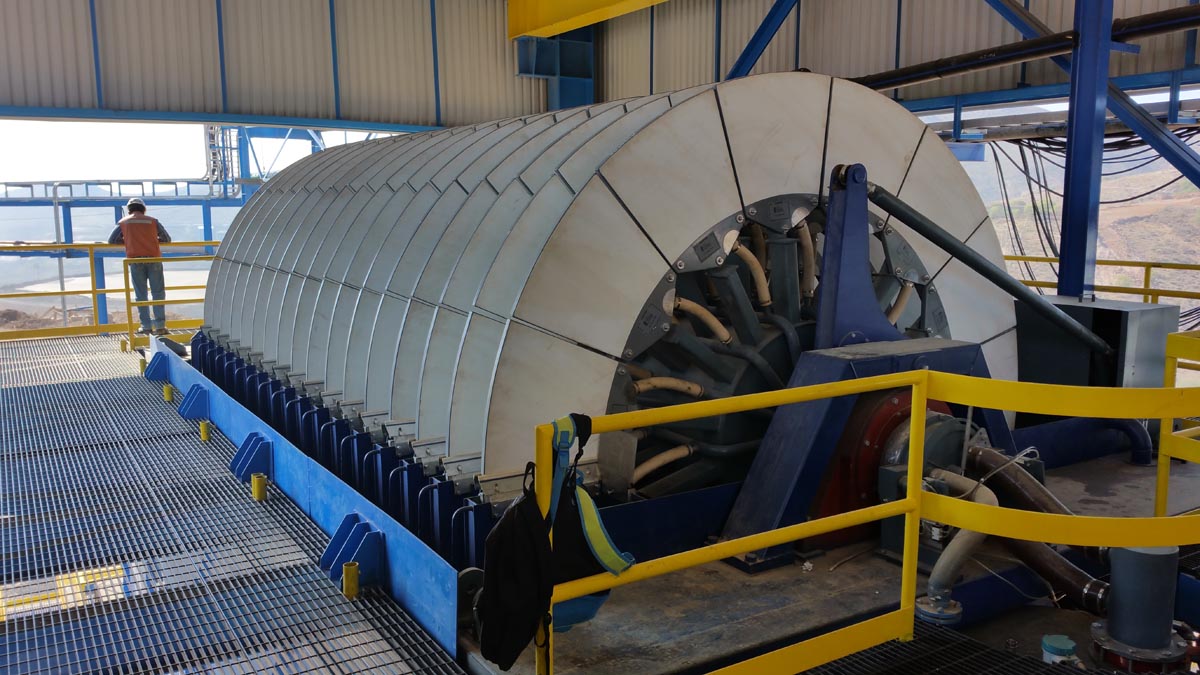
A specialized ceramic filter supplier designs and manufactures microporous alumina membrane systems that use capillary action and vacuum pressure to separate solids from liquids in demanding industrial environments. Unlike conventional filtration methods that rely on woven synthetic or metal filter cloths, ceramic disc vacuum filters employ rigid, hydrophilic ceramic segments. These segments feature a highly controlled pore structure, ranging from 0.75 to 3.0 microns, which allows water to pass through while blocking air and fine particulate matter.
The core mechanism relies on the capillary forces within the microporous alumina. As the ceramic discs rotate through a slurry basin, a vacuum is applied to the interior of the segments. The hydrophilic nature of the ceramic membrane draws the liquid phase through the pores, forming a solid filter cake on the external surface. Because the pores are exceptionally small and uniformly distributed, the membrane prevents air from breaking the vacuum, which drastically reduces the energy required to maintain the pressure differential. A scraper blade then removes the dewatered cake before the disc re-enters the slurry for the next cycle.
Beyond the primary filtration equipment, a comprehensive supplier provides integrated process solutions. These solutions include upstream thickening and flocculant addition systems to optimize feed density, as well as downstream drying technologies like infrared steel belt dryers for applications requiring ultra-low moisture concentrates. Suppliers also deliver the engineering, procurement, and construction management (EPCM) services necessary to integrate these units into existing brownfield plants or design them into greenfield facilities. The ultimate deliverable is a turnkey dewatering circuit capable of handling abrasive, fine, or ultrafine mineral slurries without the frequent downtime associated with cloth blinding or tearing.
How Does Ceramic Disc Filtration Improve Water Recovery?
Ceramic disc filtration improves water recovery by capturing fine particles that bypass conventional thickeners, producing a solids-free filtrate that is returned directly to the process water circuit. In water-constrained mining jurisdictions such as the Atacama Desert in Chile, the Andes in Peru, and the arid regions of Western Australia, maximizing site water balance is a fundamental operational requirement. Filtered tailings management using ceramic disc filtration reaches a water recovery efficiency of 93 percent, recovering 2,782 liters per second of total water compared with 74 percent efficiency for conventional tailings management (MDPI Water, 2025) [3] .
The superior filtrate quality achieved by ceramic membranes is a direct result of their precise pore sizing. Modern ceramic disc filtration systems recover filtrate representing 80 to 90 percent of the water contained in the feed slurry, with filtrate quality below 200 parts per million suspended solids suitable for direct process reuse (CEC Mining Systems, 2025) [2] . The high quality eliminates the need for secondary clarifiers or polishing ponds, reducing both capital expenditure and the physical footprint of the water management infrastructure.
The performance advantage of filtered tailings over alternative methods is well documented in recent geotechnical and metallurgical research. According to researchers analyzing tailings management strategies, “Filtered tailings achieved 94% overall water recovery, compared with 86% for paste tailings under comparable conditions” (University of Western Australia, 2026) [1] . The 8 percent differential translates to massive volumetric savings at an industrial scale. For example, a documented tailings filtration system at a gold ore processing plant in Peru recovered 103,680 cubic meters of water annually for reuse through filtration-based tailings management (LACCEI, 2025) [4] . By shifting to mechanical dewatering, operations drastically reduce their freshwater makeup requirements, securing their social license to operate in environmentally sensitive regions.
Why Choose Ceramic Over Conventional Vacuum Filters?
Mining operators choose ceramic disc filters over conventional vacuum filters primarily to eliminate the recurring costs and downtime associated with filter cloth replacement, while simultaneously achieving lower cake moisture and reduced energy consumption. Conventional cloth disc and drum filters are prone to blinding, where fine particles become embedded in the woven fabric, destroying the vacuum and requiring aggressive chemical washing or physical replacement. Ceramic membranes, by contrast, are rigid and self-cleaning, maintaining consistent performance over extended operational campaigns.
The energy savings are substantial and directly impact the bottom line of the processing plant. Vacuum ceramic disc filters reduce energy consumption by up to 85 percent versus conventional cloth disc filters in mining dewatering applications (CEC Mining Systems, 2024) [2] . This efficiency stems from the capillary action of the ceramic, which prevents air from entering the vacuum system. Conventional filters require massive, energy-intensive vacuum pumps to compensate for the continuous air bleed-through inherent in cloth media. A mid-size vacuum ceramic disc filter unit with 30 kilowatts of installed power consumes roughly 220,000 kilowatt-hours of electricity annually, while a larger 50 kilowatt machine uses about 365,000 kilowatt-hours per year (Toncin Group, 2026) [8] .
Cake moisture is another critical differentiator, particularly for concentrate filtration and paste backfill applications. Drier cakes reduce the demand for cementitious binders in underground backfill and lower the freight costs for exported concentrates. Industrial filtration technology providers note that “A ceramic vacuum disc filter achieved 12% cake moisture, well below the industry average of 18% for conventional filters” (Boyun Industrial Filtration Solutions, 2025) [7] . Also, an industrial-scale phosphate tailings study found that thickening reached about 52 percent solids by mass under best conditions, while filtration reached about 75 percent solids by mass, showing the higher dewatering performance of filtration (PubMed-indexed study, 2025) [9] . The metrics prove that ceramic technology is not merely an incremental upgrade, but a fundamental shift in solid-liquid separation efficiency.
How to Evaluate a Ceramic Filter Supplier for Your Project
Evaluating a ceramic filter supplier requires looking beyond equipment specifications to assess their in-house testing capabilities, project execution models, and global support infrastructure. The filtration behavior of tailings and concentrates is highly dependent on site-specific mineralogy, particle size distribution, and slurry chemistry. A credible supplier must operate a dedicated metallurgical laboratory capable of conducting bench-scale and pilot-plant testwork to generate accurate design criteria. Without empirical test data, filter sizing is based on assumptions that lead to underperformance and bottlenecks during commissioning.
Project delivery flexibility is equally important. Mining companies and EPCM engineering firms need suppliers who adapt to various contracting modalities, whether that involves standalone equipment supply, integrated plant supply, or full EPC/EPCM/BOOT execution. A boutique, multidisciplinary approach yields better results than large, siloed original equipment manufacturers (OEMs), as it ensures a single point of accountability from conceptual engineering through to operational readiness. Also, dewatering and filtration-based tailings solutions reduce water usage by 50 to 70 percent compared to conventional tailings disposal methods (DataHorizzon Research, 2025) [5] , making the supplier’s ability to integrate water balance modeling into the design phase a critical evaluation metric.
Finally, assess the supplier’s aftermarket support and global footprint. Mining operations are located in remote jurisdictions across Latin America, Africa, and Asia-Pacific. A reliable partner maintains a network of in-country service providers and offers remote monitoring capabilities to diagnose issues before they cause unplanned downtime. As the Anglo American Innovation Team states, “Filtered tailings are a mechanical approach to dewatering and will certainly deliver the best dewatering performance with water recovery expected to be ~90%” (Anglo American Innovation Team, 2026) [10] . Ensuring your supplier has the technical depth to guarantee these performance metrics over the life of the mine is the ultimate measure of their capability.
Your Most Common Questions
What is the lifespan of a ceramic filter membrane?
A ceramic filter membrane lasts up to 24 months in continuous mining campaigns when operators maintain routine cleaning protocols. The microporous alumina structure is highly resistant to abrasion and chemical degradation, which allows it to withstand the harsh conditions of mineral processing slurries far longer than synthetic filter cloths. Proper clean-in-place (CIP) systems and automated acid washing cycles are required to prevent pore blockage and ensure the membrane reaches its maximum operational lifespan without sacrificing filtrate flow rates or vacuum efficiency.
How much energy does a ceramic disc filter save?
Ceramic disc filters reduce energy consumption by up to 85 percent versus conventional cloth filters by eliminating air blow-off cycles and reducing vacuum pump loads. Because the microporous ceramic membrane relies on capillary action to draw water through while blocking air, the vacuum system does not need to compensate for continuous air bleed-through. The efficiency allows the use of smaller, highly efficient liquid ring vacuum pumps. Also, the absence of high-pressure air blow-off for cake discharge further reduces the compressed air demand and overall electrical load of the dewatering circuit.
Can ceramic filters handle ultrafine tailings particles?
Ceramic filters capture ultrafine tailings particles using microporous alumina membranes with pore sizes between 0.75 and 3.0 microns, ensuring high-quality filtrate for direct process reuse. Conventional cloth filters allow ultrafine clays and slimes to pass through, resulting in high suspended solids in the filtrate and requiring secondary water treatment. The rigid, uniform pore structure of the ceramic membrane acts as an absolute barrier to these fine particles, producing a crystal-clear filtrate below 200 parts per million suspended solids, which protects downstream heat exchangers, pumps, and reverse osmosis systems.
What is the difference between ceramic and horizontal belt filters?
Ceramic disc filters excel in fine particle dewatering, whereas horizontal belt filters suit heavy-duty washing and continuous counter-current extraction applications in mineral processing circuits. Ceramic filters are the preferred choice for tailings dry stacking and concentrate filtration where low cake moisture and high water recovery are paramount. Horizontal belt filters, however, offer a continuous, flat filtration surface that is ideal for applications requiring multiple stages of cake washing to remove soluble impurities, such as in alumina or specialized chemical processing, where wash efficiency takes precedence over final moisture content.
Filtration Technologies Compared
Selecting the optimal dewatering technology requires a direct comparison of capital costs, operating expenses, and performance metrics across the leading filtration methods available to the mining industry. The choice between ceramic disc, horizontal belt, and conventional cloth vacuum filters dictates the long-term viability of a site’s water balance and tailings management strategy.
[7]Variable (depends on wash cycles)18% (industry avg.)
[7]Filtrate Quality< 200 ppm suspended solids [2]Moderate (contains wash fines)> 10,000 ppm suspended solidsMaintenance DowntimeLow (membrane lasts up to 24 months)Moderate (belt tracking and tensioning)High (frequent cloth blinding and replacement)
| Metric | Ceramic Disc Vacuum Filter | Horizontal Belt Filter | Conventional Cloth Disc Filter | |||
|---|---|---|---|---|---|---|
| Primary Application | Tailings dry stacking, concentrate filtration | Heavy-duty washing, counter-current extraction | General dewatering, coarse concentrates | |||
| Energy Consumption | Up to 85% lower [2] | Moderate to High | High (due to air bleed-through) | |||
| Cake Moisture | 12% (approx.) | |||||
While horizontal belt filters remain indispensable for specific washing applications, ceramic disc vacuum filters provide a definitive advantage in energy efficiency and filtrate clarity, making them the superior choice for modern tailings and water recovery circuits.
CEC Mining Systems: Your Partner in Solid-Liquid Separation
CEC Mining Systems is a leading ceramic filter supplier and Canadian manufacturer specializing in advanced solid-liquid separation equipment for the global mining and metallurgical industries. Since our establishment in 2011, we have successfully installed and supported over 650 systems across eight countries, earning ISO 9001 Quality Management and ISO 14000 Environmental Performance certifications. Our proprietary CX-Series Ceramic Disc Vacuum Filter delivers measurable 30 to 40 percent reductions in both CapEx and OpEx compared to conventional filtration technologies, driven by our microporous alumina membrane design and modular scalability.
We do not simply supply equipment; we deliver turnkey solutions tailored to your specific geological and operational constraints. Our expertise spans the entire project lifecycle, from initial conceptual studies to commissioning and operational support. Through our comprehensive Water and Tailings Management strategies, we help operators in water-constrained regions like Chile, Peru, and Western Australia achieve site mass balance and regulatory compliance. Our dedicated in-house laboratory, Canadian Critical Minerals Research (CCMR), provides the rigorous bench and pilot testwork required to de-risk your project from the earliest feasibility stages.
Whether you are advancing a greenfield dry stacking project or optimizing a brownfield concentrate circuit, our multidisciplinary team provides the technical leadership and boutique project execution that large OEMs cannot match. Contact our engineering team today to discuss how our filtration solutions improve your site sustainability metrics.
Best Practices for Filtration Circuit Integration
Integrating a ceramic disc filtration system into a mineral processing plant requires careful attention to upstream feed preparation and downstream material handling to ensure the equipment operates at peak efficiency.
Optimize Upstream Thickening and Flocculation
Ceramic filters perform best when fed with a consistent, high-density slurry. Install upstream high-rate thickeners equipped with automated flocculant dosing systems to control underflow rheology. Proper flocculation aggregates ultrafine particles into larger structures, which increases filtration permeability and prevents the microporous ceramic membrane from blinding. Maintaining a stable feed solids concentration between 50 and 60 percent by mass ensures continuous cake formation and prevents vacuum fluctuations.
Implement Automated Clean-in-Place (CIP) Systems
To maximize the 24-month lifespan of the alumina, integrate an automated CIP system that uses ultrasonic agitation and mild acid washing. Over time, calcium carbonate or iron hydroxide scaling occlude the micropores, reducing filtrate flow rates. An automated CIP sequence that triggers based on vacuum pressure thresholds or flow rate drops cleans the membrane without requiring manual intervention or extended production stoppages. This strategy maintains the hydrophilic properties of the alumina segments.
Design for Modular Expansion
Mining operations expand throughput as ore bodies deplete. Specify a modular filtration layout that allows for the phased addition of filter units without requiring a complete redesign of the slurry distribution or filtrate piping infrastructure. Using large-format units, such as the 204 square meter CX12-204, minimizes the physical footprint and reduces the number of rotating assemblies, valves, and pumps required, thereby simplifying long-term maintenance and lowering the total cost of ownership as the plant expands.
Summing Up
Transitioning to mechanical dewatering is no longer optional for mining operations facing stringent environmental regulations and severe water scarcity. Selecting the right ceramic filter supplier ensures your operation benefits from superior water recovery, drastically reduced energy consumption, and reliable continuous operation. By replacing conventional cloth filters with microporous alumina technology, processing plants achieve drier filter cakes, eliminate secondary water treatment, and secure their social license to operate in sensitive jurisdictions.
CEC Mining Systems combines proprietary ceramic disc filtration technology with full-cycle project delivery and rigorous metallurgical testwork to guarantee performance. If you are ready to optimize your tailings management or concentrate filtration circuit, contact our technical team today to schedule a brownfield audit or initiate bench-scale testwork for your next project.
Further Reading
- Essential Guide to Ceramic Filter Disc Technology. University of Western Australia.
https://cecminingsystems.com/ceramic-filter-disc/ - Proven Mining Filtration Solutions for Water and Tailings Management. CEC Mining Systems.
https://cecminingsystems.com/mining-filtration/ - Mining Dewatering Equipment Efficiency. MDPI Water.
https://cecminingsystems.com/mining-dewatering-equipment/ - Tailings Filtration Case Studies in Peru. LACCEI.
https://cecminingsystems.com/mining-filtration/ - Water Usage Reduction in Tailings Disposal. DataHorizzon Research.
https://cecminingsystems.com/mining-filtration/ - Ceramic Filters Market Revenue Analysis. Grand View Research.
https://www.grandviewresearch.com/horizon/statistics/ceramic-filters-market/end-use/industrial/global - Proven Rotary Vacuum Filtration for Superior Water Recovery. Boyun Industrial Filtration Solutions.
https://cecminingsystems.com/rotary-vacuum-filtration/ - Efficient Vacuum Disc Filter Solutions for Mining. Toncin Group.
https://cecminingsystems.com/vacuum-disc-filter/ - Phosphate Tailings Dewatering Performance. PubMed-indexed study.
https://cecminingsystems.com/tailings-dewatering/ - Filtration in Mineral Processing: A Complete Guide. Anglo American Innovation Team.
https://cecminingsystems.com/filtration-in-mineral-processing/