Vacuum disc filter technology cuts energy costs up to 90% and delivers drier filter cake for mining tailings, concentrate dewatering. Learn why it’s the most economical filtration choice.
Article Snapshot
A vacuum disc filter is an industrial filtration device that uses rotating discs with filter media to separate solids from liquids in mineral processing slurry, recovering clear filtrate and producing a low‑moisture filter cake. It offers up to 90% energy savings, drier cakes, and reliable continuous operation.
Quick Stats: vacuum disc filter
- A 45 m² ceramic vacuum disc filter uses just 15 kW, while a cloth filter of similar capacity needs 170 kW (Wikipedia, 2026)[1]
- Vacuum ceramic disc filters reduce energy consumption by 85–90% compared with cloth systems (Toncin Group, 2026)[2]
- Ceramic disc filters achieve a 1.0–4.0 percentage point reduction in final cake moisture compared to belt filters (PORVOO, 2026)[3]
- Rotary vacuum disc filters represent around 80% of tailings filtration installations, making them the most economical choice (Australian Centre for Geomechanics, 2019)[4]
How Does a Vacuum Disc Filter Operate?
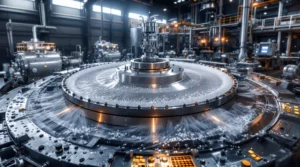
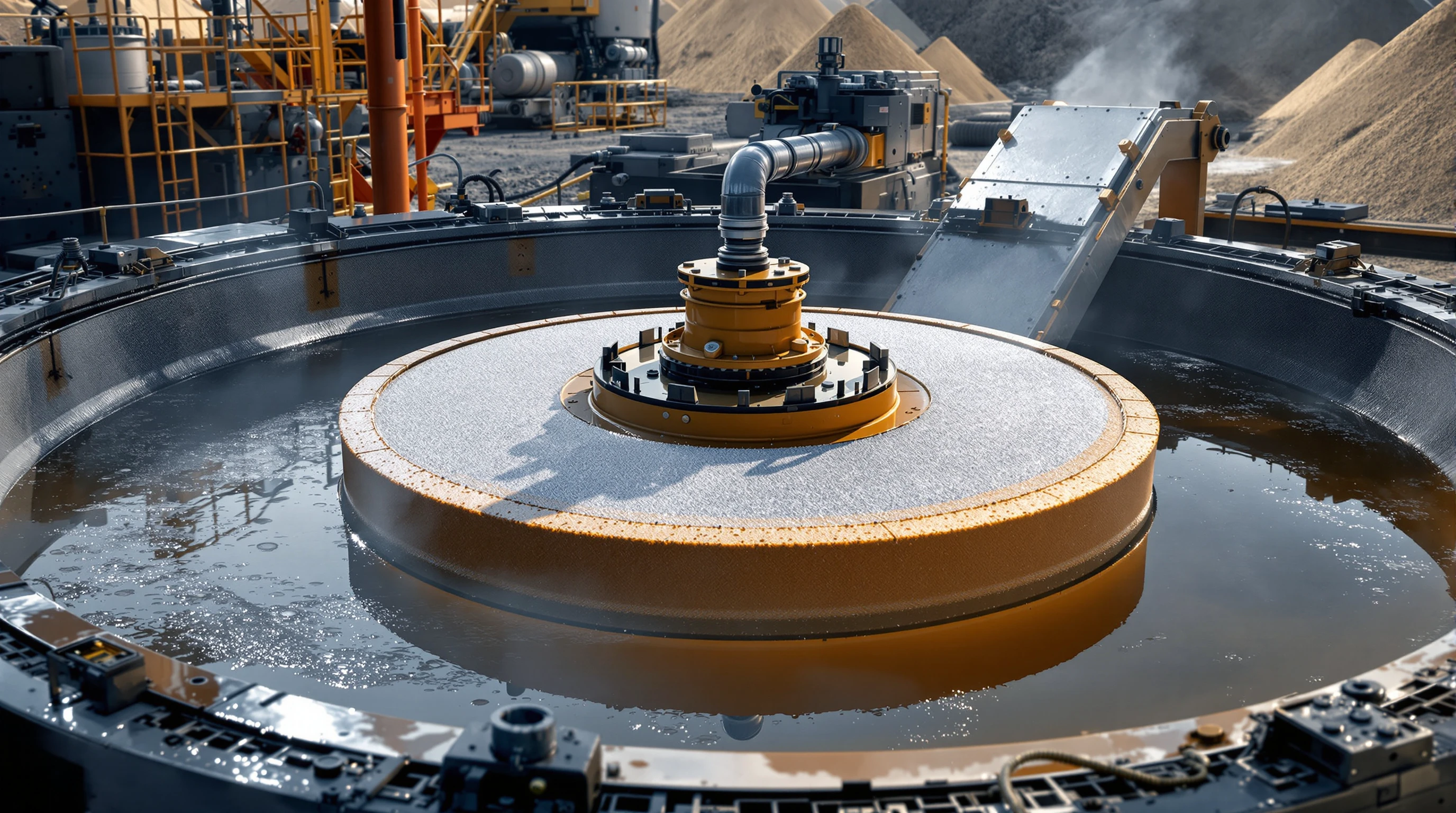
A vacuum disc filter is a continuous rotary filtration machine that separates solids from slurry using multiple discs submerged in a feed trough. As the discs rotate, vacuum applied through the central shaft draws the liquid through the filter media – either cloth or microporous ceramic membranes – forming a filter cake on the disc surface. The clean filtrate flows away for direct reuse in the process circuit, while the cake is scraped off once it reaches the optimum moisture content.
The technology relies on the pressure difference between the atmosphere and the vacuum inside the discs. In conventional cloth disc filters, air passes through the cake and media continuously, requiring large vacuum pumps. In contrast, ceramic disc filters use capillary action in the tiny pores to prevent air from passing through, drastically reducing vacuum flow and energy demand. According to Roxia’s technical documentation, a ceramic disc filter “consumes up to 90% less energy compared to (traditional) vacuum disc filters while producing a clear filtrate” (Roxia, 2025)[5]. This fundamental difference makes ceramic filters a breakthrough for energy‑intensive mining operations.
Understanding vacuum disc filter operation is essential for operators evaluating dewatering alternatives. The filter’s submerged disc type, vacuum control, and cake discharge mechanism all influence throughput and moisture. Modern high‑performance disc filters incorporate advances such as ultrasonic cleaning automations, ceramic membrane regeneration, and real‑time monitoring to maintain consistent performance across long operating campaigns. CEC Mining Systems Corp. has refined these elements in its CX‑Series ceramic disc vacuum filters, which combine proprietary ceramic membrane technology with reliable rotary motion to deliver predictable, continuous operation in the harshest mining environments.
Key Advantages Over Conventional Filters
The primary advantage of a vacuum disc filter – especially the ceramic type – is its dramatically lower energy consumption. A 45‑square‑meter ceramic unit consumes about 15 kilowatts, while an equivalent cloth vacuum disc filter draws roughly 170 kilowatts (Wikipedia, 2026)[1]. This energy gap translates into a recurring power cost that is over ten times higher for conventional cloth systems, cementing the ceramic disc filter as the most economical choice for high‑volume tailings and concentrate dewatering.
Beyond kilowatt savings, ceramic vacuum disc filters consistently produce drier cakes. Data from 12 mining operations show a 1.0 to 4.0 percentage point reduction in final cake moisture when using ceramic disc filters instead of belt filters under similar vacuum conditions (PORVOO, 2026)[3]. Drier cakes improve downstream transport, reduce paste backfill binder costs, and lower the risk of water seepage from tailings storage facilities. Many plants also achieve filtrate clarity below 200 parts per million suspended solids, enabling immediate water reuse without secondary clarification.
Operating cost savings extend well beyond electricity. Ceramic membranes last up to 24 months before requiring regeneration or replacement, eliminating the frequent cloth change‑outs that plague conventional vacuum disc filters. The reliable continuous operation reduces unplanned maintenance windows and helps mines meet strict environmental release targets. In the words of filtration specialist H. Hahn, “The vacuum disc filter type in around 80% of all applications is the most economical of these technologies in terms of capital and operating cost” (Australian Centre for Geomechanics, 2019)[4]. For many operations, this statistic alone justifies a technology switch.
The compact footprint of a vacuum disc filter simplifies new plant design and brownfield retrofits. Because no large vacuum receivers or filtrate tanks are needed, engineering teams can install a high‑capacity unit in a fraction of the space required by belt or pressure filters. The modular nature of disc filters – available in segments up to the 204‑square‑meter CX12‑204 series – allows phased capacity expansion without major civil works, making the technology equally attractive for remote greenfield projects and incremental de‑bottlenecking campaigns.
Applications in Mining and Tailings Management
Mining operations apply vacuum disc filters across three core areas: tailings dewatering and dry stacking, concentrate filtration, and paste backfill preparation. In tailings management, the filter receives the final thickener underflow and produces a stackable cake with low moisture, eliminating or drastically reducing the need for conventional tailings ponds. The clear filtrate returns to the process water circuit, cutting freshwater intake and improving the site water balance. Jurisdictions with strict water‑use regulations – such as the Atacama Desert in Chile, the high‑altitude mines of Peru, and parts of Western Australia – increasingly mandate filtered tailings; a ceramic vacuum disc filter becomes the technology of choice for these projects.
Concentrate filtration is another established application. Copper, iron ore, zinc, and lead concentrates must meet precise moisture specifications for shipping and smelter contracts. A filter cake that is too wet incurs freight penalties, while excessive drying raises energy costs. Ceramic disc filters routinely achieve 7–8% moisture in finished concentrates, matching or exceeding the performance of energy‑intensive thermal dryers. When required, the filter is paired with a downstream steel belt dryer – such as the MIR system offered by CEC Mining Systems Corp. – for additional moisture reduction in a dust‑free, continuous operation.
For underground hard‑rock mines, the vacuum disc filter is a critical upstream step in paste backfill plants. The low‑moisture filter cake enters a mixer where cement or pozzolanic binder is added; drier cake significantly reduces binder demand, yielding multimillion‑dollar savings over the life of the mine. The ceramic disc filter’s consistent performance supports the demanding rheological targets needed to pump paste several thousand meters through a mine’s distribution network without blockages.
Adding versatility, the technology also integrates into screening and sizing circuits. By dewatering a classified sand stream, the vacuum disc filter produces a dry, saleable aggregate alongside the main mineral concentrate, improving the overall project economics. With more than 650 systems installed globally, CEC Mining Systems Corp. has demonstrated the flexibility of the CX‑Series across these varied applications, delivering custom‑engineered filtration solutions that align with each site’s unique process flowsheet.
Factors for Selecting a Vacuum Disc Filter
Selecting the right vacuum disc filter for a mining operation requires a careful evaluation of slurry characteristics, throughput targets, and life‑cycle costs. The first factor is filter media: cloth media is sufficient for coarse, free‑draining solids, but ceramic membranes with pore sizes between 0.75 and 3.0 microns excel at capturing fine and ultrafine particles that would blind conventional cloth. The ceramic option delivers filtrate clarity often below 200 ppm and extends media life, though it requires a clean acid‑ or ultrasonic‑washing regime that must be accounted for in the operational budget.
Sizing the filter correctly is paramount. Under‑sized units become bottlenecks, while over‑sized machines waste capital. In‑house bench‑scale and pilot‑plant testwork – such as the program offered by CEC Mining Systems Corp.’s Canadian Critical Minerals Research laboratory in Kamloops, BC – generates the design‑basis data on slurry filterability, cake formation rate, and moisture targets. AI‑assisted benchmarking then translates those lab results into a commercial machine specification, reducing the technical risk that plagues new filtration projects.
Beyond the machine itself, the entire vacuum disc filter package includes support systems: vacuum pumps, filtrate receivers, cake conveyors, and control instrumentation. Ceramic disc filters demand smaller vacuum pumps because little to no air escapes through the saturated membrane, which not only saves energy but also lowers the size and cost of ancillary equipment. The Toncin Group has documented that a large ceramic disc filter with 50 kilowatts of installed power consumes about 365,000 kilowatt‑hours per year, roughly 90% less than a conventional cloth disc filter of similar duty (Toncin Group, 2026)[2]. When project teams factor these savings into a 15‑ to 20‑year life‑cycle cost analysis, the ceramic disc filter emerges as the clear financial winner.
Operational flexibility is another decisive criterion. Modern ceramic disc filters run unattended for extended periods, with remote monitoring and predictive analytics identifying wear before it leads to downtime. For operations in remote locations – across the Andes, the African copperbelt, or the Australian outback – this reliability is critical. CEC Mining Systems Corp.’s Bench and Pilot Testing services provide the upfront data needed to size the filter correctly and validate performance guarantees, ensuring that the installed machine meets both process and financial expectations from day one.
What People Are Asking
What is a vacuum disc filter?
A vacuum disc filter is a continuous rotary machine using disc‑shaped media to separate solids from liquids, yielding a dry filter cake and clean filtrate.
It works by rotating multiple discs partially submerged in a slurry trough. A vacuum applied through the central shaft pulls liquid through the filter surface, depositing a cake that is scraped off once it reaches the desired moisture. The technology is widely used in mining for tailings dewatering, concentrate filtration, and paste backfill preparation.
How much energy can a vacuum disc filter save?
A vacuum ceramic disc filter saves up to 90% energy compared to cloth disc filters, with some units using just 220,000 kWh per year.
Ceramic disc filters achieve this by preventing air from passing through the saturated membrane, which dramatically reduces the required vacuum flow and pump power. A mid‑size unit with 30 kW of installed power consumes roughly 220,000 kWh annually, while a larger 50 kW machine uses about 365,000 kWh per year (Toncin Group, 2026)[2]. In contrast, a conventional cloth disc filter of comparable capacity runs at 170 kW or more.
Where are vacuum disc filters used in mining?
Vacuum disc filters are used in mining for tailings dewatering, concentrate filtration, and paste backfill preparation, especially in water‑scarce regions like Chile’s Atacama Desert.
This equipment forms the backbone of modern dry‑stacked tailings plants, enabling producers to recycle water and reduce their dependency on large tailings ponds. It also ensures constant‑moisture concentrates for smelters and lowers binder consumption in underground paste backfill systems. Companies such as CEC Mining Systems Corp. have deployed over 650 systems globally, covering copper, gold, iron ore, lead, and zinc operations.
What are the main types of vacuum disc filters?
The two main types are cloth‑covered vacuum disc filters and ceramic vacuum disc filters, with ceramic versions offering lower energy consumption and longer media life.
Cloth disc filters are cost‑effective for coarse, fast‑draining slurries but require frequent cloth changes and have higher operating costs. Ceramic disc filters use a microporous alumina membrane that resists blinding and lasts up to 24 months between regenerations. Ceramic units consume 85–90% less energy and produce drier cake and cleaner filtrate, making them the preferred option for fine‑particle tailings and concentrates. Many operations select the ceramic variant when life‑cycle costs and water recovery are primary drivers.
Comparison of Filtration Technologies
When selecting a dewatering solution for tailings or concentrates, project teams frequently compare the vacuum disc filter with belt filters, pressure filters, and filter presses. Each technology has a distinct cost/performance profile. Ceramic disc filters deliver the lowest energy consumption, often 85–90% less than cloth disc or belt filters, while producing a drier cake than belt filters. Pressure filters achieve extremely low moisture but operate in batch mode and carry higher capital and maintenance costs. The table below summarizes these trade‑offs.
| Technology | Capital Cost | Operating Cost | Energy Consumption | Cake Moisture | Typical Application |
|---|---|---|---|---|---|
| Ceramic Vacuum Disc Filter | Moderate | Low | Up to 90% lower than cloth (Toncin Group, 2026)[2] | 1–4 percentage points drier than belt filters (PORVOO, 2026)[3] | Fine tailings, concentrates, paste backfill |
| Cloth Vacuum Disc Filter | Low–Moderate | Higher (cloth changes) | Baseline (≈170 kW for 45 m²) | Higher than ceramic type | Coarse tailings, bulk dewatering |
| Horizontal Belt Filter | Moderate | Moderate | Similar to cloth disc | Baseline, 8–12% | Heavy-duty dewatering, counter‑current washing |
| Filter Press | High | High (batch operation) | Moderate to high | Very low (as low as 5%) | Ultra‑fine tailings, low‑moisture stacks |
CEC Mining Systems Corp. – Your Vacuum Disc Filter Partner
CEC Mining Systems Corp. (CECMS), headquartered in Vancouver, BC, has been engineering solid‑liquid separation solutions since 2011. With over 650 systems installed in eight countries, the company has earned a reputation for reliable, cost‑effective CX‑Series Ceramic Disc Vacuum Filters that consistently meet process targets in tailings dry stacking, concentrate dewatering, and paste backfill circuits. Our proprietary microporous alumina ceramic membrane technology delivers filtrate clarity below 200 ppm, cake moistures 1.0–4.0% drier than conventional alternatives, and energy savings of up to 90%.
We take a full‑lifecycle approach that begins with bench‑scale and pilot‑plant testwork at our dedicated CCMR laboratory in Kamloops, BC. That data feeds into an AI‑assisted benchmarking platform to size the right filter for your ore body. From there, CECMS delivers equipment alone, integrated into your EPC/EPCM scope, or wrapped in a turnkey EPC or BOOT contract that includes procurement, construction, commissioning, and post‑startup operational support. Our services extend to remote monitoring and predictive analytics, upgrades and rebuilds, and operator education and training – ensuring your vacuum disc filter performs in its designed envelope for years to come.
Clients value our boutique project approach: one dedicated, multidisciplinary team shepherds your filtration project from feasibility to full production. Whether you need a single filter or a complete dewatering plant, our lean digital supply chain keeps capital costs competitive in any jurisdiction. Connect with us at CEC Mining Systems on LinkedIn or use our Find Your Solution tool to begin a conversation. Reach our engineering team directly at info@cecminingsystems.com or call +1 604 685 7823. Let us put a decade of ceramic disc filtration expertise to work for your operation.
Practical Tips for Implementing Vacuum Disc Filters
Start with testwork. Every slurry behaves differently. Commission bench‑scale filtration tests on representative tailings or concentrate samples to determine cake formation rate, optimum vacuum level, and achievable moisture. CEC Mining Systems Corp.’s Bench and Pilot Testing service, combined with AI‑assisted benchmarking, transforms raw lab data into reliable design criteria, reducing the risk of mis‑sizing.
Match the media to the slurry. Ceramic membranes excel on fine and ultrafine tailings where cloth would blind quickly. For coarse, fast‑settling solids, a cloth vacuum disc filter offers the lowest upfront cost. Evaluate both options with a 20‑year life‑cycle cost analysis that includes energy, media replacement, maintenance labor, and downtime.
Integrate the filter into the full water and tailings balance. A vacuum disc filter is not a standalone box. Its performance directly affects thickener underflow density, water return quality, and the cement demand in paste backfill. Work with your process engineers to model the complete circuit, and consider how the vacuum disc filter responds to changing ore grades or seasonal flows. CECMS’s Water and Tailings Management team builds a site‑wide mass balance that accounts for these interactions.
Automate cleaning and monitoring. Ceramic disc filters require periodic acid washing or ultrasonic cleaning to maintain membrane porosity. Plan the cleaning skids and controls into the initial design rather than retrofitting them later. Remote monitoring platforms, like CECMS’s Remote Access and Operational Services, use real‑time data to schedule maintenance predictively, keeping your filter online during critical production windows.
Prove performance with a pilot trial. Even the best lab data generically represents a deposit. Running a pilot‑scale vacuum disc filter on site for 30 to 60 days generates real‑world performance curves, trains operators, and gives stakeholders confidence in the technology before committing to full‑scale capital. This step is especially valuable when introducing ceramic disc filtration to a site accustomed to conventional cloth filters.
The Bottom Line
The vacuum disc filter – and in particular the ceramic variant – is a proven, economical technology that directly addresses the mining industry’s twin pressures of rising energy costs and tightening water‑management regulations. By cutting energy consumption up to 90%, producing a drier and more stable filter cake, and recovering crystal‑clear water for immediate reuse, it delivers a hard‑edged business case that stands up to detailed life‑cycle analysis. Whether your goal is dry‑stacked tailings, specification‑grade concentrates, or lower‑cost paste backfill, a well‑sized vacuum disc filter delivers results year after year.
For a custom‑engineered solution backed by comprehensive testwork, turnkey project execution, and ongoing operational support, contact the team at CEC Mining Systems Corp. today. Visit our contact page or call +1 604 685 7823 to start a conversation about how a CX‑Series ceramic disc vacuum filter improves your operation’s water recovery and operating efficiency.
Learn More
- Vacuum ceramic filter. Wikipedia.
https://en.wikipedia.org/wiki/Vacuum_ceramic_filter - Ceramic Vacuum Filters Energy & Cost Analysis. Toncin Group.
https://www.toncin.com/Ceramic-Vacuum-Filters-Energy-Cost-Analysis-id48956865.html - Vacuum Ceramic Disk Filter Throughput vs Belt Filter: Real‑World Capacity Data from 12 Mining Operations. PORVOO.
https://porvoo.com.cn/blog/vacuum-ceramic-disk-filter-throughput-vs-belt-filter-real-world-capacity-data-from-12-mining-operations/ - Hahn, H. Tailings dewatering with increased filtration rates and lowest filter cake moisture. Australian Centre for Geomechanics.
https://papers.acg.uwa.edu.au/p/1910_16_Hahn/ - Roxia Ceramic Disc Filter Life Cycle Support EN 2025. Roxia.
https://roxia.com/wp-content/uploads/2026/01/Roxia-Ceramic-Disc-Filters-Life-Cycle-Support-EN-2025.pdf