Solid liquid separation equipment removes suspended solids from process water and tailings. Compare technologies, ceramic filtration, and mining market data.
Article Snapshot
Solid liquid separation equipment is machinery that removes suspended solids from liquids in mining, mineral processing, and water treatment. Ceramic disc vacuum filters recover water and produce dewatered tailings. CEC Mining Systems supplies turn-key solid-liquid separation solutions with measurable cost and water-recovery advantages.
Quick Stats: Solid Liquid Separation Equipment
In 2025, the global solid liquid separation equipment market was valued at USD 15.2 billion according to MarketIntelo (MarketIntelo, 2025)[1].
The mining and mineral processing application segment was valued at approximately USD 4.74 billion in 2025 and was projected to reach USD 6.28 billion by 2034 (MarketIntelo, 2025)[1].
The mining and mineral processing segment represented 31.2 percent of the solid liquid separation equipment market in 2025 (MarketIntelo, 2025)[1].
The solid liquid separation equipment market was projected to grow at a 5.1 percent compound annual growth rate from 2026 to 2034 (MarketIntelo, 2025)[1].
Solid liquid separation equipment is the foundation of responsible mining water management. Mining operations generate large volumes of slurry, tailings, and process water that must be dewatered before reuse, discharge, or dry stacking. CEC Mining Systems provides ceramic disc-vacuum filtration and turn-key tailings dewatering solutions that help mining companies recover clean process water, reduce tailings storage risk, and meet tightening environmental standards.
Across mineral processing, metallurgical refining, and industrial water treatment, the choice of solid-liquid separation technology directly affects capital costs, operating costs, water recovery, and tailings stability. This guide examines the main equipment types, market data, ceramic disc filtration advantages, and selection criteria for mining projects. You will also find practical planning steps and a comparison of common solid liquid separation equipment methods.
For project owners, EPC/EPCM engineering firms, and plant operators, understanding how solid liquid separation equipment works and how to select it is important. The sections below cover technology types, tailings dewatering, ceramic disc filtration, and selection criteria, followed by practical tips and a direct comparison of common methods.
What Are the Main Types of Solid Liquid Separation Equipment?
Solid liquid separation equipment encompasses the mechanical systems used to remove suspended solids from process liquids in mining, mineral processing, and water treatment. These systems separate solids from liquids using gravity, centrifugal force, vacuum, pressure, or membrane barriers, and each method suits different particle sizes, throughputs, and moisture targets.
In mining and tailings management, the main categories include gravity thickeners and clarifiers, centrifugal separators, belt filters, vacuum disc filters, ceramic disc vacuum filters, and membrane filtration systems. Gravity thickeners and clarifiers settle solids under quiescent conditions and are widely used ahead of filtration. Centrifuges use rotational force to separate fine particles; a 2025 market analysis reported centrifuges held the largest product share at 28.5 percent of the solid liquid separation equipment market (MarketIntelo, 2025)[1].
Vacuum filters draw liquid through a filter medium using negative pressure. Conventional vacuum disc filters use cloth media, while ceramic disc vacuum filters use microporous alumina membranes. Membrane filtration systems rely on physical pore size to capture fine and ultrafine particles, and the same report found membrane filtration systems represented 16.8 percent of market value (MarketIntelo, 2025)[1]. Belt filters provide continuous washing and dewatering for high-capacity applications, and screening equipment prepares slurry ahead of leaching and flotation circuits.
The choice among solid liquid separation equipment types depends on desired cake moisture, water clarity, particle size distribution, and overall process economics. For example, tailings dry stacking requires vacuum filtration or belt filtration, while ultrafine particle capture demands membrane or ceramic media. Understanding the differences between these solid-liquid separation systems helps engineering teams match the equipment to the process duty rather than defaulting to a single technology.
Gravity thickeners and clarifiers are the first stage in solid liquid separation equipment circuits. They increase solids loading in the underflow and improve overflow clarity before downstream filtration. Flocculant mixing and addition systems further optimize thickener performance by aggregating fine particles, which reduces the load on filters and improves water recovery. In a well-designed circuit, thickening significantly lowers total filtration area required, reducing both capital and operating costs.
For high-capacity washing applications, horizontal belt filters provide continuous counter-current washing and efficient cake discharge. They complement vacuum filtration in complex solid-liquid separation flowsheets where washing efficiency and throughput are primary performance drivers.
How Does Solid Liquid Separation Equipment Support Tailings Dewatering and Water Recovery?
Solid liquid separation equipment supports tailings dewatering and water recovery by converting low-density tailings slurry into a stackable filter cake and a clarified water stream. In a filtered tailings plant, the equipment mechanically removes water from the tailings stream, the solids are placed in a dry stack, and the recovered water returns to the process circuit.
Tailings dewatering with solid liquid separation equipment begins with thickening, where flocculant addition increases solids loading and overflow clarity. Thickened tailings then feed filtration equipment such as ceramic disc vacuum filters, which produce a filter cake with low moisture content and filtrate with suspended solids below 200 ppm in CEC Mining Systems’ CX-Series applications. The low-solids filtrate produced by ceramic disc vacuum filters supports water-constrained jurisdictions such as Chile’s Atacama Desert, Peru’s Andes, and Western Australia, where regulatory pressure and water scarcity drive adoption of filtered tailings management.
Dry stacking eliminates or reduces the footprint of conventional tailings storage facilities, lowers dam failure risk, and supports site water balance goals. A 2025 report valued the mining and mineral processing application segment of the solid liquid separation equipment market at approximately USD 4.74 billion, underlining the scale of investment in these technologies (MarketIntelo, 2025)[1]. Water recovery from tailings filtration also reduces fresh water demand, a priority for mining companies operating in arid regions.
Ceramic disc vacuum filtration contributes to this process by using microporous alumina membranes that deliver a solids-free filtrate and lower energy consumption than conventional vacuum filtration. CEC Mining Systems designs and supplies turn-key tailings dewatering projects that integrate Water and Tailings Management – practical, new, cost-effective strategies to support site mass and water balance strategies from bench-scale testing through commissioning.
Filtered tailings handling produces a more stable tailings deposit, lower environmental liability, and improved water security for the mine. For brownfield plants, adding solid liquid separation equipment to an existing tailings circuit is a cost-effective alternative to building new tailings storage capacity.
Why Is Ceramic Disc Filtration Gaining Traction in Mining?
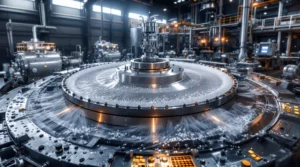
Ceramic disc filtration is gaining traction in mining because it lowers energy consumption, improves filtrate clarity, and reduces operating costs compared with conventional cloth vacuum filters. The technique uses microporous alumina ceramic membranes in place of filter cloth, allowing capillary action and vacuum to produce a drier filter cake and cleaner filtrate.
CEC Mining Systems’ CX-Series Ceramic Disc Vacuum Filter – proprietary ceramic membrane filtration technology for tailings dewatering, concentrate filtration, and paste backfill; 30-40% CapEx/OpEx savings versus conventional technologies delivers up to 85 percent lower energy consumption than conventional vacuum filters, with filtrate quality between 50 and 200 ppm suspended solids. The ceramic membrane lifespan reaches 24 months per campaign, reducing downtime associated with cloth failures. Cake moisture is 1.0 to 4.0 percent lower than conventional vacuum filters at similar throughput rates.
Ceramic disc filtration performance advantages translate directly into lower total cost of ownership. In paste backfill applications, drier filter cake reduces cement binder demand, which produces measurable cost savings over the life of an underground operation. In concentrate filtration, consistent low moisture supports smelter and export specifications. The same 2025 report found vacuum filters contributed 11.5 percent to solid liquid separation equipment market value, particularly in mining and chemical processing sectors (MarketIntelo, 2025)[1]. Ceramic disc filters are a subset of vacuum filtration technology and serve the most demanding water recovery and moisture control applications.
Mining operations and EPC/EPCM engineering firms are also drawn to ceramic disc filtration because of its modular design and scalability. The CX-Series is available up to the CX12-204, the world’s largest ceramic filter at 204 square meters of filtration area, enabling economies of scale for large-capacity plants.
For existing plants, a brownfield audit reveals whether replacing cloth filters with ceramic disc filters will improve uptime and reduce media costs. Ceramic disc filtration is a practical upgrade path, not only a greenfield technology choice.
How Do You Select Solid Liquid Separation Equipment for a Mining Project?
Selecting solid liquid separation equipment for a mining project starts with bench-scale and pilot-plant testwork that quantifies filterability, cake moisture, and water quality targets. The selection process must align equipment performance with the mine plan, water balance, tailings storage strategy, and project economics.
The first step is to define the solid-liquid separation duty: feed slurry characteristics, particle size distribution, target cake moisture, required filtrate clarity, throughput, and variability over the mine life. Gravity separators, belt filters, ceramic disc filters, and membrane systems each perform differently across these parameters. A 2025 report projected the solid liquid separation equipment market to reach USD 20.1 billion by 2034, driven by demand for more efficient water recovery and tailings management in mining (MarketIntelo, 2025)[1].
When comparing solid liquid separation equipment options, compare total cost of ownership, not just capital cost. Ceramic disc vacuum filtration delivers 30 to 40 percent lower CapEx and OpEx than conventional filtration technologies, according to CEC Mining Systems project experience. Reliability and media life also matter: conventional cloth filters require frequent media replacement, while ceramic membranes run continuously for up to 24 months per campaign.
Project delivery models are equally important. Some mining companies prefer equipment supply, while others need EPC, EPCM, or BOOT execution. CEC Mining Systems offers Bench and Pilot Testing – giving you the data and confidence to power your project from the earliest stages through its CCMR subsidiary in Kamloops, BC, so you generate design data before committing to a full-scale filtration plant. Bench and pilot testing supports filter sizing, water balance modeling, and capital cost estimation, reducing technical risk from the earliest feasibility stages.
Finally, evaluate the supplier’s ability to support remote sites and complex jurisdictions. A vendor with in-country partners and remote monitoring capabilities helps you maintain performance after commissioning. The right selection balances technical fit, life-cycle cost, and execution risk, so your solid liquid separation equipment performs reliably from start-up through years of operation.
Your Most Common Questions
What is solid liquid separation equipment used for in mining?
Solid liquid separation equipment removes suspended solids from mining tailings slurry, recovers process water, and produces dewatered solids for dry stacking. In mineral processing, these systems handle tailings dewatering, concentrate filtration, paste backfill preparation, and process water clarification. By separating solids from liquids mechanically, the equipment reduces the volume of material reporting to tailings storage facilities and returns clarified water to the plant. Common technologies include thickeners, clarifiers, belt filters, vacuum disc filters, ceramic disc vacuum filters, and membrane filtration systems. Each type targets different particle sizes and moisture specifications, so the equipment selection depends on the specific process duty and water balance goals. For example, tailings dry stacking requires low-moisture filter cake, while concentrate filtration must meet smelter moisture limits. Solid liquid separation equipment also supports environmental compliance by reducing water discharge and tailings storage risk.
How does a ceramic disc vacuum filter work?
A ceramic disc vacuum filter works by drawing slurry through microporous alumina membranes so capillary action and vacuum form a filter cake while clean water passes through. The rotary ceramic discs are partially submerged in a slurry basin, and vacuum applied to the inside of the discs pulls liquid through the membrane pores while solids accumulate on the disc surface. Filtrate remains free of suspended solids because the microporous membrane prevents particle breakthrough. Scrapers then remove the filter cake, and the cycle continues without the frequent media changes required by conventional cloth filters. The continuous ceramic disc filtration process delivers high water recovery and low energy consumption, making it suitable for tailings dewatering, concentrate filtration, and paste backfill.
What factors should I consider when choosing solid liquid separation equipment?
You should consider feed slurry characteristics, required cake moisture, filtrate clarity, throughput, media life, energy use, and total cost of ownership. Start with particle size distribution and solids content, because these affect filterability and media selection. Then define water clarity targets and final cake moisture specifications for dry stacking, backfill, or shipping. Operating cost factors such as energy consumption, media replacement frequency, and maintenance downtime outweigh capital cost differences over the equipment life. Project delivery model and supplier support also matter, especially for remote sites. Bench-scale testwork and pilot-plant data provide the most reliable basis for comparing options and sizing the equipment correctly.
Can ceramic disc filtration support tailings dry stacking?
Yes, ceramic disc filtration supports tailings dry stacking by producing a low-moisture filter cake and solids-free water for reuse. Dry stacking requires tailings that behave as an unsaturated, stackable material, and ceramic disc vacuum filters deliver the necessary cake moisture and shear strength. The filtrate quality also supports direct water recycling, reducing fresh water demand. In water-constrained mining jurisdictions such as Chile, Peru, and Western Australia, this technology helps mines eliminate or reduce conventional tailings storage facilities. Ceramic disc filtration systems integrate with thickening and flocculant addition to optimize the full dewatering circuit, and they have been deployed in turn-key tailings dewatering projects by companies like CEC Mining Systems.
Solid Liquid Separation Equipment Methods Compared
Different solid liquid separation equipment methods suit different particle sizes, moisture targets, and water recovery goals. The comparison below highlights three common classes from the 2025 solid liquid separation equipment market report, with product share references for market context. Use this table as a starting point, then confirm performance with bench-scale testwork for your specific slurry.
| Solid liquid separation equipment method | Typical mining application | 2025 market share |
|---|---|---|
| Centrifugal separation | Fine particle separation and high-solids dewatering in chemical and mineral processing circuits. | 28.5 percent of the solid liquid separation equipment market (MarketIntelo, 2025)[1]. |
| Vacuum filtration, including ceramic disc vacuum filtration | Tailings dry stacking, concentrate filtration, and paste backfill where low cake moisture and clear filtrate are required. | 11.5 percent of market value, particularly in mining and chemical processing sectors (MarketIntelo, 2025)[1]. |
| Membrane filtration systems | Fine and ultrafine particle capture for high-clarity water treatment and specialized mineral processing. | 16.8 percent of the solid liquid separation equipment market (MarketIntelo, 2025)[1]. |
Each row is a self-contained summary of the method, its most common mining application, and its reported share. Ceramic disc vacuum filtration falls within the vacuum filtration category and is selected when energy efficiency and filtrate clarity are top priorities.
How CEC Mining Systems Supports Solid-Liquid Separation Projects
CEC Mining Systems (CECMS) is a Canadian manufacturer of solid liquid separation equipment headquartered in Vancouver, BC. Since 2011, the company has installed and supported more than 650 systems in eight countries, with ISO 9001 and ISO 14000 certifications covering quality management and environmental performance.
Our core technology is the CX-Series Ceramic Disc Vacuum Filter, which uses microporous alumina ceramic membranes to deliver 30 to 40 percent lower CapEx and OpEx compared with conventional filtration technologies. We also supply horizontal belt filters, CX-Rotaspiral screens, MIR steel belt dryers, flocculant mixing systems, and thickening and clarifying equipment, creating integrated solid-liquid separation solutions for mining, metallurgical refining, and industrial water treatment.
CECMS delivers full-cycle project execution through Engineering Studies, Turnkey and Integrated Plant Supply – save time, reduce costs, and build greater efficiency through full-cycle project execution, from conceptual engineering and testwork through procurement, construction, commissioning, and operational support. Our in-house CCMR laboratory in Kamloops, BC provides bench-scale and pilot-plant testing, giving you design data for filter sizing and water balance modeling.
To discuss your project, contact CEC Mining Systems at +1 604 685 7823 or info@cecminingsystems.com. You also follow CEC Mining Systems on LinkedIn for technology updates.
Practical Tips for Solid Liquid Separation Equipment Planning
Planning solid liquid separation equipment effectively starts with data, not assumptions. You should characterize your slurry, define water recovery targets, and evaluate total cost of ownership before selecting a filtration technology. The following practices help mining projects avoid common pitfalls and achieve reliable dewatering performance.
Representative bench-scale testwork reduces the risk of under-sizing or over-sizing filtration equipment and supports accurate capital cost estimates. Use pilot-plant data to confirm filterability across ore variability and changing particle size distributions.
Prioritize water recovery and tailings stability in your design basis. In water-constrained jurisdictions, a filtration circuit that produces clarifier-ready water reduces fresh water intake and improves site water balance. Pair filtration with thickening and flocculant addition to maximize underflow density and filter performance.
Compare operating cost over the full equipment life. Ceramic disc vacuum filters deliver lower energy consumption and longer media life than conventional cloth filters, which reduces maintenance downtime and total operating cost. Include energy, media replacement, labor, and water recovery benefits in your financial model.
Finally, plan for commissioning and operational readiness. A structured ramp-up with operator training and remote monitoring helps new solid liquid separation equipment reach steady-state performance sooner. Working with a supplier that offers post-commissioning support reduces startup risks and protects your project schedule.
For large-capacity plants, consider a phased or modular approach. Modular solid liquid separation equipment expands with production, allowing you to match capital outlay to mine life and reduce initial project risk.
The Bottom Line
Solid liquid separation equipment is a strategic investment for mining operations seeking reliable water recovery, tailings stability, and lower operating costs. The right technology depends on your slurry characteristics, moisture targets, and project delivery model, but ceramic disc vacuum filtration consistently delivers measurable advantages in energy use, filtrate clarity, and media life.
CEC Mining Systems provides turn-key solid-liquid separation solutions backed by bench-scale testing, engineering studies, and global project experience. To evaluate solid liquid separation equipment for your tailings dewatering, concentrate filtration, or paste backfill project, contact our Vancouver head office at +1 604 685 7823 or email info@cecminingsystems.com. Visit our website to book a bench-scale test or request a brownfield filtration audit.
Learn More
- Solid-Liquid Separation Equipment Market Report. MarketIntelo.
https://marketintelo.com/report/solid-liquid-separation-equipment-market