A filter press dewaters slurries using pressure, but modern mining demands better. Discover advanced filter press alternatives for tailings and concentrates.
Article Snapshot
Filter press equipment uses mechanical pressure to separate solids from liquids in slurry dewatering applications. Modern mining operations increasingly adopt advanced vacuum filtration alternatives to reduce operating costs and improve water recovery.
Quick Stats: Filter Press
- The global filter press market was valued at USD 1.95 billion in 2025 (Strategic Market Research, 2026) [1] .
- Mining accounted for 24.0% of the global market in 2025, representing USD 0.4682 billion (Strategic Market Research, 2026) [1] .
- The mining segment is projected to grow at a CAGR of 7.83% through 2032 (Strategic Market Research, 2026) [1] .
- The plate and frame filter press market is projected to increase from USD 1.65 billion in 2026 to USD 2.538 billion by 2036 (Future Market Insights, 2026) [2] .
Introduction
Filter press technology has long been a staple in mineral processing, metallurgical refining, and industrial slurry dewatering. For decades, these mechanical systems provided a reliable, albeit labor-intensive, method for separating solids from liquids. However, as modern mining operations face increasingly stringent environmental regulations, severe water scarcity, and demanding production targets, traditional mechanical solid-liquid separators are showing their operational and economic limitations. The industry is actively seeking more efficient, continuous, and sustainable alternatives to manage tailings and recover valuable process water. CEC Mining Systems provides advanced ceramic disc-vacuum filtration solutions that directly address the high operating costs, frequent maintenance demands, and energy inefficiencies associated with conventional batch equipment. Stay updated with industry advancements and Follow CEC Mining Systems on LinkedIn . This article explores the fundamental mechanics of how a filter press works, examines why forward-thinking mining companies are moving beyond these legacy systems, and details how advanced vacuum technologies deliver superior CapEx and OpEx savings for tailings dry stacking, concentrate filtration, and paste backfill applications.
What Is a Filter Press and How Does It Work?
A plate and frame filter operates by pumping slurry into a series of chambers formed between heavy, recessed plates that are clamped together by a massive hydraulic ram. Mechanical pressure forces the liquid phase through woven or non-woven filter cloths, leaving behind a solid filter cake within the chambers. This batch-operated industrial filtration equipment is widely deployed across various heavy industries for basic solid-liquid separation tasks. The dewatering process relies entirely on physical pressure, which requires heavy-duty structural components and high-pressure feed pumps to withstand the immense forces involved during the compression cycle. While a slurry dewatering press is effective for certain coarse, easily drained materials, the inherent nature of batch processing means that overall throughput is strictly limited by the time required to fill, press, wash, and discharge each individual cycle.
Once the chambers are full, the feed must stop, the pressure must be released, and the plates must be physically separated to drop the cake. This cyclical interruption makes it incredibly difficult to synchronize a mechanical press with continuous upstream grinding, leaching, and flotation circuits. Operations require large, expensive surge tanks to buffer the continuous plant flow into the batch press, complicating the overall site mass balance and increasing capital costs. The reliance on traditional filter cloths introduces a continuous and unpredictable consumable expense. These media regularly blind from fine particle embedding, tear under mechanical stress, or degrade chemically under the harsh, abrasive conditions typical of mineral processing environments. When a single cloth fails, the entire unit must be shut down, depressurized, and manually serviced, taking the entire dewatering line offline and causing significant maintenance downtime. The mechanical complexity and the sheer footprint required for large-capacity multiple units to match continuous systems make them less attractive for modern greenfield mega-projects. The heavy structural steel required to support the immense clamping forces adds significantly to the civil and structural concrete foundation costs, further inflating the initial capital expenditure for the filtration building.
Why Are Mining Operations Moving Beyond the Traditional Filter Press?
Mining companies are actively moving beyond the traditional filter press because batch processing severely limits throughput, and filter cloth maintenance drives excessive, unpredictable operating expenses. Modern tailings management and dry stacking require continuous, high-volume dewatering to maintain site mass balance, ensure geotechnical stability, and recover water efficiently. In water-constrained jurisdictions like the Atacama Desert in Chile, the Andes in Peru, or parts of Western Australia, the filtrate quality generated by conventional mechanical presses falls far short of operational requirements. Suspended solids in the filtrate from a cloth-based press exceed 10,000 ppm due to cloth blinding and particle bypass. This poor water quality necessitates additional, costly clarifying steps before the water is safely returned to the process circuit or reused in dust suppression.
Advanced alternatives use continuous vacuum filtration and capillary action, completely eliminating the batch cycle bottleneck and delivering solids-free filtrate directly to the water recovery system. The mining industry is under immense pressure to reduce its environmental footprint and eliminate the catastrophic risks associated with conventional wet tailings storage facilities, a concern highlighted by the UNEP Global Tailings Review . Dry stacking requires a consistent, low-moisture filter cake that is immediately transported and compacted. The variable moisture content produced during the different stages of a mechanical press cycle-where the cake is wetter in the center of the chamber than at the edges-creates handling and geotechnical challenges for dry stack engineers. By transitioning to continuous filtration technologies, mining operators achieve a uniform, predictable cake moisture that simplifies material handling, reduces the need for expensive paste binders in backfill applications, and ensures compliance with stringent environmental regulations. The shift away from legacy mechanical equipment is fundamentally driven by the need for operational reliability, superior water clarity, and long-term sustainability in increasingly complex mining jurisdictions. Regulatory bodies worldwide are scrutinizing tailings storage facilities more closely than ever, demanding engineered solutions that eliminate the risk of catastrophic dam failures and minimize long-term environmental liability.
How Does Ceramic Disc Filtration Compare to a Filter Press?
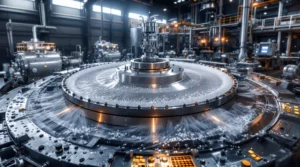
Ceramic disc filtration compares to a filter press by replacing brute mechanical pressure and disposable cloth media with microporous alumina membranes and continuous vacuum action. The proprietary CX-Series Ceramic Disc Vacuum (CDV) filter rotates large ceramic segments through a slurry basin, where capillary forces draw water through the microscopic pores of the membrane while completely blocking fine and ultrafine particles. This continuous operation entirely eliminates the need for filter cloth replacement, which is historically one of the largest cost drivers and safety hazards associated with mechanical solid-liquid separators. The microporous alumina structure ensures that filtrate quality consistently remains below 200 ppm suspended solids, making it exceptionally clean and ideal for direct reuse in sensitive mineral processing circuits, such as flotation or reverse osmosis feed water systems.
The ceramic membrane lifespan reaches up to 24 months per continuous campaign, providing sustained, uninterrupted filtration without the frequent, labor-intensive shutdowns required by a plate and frame filter. This technology is particularly advantageous for concentrate filtration and paste backfill applications, where precise moisture control and absolute operational continuity are critical to downstream performance and smelter contract compliance. In paste backfill plants, the drier filter cake produced by ceramic vacuum technology significantly reduces the demand for expensive cementitious binders, delivering massive ongoing cost savings for underground hard-rock mining operations. The modular design of advanced ceramic systems, available up to the CX12-204 with a 204-square-meter filtration area, allows operations to scale their dewatering capacity efficiently. Using economies of scale and phased plant expansion, mining companies deploy a continuous vacuum filtration footprint that is significantly smaller and more energy-efficient than a sprawling installation of multiple mechanical batch presses.
What Are the Operating Costs of a Filter Press vs. Advanced Alternatives?
The operating costs of a filter press are significantly higher than advanced vacuum alternatives due to immense energy consumption, constant media replacement, and labor-intensive maintenance routines. Conventional mechanical presses require high-pressure slurry feed pumps and massive hydraulic rams to generate the thousands of pounds of pressure needed to squeeze moisture from the cake, resulting in substantial and continuous energy demands. In stark contrast, advanced ceramic disc-vacuum filtration systems consume up to 85% lower energy than conventional vacuum and pressure filters by relying on natural capillary action and low-vacuum pumps. When evaluating the total cost of ownership over the life of a mine, metallurgical plant, or municipal water treatment facility, operators discover that transitioning to advanced alternatives yields 30-40% CapEx and OpEx savings compared to installing and maintaining a large-scale slurry dewatering press.
The complete elimination of cloth inventory, reduced wash water requirements, and lower flocculant consumption further widen the economic gap between legacy systems and modern ceramic technology. For brownfield filtration upgrades, retrofitting an existing bottlenecked circuit with ceramic technology resolves throughput limitations while drastically cutting the ongoing consumable and maintenance budget. Labor costs also drop significantly, as the automated, continuous nature of ceramic disc filters requires minimal operator intervention compared to the manual plate shifting, cloth washing, and cake dislodging inherent to batch presses. The high-quality, solids-free filtrate reduces the downstream workload on thickeners and clarifiers, preventing the hidden costs of recirculating fines back through the grinding and flotation circuits. Ultimately, the economic argument against traditional mechanical separation is compelling; the initial capital investment in advanced ceramic technology is rapidly offset by the compounding operational savings, reduced environmental liability, and superior process water recovery achieved from day one of commissioning. These operational advantages align perfectly with the sustainability frameworks promoted by organizations like the CIM Environmental and Social Responsibility Society .
Important Questions About Filter Press
What is the main difference between a filter press and a vacuum filter?
A filter press uses batch mechanical pressure to force liquid through cloth, while a vacuum filter uses continuous capillary action and negative pressure. The mechanical press requires the entire system to stop, open, and discharge the cake periodically, leading to fluctuating throughput and high mechanical wear on hydraulic components. In contrast, a continuous vacuum filter, such as a ceramic disc system, rotates constantly through the slurry, drawing water through a static membrane without the need for immense physical compression. This fundamental difference in operating physics means that vacuum systems integrate smoothly with continuous upstream mineral processing circuits, while mechanical presses require complex buffering tanks and batch-scheduling logistics to maintain plant flow.
How often does filter cloth need replacing in a mechanical press?
Filter cloth in a mechanical press requires replacement every few weeks to months depending on slurry abrasiveness, causing frequent maintenance downtime. In highly abrasive mining environments, such as iron ore or copper tailings processing, the woven fabrics degrade rapidly from the friction of sharp particles and the high-pressure squeezing action. Operations must maintain extensive inventories of spare cloths and employ dedicated maintenance crews to cut, install, and tension the new media. Every cloth change requires the press to be taken offline, the heavy plates to be separated, and the old cloth to be manually stripped and cleaned. This recurring maintenance not only drives up direct operating expenses but also reduces the overall availability and utilization rate of the dewatering circuit, negatively impacting the site’s total production capacity.
Can a filter press achieve filtrate quality below 200 ppm?
Standard mechanical presses rarely achieve filtrate quality below 200 ppm suspended solids without secondary polishing due to cloth blinding and particle bypass. As the filter cloth pores become clogged with fine particles, the resistance to flow increases, and the high pressure forces microscopic solids through the fabric or around the plate seals. This results in cloudy, solids-laden filtrate that cannot be directly reused in sensitive downstream processes, such as reverse osmosis water treatment or direct flotation feed, without passing through additional clarifiers or polishing filters. Advanced ceramic membrane technology, however, uses precisely engineered microporous alumina structures with pore sizes ranging from 0.75 to 3.0 microns. This absolute barrier guarantees that the recovered water consistently meets the strict sub-200 ppm clarity requirements necessary for immediate, unrestricted reuse in modern, water-constrained mining operations.
Why are mining companies replacing filter presses with ceramic disc filters?
Mining companies replace filter presses with ceramic disc filters to eliminate cloth costs, reduce energy consumption by 85%, and achieve continuous high-volume dewatering. The transition is driven by the urgent need to improve site water balance, lower the carbon footprint of the dewatering circuit, and ensure the geotechnical stability of dry stack tailings facilities. Ceramic disc filters provide a uniform, low-moisture cake that is ideal for conveyor transport and mechanical compaction, whereas the variable moisture from batch presses complicates dry stack engineering. The elimination of high-pressure hydraulic systems and heavy moving plates significantly improves site safety, reducing the risk of catastrophic equipment failures and minimizing operator exposure to hazardous maintenance tasks in the filtration plant.
Filter Press vs. Ceramic Disc Vacuum Filter
Comparing a traditional filter press to advanced ceramic disc vacuum technology reveals distinct differences in operational continuity, consumable requirements, and energy efficiency. Mining operations and EPC engineering firms must carefully weigh the historical familiarity of batch pressure systems against the long-term economic, environmental, and operational benefits of continuous capillary filtration. The choice of solid-liquid separation equipment fundamentally dictates the reliability of the site water balance and the stability of the tailings storage facility.
| Feature | Plate and Frame Filter Press | Ceramic Disc Vacuum Filter |
|---|---|---|
| Operation Mode | Batch processing with cyclical downtime | Continuous rotation for uninterrupted flow |
| Filtration Media | Woven/non-woven filter cloth | Microporous alumina ceramic membrane |
| Energy Consumption | High (hydraulic rams, high-pressure pumps) | Up to 85% lower than conventional methods |
| Filtrate Quality | >10,000 ppm suspended solids | 50-200 ppm suspended solids |
| Maintenance Downtime | Frequent (cloth replacement, cleaning) | Minimal (membrane lifespan up to 24 months) |
How CEC Mining Systems Upgrades Filtration
CEC Mining Systems specializes in replacing underperforming mechanical equipment with advanced solid-liquid separation technologies tailored specifically for the global mining and metallurgical industries. While a traditional filter press suffices for basic, low-volume applications, our CX-Series Ceramic Disc Vacuum Filter delivers measurable, data-backed advantages in tailings dry stacking, concentrate dewatering, and paste backfill circuits. We support mining operations from initial conceptual feasibility through full-cycle Engineering Studies, Turnkey and Integrated Plant Supply execution and long-term operational support.
Our dedicated Bench and Pilot Testing services at the CCMR laboratory in Kamloops, BC, provide the empirical, AI-assisted benchmarking data required to accurately size equipment, model site water balances, and de-risk your filtration investment before capital is committed. By choosing CECMS, operators gain a boutique technology partner dedicated to reducing freshwater consumption, minimizing tailings storage footprints, and driving 30-40% CapEx and OpEx savings over conventional mechanical separators. Our lean, digital supply chain and global network of in-country partners ensure that we deliver and support turn-key plants in remote, complex jurisdictions across the Americas, Africa, and Australia. We do not just supply equipment; we engineer comprehensive Water and Tailings Management solutions that align with the stringent ESG priorities of modern mining investors. Contact our multidisciplinary engineering team to evaluate how continuous ceramic disc technology optimizes your specific mineral processing flowsheet and secures your site’s water future.
How to Select the Right Filtration Technology in 4 Steps
Conduct bench-scale testwork on your slurry
Analyze the specific mineralogy, particle size distribution, and abrasiveness of your slurry through rigorous laboratory testing to establish baseline filterability, cake permeability, and accurate design criteria. Relying on generic assumptions rather than empirical data leads to severely undersized or inefficient equipment selections that fail to meet production targets during commissioning.
Define your water recovery and cake moisture targets
Determine the exact required filtrate clarity for direct process reuse and the maximum allowable cake moisture for dry stacking, paste backfill, or concentrate shipping specifications. Understanding these precise mass balance constraints ensures that the selected technology handles the specific rheological demands of your downstream material handling and water treatment circuits.
Evaluate total cost of ownership across technology options
Compare the capital expenditure, energy consumption, and ongoing consumable costs of batch mechanical presses versus continuous vacuum filtration systems over the entire life of the mine. Factoring in the hidden costs of maintenance downtime, cloth inventory, and secondary water polishing reveals the true economic advantage of advanced capillary filtration technologies.
Select a modular solution that supports future expansion
Choose a filtration technology with a scalable, modular design that allows for phased plant expansion and economies of scale as your production throughput increases over time. Modular systems prevent massive initial capital overexpenditure while ensuring that the dewatering circuit smoothly adapts to future ore body changes and production upgrades.
Wrapping Up
Selecting the right dewatering equipment is critical for modern mining sustainability, environmental compliance, and long-term profitability. While a filter press has historically dominated the industrial market, advanced ceramic disc vacuum technology offers vastly superior continuous performance, significantly lower energy consumption, and exceptional filtrate quality that mechanical systems simply cannot match. CEC Mining Systems delivers turn-key solid-liquid separation solutions that fundamentally improve tailings management, concentrate processing, and site water recovery. By replacing legacy batch equipment with continuous capillary filtration, mining operators secure their water balance, reduce their environmental liability, and achieve massive ongoing operational savings. Contact CEC Mining Systems today at +1 604 685 7823 or via our contact form to discuss upgrading your filtration circuit and securing a sustainable future for your mining operation.
Sources & Citations
- Filter Press Market Report. Strategic Market Research.
https://www.strategicmarketresearch.com/market-report/filter-press-market - Plate and Frame Filter Press Market. Future Market Insights.
https://www.futuremarketinsights.com/reports/plate-and-frame-filter-press-market