Concentrate dewatering is the process of removing water from mineral concentrates to meet moisture specifications for smelting, shipping, and downstream processing – learn which technologies deliver the best results for your operation.
Article Snapshot
Concentrate dewatering is the removal of water from mineral concentrate slurries to produce a filter cake or dried product that meets moisture specifications for smelter contracts, export shipment, or downstream processing. Ceramic disc vacuum filtration, pressure filtration, and centrifugation are the primary technologies used across copper, gold, and base metal operations globally.
Concentrate Dewatering in Context
- Filtration enables immediate reuse of 68% to 85% of process water in mining dewatering applications, as of 2017 (Centro de Tecnologia Mineral, 2017).[1]
- Centrifuge technology recovers more than 90% of process water in some mining applications, as of 2019 (University of Western Australia, 2019).[2]
- A decanter centrifuge achieves centrifugal separation of up to 29,430 m/s², equivalent to 3,000 times gravitational acceleration, as of 2019 (University of Western Australia, 2019).[2]
- Tailings water recovery of 75% was achieved in the El Soldado hydraulic dewatered stacking project, as of 2025 (WSP, 2025).[3]
What Is Concentrate Dewatering?
Concentrate dewatering is a critical unit operation in mineral processing that separates entrained water from flotation or leaching concentrates to produce a product suitable for transport, smelting, or further refining. Without effective dewatering, high residual moisture increases shipping costs, triggers smelter penalties, and creates handling problems during transport. CEC Mining Systems has delivered ceramic disc vacuum filtration solutions across copper, gold, and base metal concentrate circuits, helping operations meet strict moisture targets while reducing operating costs.
The concentrate dewatering circuit sits at the back end of a flotation or leaching plant, receiving a thickened slurry from the thickener underflow before the final filtration stage. The objective is to reduce moisture content in the filter cake to a level specified by the smelter or port authority – commonly between 6% and 10% moisture by weight for copper concentrates, though target values vary by commodity and contract. Achieving consistent moisture output requires equipment matched carefully to concentrate mineralogy, particle size distribution, and throughput rate.
Mineral concentrate dewatering serves a second function beyond product quality: water recovered during filtration is returned to the process circuit, reducing freshwater consumption and supporting site water balance. In water-constrained jurisdictions such as the Atacama Desert in Chile or arid regions of Western Australia, the volume of water recovered through concentrate filtration contributes meaningfully to overall site sustainability and regulatory compliance. The choice of dewatering technology therefore influences both operational costs and environmental performance simultaneously.
How Do Concentrate Dewatering Technologies Work?
Concentrate dewatering technologies work by applying vacuum pressure, mechanical compression, or centrifugal force to drive water through a filtration medium and away from solid mineral particles. Each mechanism produces a filter cake at a different moisture level, throughput rate, and capital cost, making technology selection a function of concentrate mineralogy, required moisture specification, and plant operating philosophy.
Ceramic Disc Vacuum Filtration
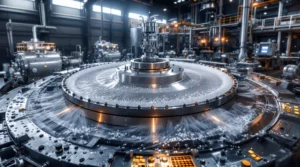
Ceramic disc vacuum filtration uses microporous alumina ceramic membranes mounted on rotating discs to draw concentrate slurry onto the membrane surface using vacuum and capillary pressure. As the disc rotates through the slurry basin, a filter cake builds on the membrane face; the disc then passes through a drying zone where additional vacuum removes residual moisture before the cake is discharged. The ceramic membrane produces filtrate with suspended solids between 50 and 200 ppm, significantly cleaner than conventional cloth-based vacuum filters, which commonly exceed 10,000 ppm. This filtrate quality means recovered process water is returned directly to the circuit without further clarification.
The CX-Series Ceramic Disc Vacuum Filter – proprietary ceramic membrane filtration technology for tailings dewatering, concentrate filtration, and paste backfill – delivers 30-40% CapEx/OpEx savings versus conventional technologies. Ceramic membrane pore sizes range from 0.75 to 3.0 microns, capturing fine and ultrafine concentrate particles that conventional vacuum filters pass. The absence of a filter cloth eliminates scheduled cloth change downtime, a significant source of unplanned production loss in conventional vacuum filter installations. Ceramic membrane campaigns run up to 24 months before replacement, supporting continuous uninterrupted concentrate filtration operations.
Pressure Filtration
Pressure filtration applies compressed air or mechanical force to a filter chamber containing concentrate slurry, driving liquid through a filter cloth under positive pressure rather than vacuum. Pressure filters – including plate-and-frame and membrane press configurations – achieve very low cake moisture, sometimes below 6%, making them the technology of choice for concentrates with tight smelter moisture specifications or for challenging mineralogies that respond poorly to vacuum alone. The trade-off is higher capital cost, a more complex mechanical arrangement, and a batch operating cycle that complicates integration with continuous flotation or thickening circuits.
Centrifuge Dewatering
Centrifuge concentrate dewatering applies centrifugal force to accelerate water separation from solid particles. Decanter centrifuges reach centrifugal separation of up to 29,430 m/s², equivalent to 3,000 times gravitational acceleration (University of Western Australia, 2019)[2], enabling rapid water removal from fine-grained concentrates. Centrifuge technology recovers more than 90% of process water in some mining applications (University of Western Australia, 2019)[2]. Centrifuges are mechanically intensive, require higher maintenance investment, and produce a wetter product than ceramic disc or pressure filtration for most concentrate mineralogies, limiting their standalone use in final product dewatering.
Water Recovery and Process Efficiency in Concentrate Dewatering
Water recovery is a central performance metric in concentrate dewatering, directly affecting site water balance, freshwater consumption, and environmental compliance across all major mining jurisdictions. Filtration that returns clean process water to the circuit reduces reliance on freshwater intake and lowers operating costs associated with water supply and treatment.
Research published in 2017 by Centro de Tecnologia Mineral found that filtration enables the immediate reuse of 68% to 85% of process water in mining applications (Centro de Tecnologia Mineral, 2017)[1]. This range reflects variability in concentrate mineralogy, feed solids content, and filter equipment selection, reinforcing the value of testwork to characterize filtration performance before final technology selection. The Bench and Pilot Testing service at CEC Mining Systems – giving you the data and confidence to power your project from the earliest stages – provides exactly this characterization, generating filterability data across different slurry conditions and mineralogies to inform technology selection and filter sizing.
In the El Soldado copper mine project in Chile, a hydraulic dewatered stacking approach achieved tailings water recovery of 75% as of 2025 (WSP, 2025)[3]. As WSP’s project team noted in 2025, “Hydraulic dewatered stacking lowers fresh water draw and/or desalination requirements, enhancing water stewardship in a water-scarce region.”[3] This principle applies equally to concentrate filtration circuits: every percentage point of moisture reduction in the filter cake represents water recovered and available for reuse, reducing net freshwater consumption on site.
Concentrate dewatering efficiency is also influenced by upstream thickening performance. A well-operated thickener delivering high underflow density to the filter reduces the volumetric load on the filtration circuit and improves filter cake formation rate, directly raising water recovery per unit of filter area. Water and Tailings Management solutions from CEC Mining Systems – practical, cost-effective strategies to support site mass and water balance – address this integration between thickening and filtration as part of a complete site water management strategy.
How to Select the Right Concentrate Dewatering Technology
Selecting the right concentrate dewatering technology requires matching equipment capabilities to concentrate mineralogy, required final moisture, throughput volume, and site operating constraints – no single technology is optimal for every application. The decision should be data-driven, beginning with bench-scale testwork on representative concentrate samples.
Particle size distribution is one of the most important factors governing technology selection. Fine and ultrafine concentrates – common in complex sulphide or refractory gold circuits – respond better to ceramic disc vacuum filtration, where small membrane pore sizes capture particles that pass through conventional cloth media. Coarser concentrates, such as those from some copper porphyry flotation circuits, are effectively dewatered by a broader range of technologies, giving the engineer more flexibility in optimizing for capital cost or moisture target.
Meeting Smelter Moisture Specifications
Smelter moisture specifications are contractually binding for most concentrate producers and define the minimum dewatering performance the circuit must achieve consistently. Copper concentrate smelters specify moisture in the range of 6% to 10% by weight, though requirements vary by smelter and tighten during wet seasons or when shipping by sea over long distances. Failing to meet moisture specifications results in financial penalties that erode project economics, making filter performance guarantees an important part of technology procurement.
Ceramic disc vacuum filtration consistently delivers cake moisture 1.0 to 4.0% lower than conventional vacuum filters at comparable throughput rates, providing a meaningful margin against smelter moisture thresholds. For concentrates where even lower moisture is required, integrating a MIR Steel Belt Dryer – continuous and efficient concentrate dehydration with zero dust generation or vibration downstream of the ceramic filter produces final product moisture below what filtration alone achieves, without dust generation or batch interruption.
Throughput scalability is a third selection criterion. Modular ceramic filter designs, including the CX12-204 at 204 m² of filtration area – the world’s largest ceramic filter – allow concentrate dewatering plants to scale capacity in discrete increments as mine production ramps up, avoiding the risk of over-investing in filtration capacity at project start. This modular approach also enables brownfield expansions without the plant layout disruption associated with replacing an entire conventional filter installation. Engineering Studies, Turnkey and Integrated Plant Supply from CEC Mining Systems – save time, reduce costs, and build greater efficiency through full-cycle project execution – supports technology selection and scale-up from concept through commissioning for concentrate filtration projects globally.
Your Most Common Questions
What moisture content can concentrate dewatering achieve?
Concentrate dewatering using ceramic disc vacuum filtration achieves filter cake moisture between 6% and 10% by weight for most mineral concentrates, with results depending on mineralogy and feed conditions. Ceramic disc vacuum filters consistently deliver cake moisture 1.0 to 4.0% lower than conventional vacuum filter technology operating at comparable throughput rates, providing a reliable buffer against smelter moisture penalty thresholds. For concentrate applications requiring moisture below what vacuum filtration alone achieves – such as certain specialty metal concentrates with tight smelter specifications – combining a ceramic disc filter with a downstream steel belt dryer provides a continuous, integrated drying circuit that reduces residual moisture to specification without dust generation. The achievable moisture level in any specific application depends on particle size distribution, mineralogy, feed solids content, and filter operating parameters, making bench-scale testwork on representative concentrate samples an important step before committing to a final equipment specification.
How does concentrate dewatering affect site water balance?
Concentrate dewatering improves site water balance by recovering process water from the concentrate slurry for reuse in the flotation or leaching circuit, reducing net freshwater consumption across the operation. Research published in 2017 by Centro de Tecnologia Mineral found that filtration enables the immediate reuse of 68% to 85% of process water in mining applications (Centro de Tecnologia Mineral, 2017)[1]. In water-constrained mining regions such as the Atacama Desert in northern Chile, the Peruvian Andes, or arid areas of Western Australia, the volume of water recovered through concentrate filtration contributes materially to meeting site water budgets and satisfying regulatory water-use conditions. Ceramic disc vacuum filtration produces filtrate with suspended solids below 200 ppm, allowing recovered process water to be returned directly to the circuit without additional clarification, simplifying the water management circuit and reducing infrastructure costs associated with water treatment and storage.
What is the difference between ceramic disc filtration and conventional vacuum filtration for concentrate dewatering?
Ceramic disc filtration differs from conventional vacuum filtration in filtration media, filtrate quality, operating cost, and maintenance requirements for concentrate dewatering applications. Conventional vacuum filters use woven filter cloth that requires regular replacement – on a schedule of days to weeks – due to cloth blinding, wear, and failure, generating planned and unplanned downtime in the concentrate filtration circuit. Ceramic disc filters use microporous alumina membrane segments with pore sizes between 0.75 and 3.0 microns and a service life up to 24 months per campaign, eliminating cloth change cycles and their associated production losses. Filtrate quality from ceramic membranes is 50 to 200 ppm suspended solids, compared to more than 10,000 ppm from conventional cloth-based vacuum filters, enabling direct water reuse without clarification. These combined advantages result in 30 to 40% lower capital and operating costs than conventional vacuum filter installations across comparable concentrate dewatering applications.
Does concentrate dewatering technology apply to tailings management as well?
Concentrate dewatering technology – particularly ceramic disc vacuum filtration – applies directly to tailings management through the same core separation mechanism, though tailings circuits operate at much higher throughput volumes and have different moisture targets than concentrate filtration. In tailings dry stacking applications, filtered tailings are dewatered to a moisture content that allows geotechnically stable stack construction without the need for a conventional tailings storage facility pond, eliminating the catastrophic failure risk associated with conventional wet tailings impoundments. Research from a University of Western Australia conference noted that “Dewatering would eliminate the need to construct any further TSFs, increase the water recovery and reduce tailings disposal costs over the life of the mine” (University of Western Australia)[4]. The same ceramic disc filter technology used in concentrate filtration is scaled and configured for tailings circuits, allowing a single technology platform to serve both concentrate dewatering and tailings management within the same mineral processing plant.
Comparing Concentrate Dewatering Technologies
The four primary concentrate dewatering technologies – ceramic disc vacuum filtration, conventional vacuum filtration, pressure filtration, and centrifuge dewatering – each offer distinct trade-offs in moisture achievement, capital cost, operating continuity, and filtrate quality. Choosing between them requires evaluating concentrate-specific testwork data against project financial constraints and smelter contractual requirements.
| Technology | Typical Cake Moisture | Filtrate Quality | Operating Mode | Relative CapEx/OpEx |
|---|---|---|---|---|
| Ceramic Disc Vacuum Filtration | 6-10% (commodity-dependent) | 50-200 ppm suspended solids | Continuous | 30-40% lower than conventional[2] |
| Conventional Vacuum Filtration (cloth) | 8-13% | >10,000 ppm suspended solids | Continuous (with cloth change downtime) | Baseline reference |
| Pressure Filtration | 4-8% | Moderate – cloth-dependent | Batch cycle | Higher CapEx; lower throughput per unit |
| Centrifuge Dewatering | 10-15% (slurry-dependent) | Variable – higher fines loss | Continuous | Higher maintenance intensity |
CEC Mining Systems: Ceramic Filtration for Concentrate Dewatering
CEC Mining Systems Corp. (CECMS) is a Canadian manufacturer specializing in ceramic disc vacuum filtration systems and turn-key solid-liquid separation project delivery, with over 650 systems installed across eight countries since 2011. The company’s CX-Series Ceramic Disc Vacuum Filter is the core technology for concentrate dewatering applications, offering filtrate quality below 200 ppm and filter cake moisture 1.0 to 4.0% drier than conventional vacuum filters – directly supporting smelter contract compliance and site water reuse in copper, gold, and base metal concentrate circuits.
CECMS delivers concentrate dewatering solutions across the full project lifecycle. Bench-scale and pilot-plant testwork through the Canadian Critical Minerals Research (CCMR) subsidiary laboratory in Kamloops, BC characterizes concentrate filterability and generates validated design inputs for filter sizing and water balance modelling. AI-assisted benchmarking, drawing on over a decade of operational and laboratory data, accelerates project feasibility timelines and reduces technical risk from the earliest stages of concentrate plant design. From testwork, the project moves through conceptual engineering, FEED, procurement, construction, and commissioning under EPC, EPCM, or BOOT delivery structures tailored to the client’s contracting preference.
For operating concentrate filtration plants, CECMS provides Brownfield Audits and Optimization services – manage risks before they emerge and identify opportunities to improve filtration performance, targeting throughput bottlenecks, moisture consistency problems, and equipment reliability challenges in existing filter circuits. Where concentrate moisture specifications require drying beyond what filtration achieves, the MIR Steel Belt Dryer integrates downstream of the ceramic filter as a continuous, zero-dust drying stage.
Mining operations and EPC engineering firms engaged in concentrate plant design or upgrade projects are encouraged to contact CEC Mining Systems at info@cecminingsystems.com or +1 604 685 7823 to discuss testwork requirements, equipment selection, and project delivery options. You can also use the Find Your Solution interactive guide to match your solid-liquid separation challenge to the right CEC Mining Systems technology or service.
How to Implement Concentrate Dewatering in 5 Steps
Step 1: Characterize Your Concentrate Through Bench-Scale Testwork
Before selecting any concentrate dewatering technology, commission bench-scale filtration tests on representative concentrate samples from your flotation or leaching circuit. Testwork should measure filterability index, filter cake formation rate, achievable cake moisture, and filtrate suspended solids across a range of feed solids concentrations and vacuum levels. This data is the foundation for all subsequent filter sizing and technology selection decisions and eliminates the risk of specifying equipment that cannot meet smelter moisture requirements under real operating conditions.
Step 2: Define Your Moisture Target and Throughput Requirements
Confirm the contractual moisture specification from your smelter or offtake agreement before finalizing technology selection, and add a practical operating margin of at least 1 to 2 percentage points to account for feed variability during wet seasons or when concentrate mineralogy changes. Establish peak and average throughput requirements based on mine plan production rates over the project life, including any planned production ramp-up that may require additional filter capacity in future phases.
Step 3: Select and Size the Filtration Technology
Use bench-scale testwork results and throughput requirements to size the filtration circuit, selecting technology based on achievable cake moisture, filtrate quality, capital cost, and operating continuity. Ceramic disc vacuum filtration is the preferred technology for concentrate circuits requiring continuous operation, clean filtrate for water reuse, and lower total cost of ownership versus conventional cloth filters. Where moisture targets are below what vacuum filtration achieves alone, evaluate integrating a downstream drying stage using testwork data from the drying equipment supplier.
Step 4: Optimize Upstream Thickening for Filter Feed Conditions
Concentrate dewatering filter performance depends heavily on the quality of the thickener underflow delivered to the filter feed tank. Target a thickener underflow solids content that maximizes filter throughput per unit of membrane area without causing excessive rheological challenges in slurry piping and distribution. Flocculant mixing and addition systems should be optimized for the concentrate mineralogy and thickener geometry to achieve consistent underflow density and minimize fines carryover into the filter feed, which blinds ceramic membranes and reduces throughput.
Step 5: Commission, Monitor, and Optimize Filter Performance
During commissioning, establish baseline filter performance data including cake moisture, filtrate quality, throughput rate, and energy consumption under design feed conditions. Set up remote monitoring and predictive analytics to track membrane condition, vacuum performance, and cake discharge consistency on a continuous basis, enabling proactive intervention before performance degrades to the point of smelter specification non-compliance. Schedule periodic performance reviews against original design targets, using operational data to identify opportunities for process optimization and to plan membrane replacement campaigns before performance is materially affected.
The Bottom Line
Concentrate dewatering is a technically demanding and commercially critical step in mineral processing, directly determining whether your operation meets smelter moisture contracts, manages water responsibly, and controls filtration operating costs over the mine life. Ceramic disc vacuum filtration has established a clear performance advantage in continuous concentrate circuits – delivering cleaner filtrate, lower cake moisture, and significantly reduced capital and operating costs compared to conventional vacuum filter technology. For operations where moisture targets push below what filtration alone achieves, integrating ceramic filtration with downstream drying provides a complete, continuous dewatering solution.
CEC Mining Systems brings over a decade of ceramic disc filtration expertise, in-house testwork capability through CCMR, and full-cycle EPC project delivery to concentrate dewatering projects across the Americas, Africa, Australia, and beyond. Contact the team at info@cecminingsystems.com or call +1 604 685 7823 to discuss your concentrate filtration requirements, arrange bench-scale testwork, or request a project feasibility consultation.
Sources & Citations
- Water in Mining – Challenges for Reuse. Centro de Tecnologia Mineral, 2017.
https://www.cetem.gov.br/antigo/images/congressos/2017/CAC0008-00-17.pdf - Dewatering tailings: rapid water recovery by use of centrifuges. University of Western Australia, 2019.
https://papers.acg.uwa.edu.au/p/1910_26_klug/ - Innovative Tailings Solutions at El Soldado’s Copper Mine. WSP, 2025.
https://www.wsp.com/en-us/projects/el-soldado-and-hds - Proceedings Tailings and Mine Waste 2015. University of British Columbia.
https://open.library.ubc.ca/media/stream/pdf/59368/1.0314232/5