Discover how ceramic membrane filtration delivers superior solid-liquid separation, exceptional water recovery, and strong performance for demanding industrial mining applications.
Quick Summary
Ceramic membrane filtration is a solid-liquid separation process using microporous ceramic membranes to filter suspended solids from industrial effluents. CEC Mining Systems uses this technology to achieve high water recovery and strong dewatering for mining applications.
Ceramic Membrane Filtration in Context
- A mullite-based ceramic membrane achieved a permeate flux of 534 liters per square meter per hour at 2 bar pressure (Royal Society of Chemistry, 2024) [1] .
- Pilot-scale ceramic membrane plate filtration reduced chemical oxygen demand by 85.71 percent in semiconductor wastewater (Chemical Engineering Journal, 2024) [2] .
- Modified ceramic membranes showed an oil rejection rate of 98.2 percent under optimized operating conditions (Ceramics-Silikáty, 2024) [3] .
Introduction
Ceramic membrane filtration represents an important advancement in solid-liquid separation technology, offering unmatched durability and precision for industrial water treatment and mineral processing. Unlike traditional polymeric alternatives, ceramic membrane filters provide exceptional chemical stability and thermal resistance, making them ideal for harsh operating environments where conventional media rapidly degrade. As global mining operations face increasing regulatory pressure and severe water scarcity, the demand for reliable, high-efficiency filtration systems has never been higher.
CEC Mining Systems uses advanced ceramic disc filtration technology to deliver turn-key tailings dewatering and water recovery solutions that address these exact challenges. By integrating microporous ceramic membranes into our solid-liquid separation circuits, we help mining and metallurgical operations maximize filtrate quality while minimizing operational downtime. This guide explores the mechanics, applications, and strategic advantages of ceramic membrane filtration, detailing how this technology transforms site water balance management and supports sustainable tailings dry stacking initiatives across the globe.
What Is Ceramic Membrane Filtration and How Does It Work?
Ceramic membrane filtration is a pressure-driven or vacuum-driven solid-liquid separation process that uses microporous ceramic membranes to separate suspended solids, oils, and fine particles from liquid streams. The core mechanism relies on the precise pore size of the ceramic substrate, which acts as a physical barrier while allowing the liquid phase-known as the permeate or filtrate-to pass through. These membranes are manufactured from inorganic materials such as alumina, titania, zirconia, or mullite, which are sintered at high temperatures to create a highly durable, asymmetric structure with a porous support layer and a thin, selective top layer.
In industrial applications, the feed slurry or wastewater is introduced to the membrane surface under specific hydraulic conditions. The separation process operates in either cross-flow or dead-end filtration modes. Cross-flow velocity is particularly important in managing membrane fouling, as the tangential flow of the feed stream continuously sweeps away accumulated particles, reducing the formation of a thick filter cake and maintaining a high permeate flux. Recent material science advancements have significantly improved the hydrophilic properties of these membranes, further enhancing their resistance to organic fouling and improving overall throughput in demanding mineral processing circuits.
The structural integrity of microporous ceramic membranes allows them to withstand aggressive chemical cleaning protocols and extreme temperature fluctuations that would destroy polymeric equivalents. According to Chen Ming, a researcher at Delft University of Technology, “Ceramic membrane filtration for oily wastewater treatment offers strong chemical and thermal stability, making it particularly suitable for harsh industrial effluents where polymeric membranes often fail” (Delft University of Technology, 2024) [4] . This inherent resilience ensures that the membrane modules maintain their precise pore size distribution over extended service life.
Why Do Mining Operations Rely on Ceramic Membrane Filters?
Mining operations rely on ceramic membrane filters to achieve water recovery targets and secure environmental compliance. Modern mining and mineral processing facilities generate massive volumes of wastewater and tailings slurry, which must be processed to recover water for reuse while minimizing the environmental footprint of tailings storage facilities (TSF).
The primary driver for adopting ceramic membrane filtration in mining is the ability to produce high-quality water recovery and minimize the environmental impact of mining operations. Modern mining and mineral processing facilities generate massive volumes of wastewater and tailings slurry, which must be processed to recover valuable process water for reuse while minimizing the environmental footprint of tailings storage facilities.
What Are the Operational Benefits of Ceramic Ultrafiltration Membranes?
The operational benefits of ceramic ultrafiltration membranes center on their exceptional filtrate quality, thermal resistance, and reduced maintenance downtime. These systems deliver consistent filtrate quality and reduce the need for frequent media replacements.
How Do You Maintain Microporous Ceramic Membranes in Harsh Environments?
Maintaining microporous ceramic membranes in harsh environments requires a proactive approach to fouling management, routine chemical cleaning, and careful monitoring of transmembrane pressure. Because ceramic materials are highly resistant to chemical degradation, operators can use aggressive cleaning agents, such as strong acids, bases, and oxidants, to dissolve stubborn organic and inorganic foulants without damaging the membrane structure. This chemical stability is a significant advantage over polymeric membranes, which often degrade when exposed to harsh cleaning protocols.
Physical cleaning methods, such as backwashing and air sparging, are also important components of a comprehensive maintenance strategy. Backwashing involves reversing the flow of the permeate to dislodge particles trapped within the membrane pores, while air sparging introduces gas bubbles to create turbulence and shear forces that sweep the membrane surface. Implementing automated cleaning cycles based on real-time pressure and flux data ensures that the system operates within optimal parameters and prevents irreversible fouling.
Regular inspection of the membrane modules and sealing components is necessary to identify any mechanical wear or structural compromises on the membrane surface. This proactive approach to maintenance ensures that the ceramic membrane filtration systems remain highly resistant to chemical degradation, and operators can use aggressive cleaning agents, such as strong acids and oxidants, to dissolve stubborn organic and inorganic foulants without damaging the membrane structure. This chemical stability is a significant advantage over polymeric membranes, which often degrade when exposed to harsh cleaning protocols.
Ceramic membrane maintenance extends the lifespan of the system and ensures consistent filtrate quality. As Graeme Pearce, an independent membrane technology consultant, observes, “Advanced ceramic ultrafiltration membranes are increasingly seen as a solution to emerging critical water challenges, combining long service life with consistent filtrate quality in difficult applications” (Nanostone, 2024) [5] . This long service life translates directly into lower total cost of ownership and improved operational reliability.
Questions from Our Readers
What is the typical lifespan of ceramic membrane filtration systems?
Ceramic membrane filtration systems last between five and ten years, significantly outperforming polymeric alternatives that require replacement every two to three years. The inorganic materials used in ceramic membranes resist chemical degradation, ensuring long-term consistent performance in harsh industrial environments.
Can ceramic membrane filtration handle high concentrations of suspended solids?
Ceramic membrane filtration is highly effective at handling high concentrations of suspended solids due to the mechanical strength of the ceramic materials allows them to withstand high solids loading without structural failure. Cross-flow filtration velocity and routine backwashing protocols effectively manage the accumulation of a filter cake, ensuring stable operation even in demanding mineral processing and tailings dewatering applications.
How does ceramic membrane filtration improve water recovery rates?
Ceramic membrane filtration improves water recovery rates by producing a high-quality filtrate with very low suspended solids, allowing the recovered water to be directly reused in sensitive process circuits. The precise pore size ensures that the filtrate is free of fine particulates and contaminants. This high-quality water recovery reduces the demand for freshwater sources and improves the sustainability of the operation.
What is the difference between ceramic microfiltration and ultrafiltration?
The primary difference between ceramic microfiltration and ultrafiltration lies in their respective pore sizes and the size of the particles they remove. Microfiltration membranes have pore sizes ranging from 0.1 to 10 microns, removing larger suspended solids and bacteria. Ceramic ultrafiltration membranes feature smaller pore sizes between 0.01 and 0.1 microns, which enables the removal of macromolecules, viruses, and finer colloids, proteins, and proteins.
Comparing Solid-Liquid Separation Technologies
Selecting the appropriate solid-liquid separation technology is important for optimizing process efficiency, minimizing operational costs, and ensuring long-term reliability. The following table compares ceramic membrane filtration against traditional filtration methods to highlight the specific advantages of ceramic systems in mineral processing.
TechnologyFiltrate QualityChemical and Thermal ResistanceMaintenance and Operational CostsCapital Expenditure (CapEx)Operational Expenditure (OpEx)Ceramic Membrane FiltrationExceptional (<200 ppm suspended solids)ExceptionalLow (infrequent media replacement)Moderate to HighLow (lower energy and media replacement)Conventional Cloth Vacuum FiltersPoor (often >10,000 ppm suspended solids)LowHigh (frequent cloth changes required)Low to ModerateHigh (frequent cloth replacement and labor)HighLow to ModerateLow to ModerateModerate (chemical and operational costs)
Ceramic membrane filtration consistently outperforms conventional cloth filters in filtrate quality and operational stability. While the initial capital expenditure for ceramic systems can be higher, the significant reduction in operational costs, media replacement, and maintenance downtime results in a highly favorable total cost of ownership over the lifespan of the installation. Thickeners and clarifiers serve a different primary function and are used as upstream concentration steps rather than final polishing filtration.
How CEC Mining Systems Delivers Ceramic Membrane Filtration Solutions
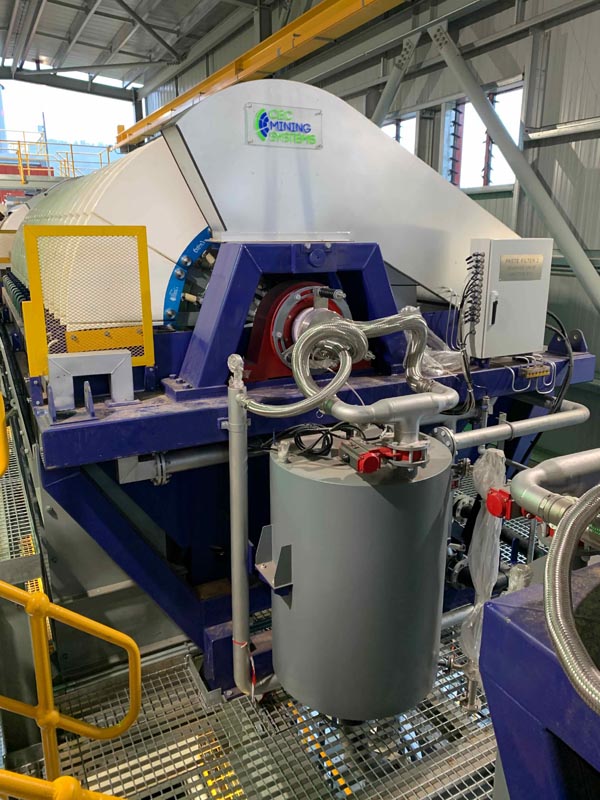
CEC Mining Systems delivers comprehensive ceramic membrane filtration solutions tailored to the rigorous demands of the global mining and metallurgical industries. Our flagship CX-Series Ceramic Disc Vacuum Filter uses proprietary microporous alumina ceramic membranes to achieve superior solid-liquid separation, delivering filtrate quality below 200 ppm suspended solids and significantly lower cake moisture than conventional technologies. This advanced ceramic disc filtration approach ensures maximum water recovery and supports efficient tailings dry stacking operations.
Our commitment to project excellence extends beyond equipment supply. We provide full-cycle Engineering Studies, Turnkey and Integrated Plant Supply , managing every phase from conceptual design and feasibility studies through procurement, construction, and commissioning. By using our in-house Bench and Pilot Testing capabilities at our CCMR laboratory in Kamloops, British Columbia, we de-risk projects early by generating precise filterability data and validating design parameters before full-scale deployment.
Furthermore, our integrated approach to Water and Tailings Management ensures that our filtration systems are smoothly incorporated into the broader site mass and water balance strategy. Whether addressing water scarcity in arid regions like the Atacama Desert or optimizing paste backfill circuits in underground hard-rock mines, CEC Mining Systems provides the technical leadership and turn-key execution required to deliver sustainable, cost-effective solid-liquid separation outcomes.
Practical Tips for Ceramic Membrane Filtration Operations
Optimizing the performance of ceramic membrane filtration systems requires a strategic approach to feed preparation, operational monitoring, and proactive maintenance. Implementing the following best practices will ensure sustained high permeate flux, minimize membrane fouling, and extend the operational lifespan of your solid-liquid separation equipment.
- Optimize Feed Pre-Treatment: Incorporate upstream screening and thickening processes to remove oversized debris and manage the solids loading rate. Effective pre-treatment prevents mechanical damage to the ceramic surface and reduces the frequency of aggressive chemical cleaning cycles, thereby preserving the integrity of the microporous structure.
- Implement Automated Backwashing Protocols: Use automated, frequency-based backwashing routines to dislodge particulate matter trapped within the membrane pores. Adjusting the backwash duration and frequency based on real-time transmembrane pressure data prevents the consolidation of the filter cake and maintains consistent hydraulic permeability throughout the filtration campaign.
- Monitor Cross-Flow Velocity: Maintain an optimal cross-flow velocity across the membrane surface to generate sufficient shear force. This tangential flow continuously sweeps away accumulating particles, mitigating concentration polarization and reducing the rate of cake formation, which is important for sustaining high throughput in demanding mineral processing applications.
- Execute Scheduled Chemical Cleaning: Develop a rigorous chemical cleaning schedule using compatible acids, bases, or oxidants to dissolve irreversible organic and inorganic foulants. Because ceramic membranes exhibit exceptional chemical stability, operators can use stronger cleaning agents than those permitted for polymeric systems, ensuring complete restoration of the membrane’s original permeability.
By adhering to these operational guidelines, mining and industrial facilities can maximize the return on investment in ceramic membrane filtration technology, ensuring reliable water recovery and consistent filtrate quality across varying feed conditions.
Before You Go
Ceramic membrane filtration provides a strong, highly efficient solution for the most demanding solid-liquid separation challenges in the mining and industrial sectors. By delivering exceptional filtrate quality, unmatched chemical stability, and significant reductions in operational costs, this technology is important for modern water recovery and tailings management strategies. CEC Mining Systems is ready to help you integrate advanced ceramic disc filtration into your operations, ensuring sustainable performance and long-term reliability. Contact our technical team today to discuss your specific filtration requirements and discover how our turn-key solutions can optimize your site’s water balance.
Useful Resources
- A mullite-based ceramic membrane designed for oily water treatment. Royal Society of Chemistry.
https://pubs.rsc.org/en/content/articlehtml/2024/ra/d4ra05193a - Newnovative ceramic membrane plate filtration system for sustainable wastewater treatment. Chemical Engineering Journal.
https://nchr.elsevierpure.com/en/publications/innovative-ceramic-membrane-plate-filtration-system-for-sustainab/ - Advances in the application of modified ceramic membranes in oily wastewater treatment. Ceramics-Silikáty.
https://www2.irsm.cas.cz/materialy/cs_content/2024_doi/Lin_CS_2024_0047.pdf - Ceramic membrane filtration for oily wastewater treatment: Basics, membrane fouling and fouling control. Delft University of Technology.
https://pure.tudelft.nl/ws/portalfiles/portal/201809945/1-s2.0-S0011916424004387-main.pdf - Exclusive interview with Preetha Nair on advanced ceramic ultrafiltration membranes. Nanostone.
https://nanostone.com/news-and-events/exclusive-interview-by-graeme-pearce-with-preetha-nair-nanostones-managing-director-south-east-asia-the-middle-east