Learn how a ceramic membrane filter works in mining, from tailings dry stacking to concentrate dewatering, with performance data, comparisons, and buying tips.
Quick Summary
A ceramic membrane filter is a solid-liquid separation device that uses a rigid, microporous ceramic plate, most commonly alumina, in place of filter cloth. Vacuum and capillary action pull liquid through fine pores while solids form a cake on the surface. The result is clear filtrate and drier cake for mining tailings, concentrate, and paste backfill circuits.
Ceramic membrane filter in Context
- Ceramic membranes removed more than 99% of total suspended solids from mining-discharge water in a 2025 peer-reviewed study (MDPI, 2025)[1].
- Ceramic membranes achieved heavy-metal rejection rates between 55% and 67% in a 2025 review of membrane innovations for mine effluent (University of Pretoria, 2025)[2].
- Ceramic membranes made from mining wastes delivered permeate fluxes of 177 to 228 liters per hour per square meter at a transmembrane pressure of 2 bar in a 2026 study (Semantic Scholar, 2026)[3].
- Ceramic membranes with smaller pore sizes removed 90% to 96% of turbidity from a water-and-clay suspension in a 2026 study of mining-waste membranes (Semantic Scholar, 2026)[3].
Introduction
A ceramic membrane filter lets a mine recover clean water from slurry while producing filter cake dry enough to stack, mix into paste, or ship to a smelter. At CEC Mining Systems, we design and manufacture ceramic disc vacuum filtration systems for tailings dewatering, concentrate filtration, and paste backfill. On nearly every project, we see the same pressures: tighter rules on tailings storage, shrinking freshwater allowances, and operating budgets strained by cloth replacement and unplanned downtime.
Tailings and water pressures are sharpest in places like Chile’s Atacama region and the Peruvian Andes, where water scarcity pushes operators toward filtered tailings and dry stacking. Conventional cloth filters can do the job, but blinded media, cloudy filtrate, and frequent media changes add cost over the life of a plant. Ceramic filtration replaces the cloth with a rigid, microporous plate, and that single change affects energy use, water quality, and maintenance across the whole circuit.
This guide covers what the technology is, how it works, what recent research says about its performance, and where it earns its place in a flowsheet. You will also find answers to common questions, a comparison with other dewatering methods, and practical tips for your next project.
What Is a Ceramic Membrane Filter?
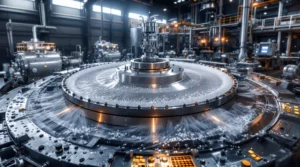
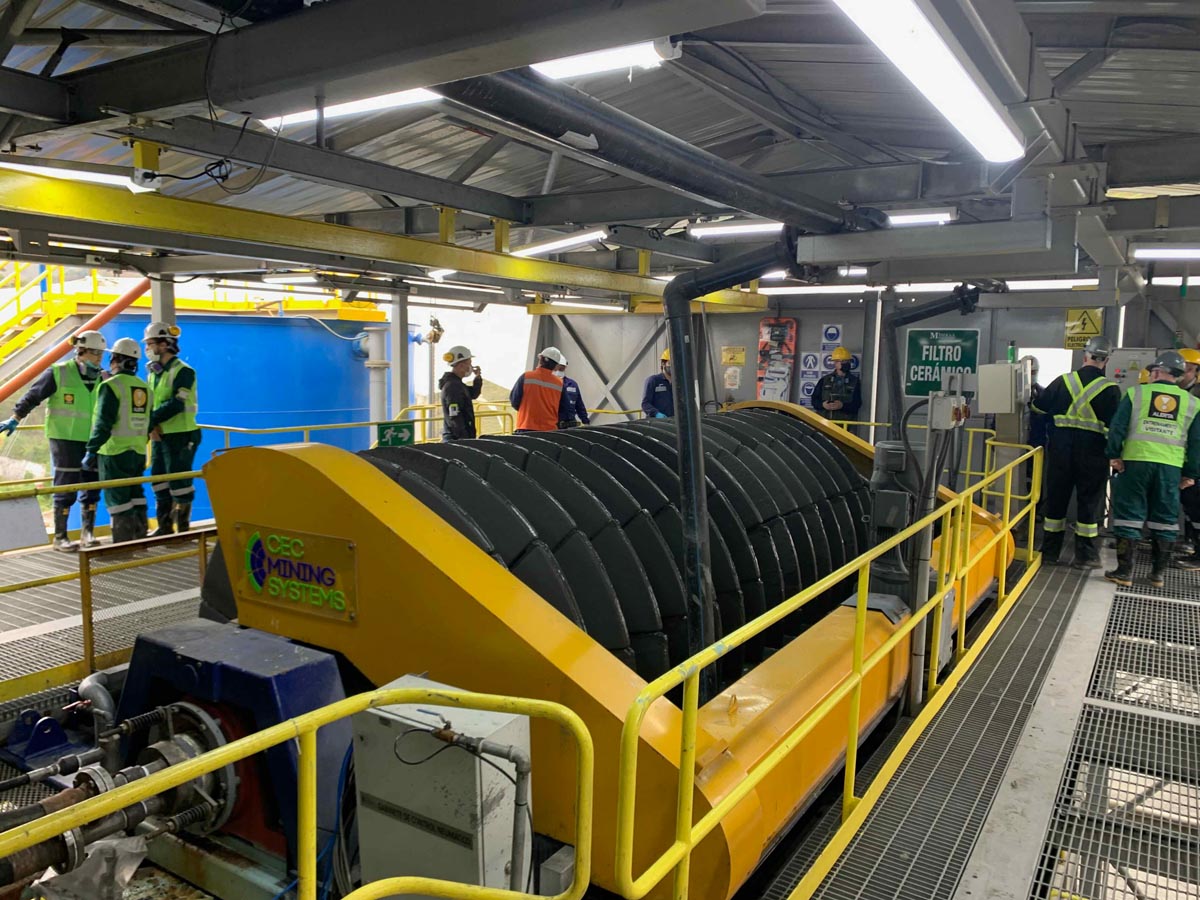
A ceramic membrane filter is a solid-liquid separation unit that uses sintered, microporous ceramic plates instead of woven filter cloth to capture solids and pass clear liquid. In mining, the most common format is the ceramic disc vacuum filter, where flat ceramic segments are mounted around rotating discs that dip into a slurry basin.
Each ceramic segment is a thin, hollow plate. Its outer surface carries a fine membrane layer, and its interior contains channels connected to a vacuum system. When the plate is submerged, liquid moves through the membrane into those channels and leaves as filtrate, while particles build up on the outside as filter cake.
How a ceramic membrane filter differs from filter cloth
A ceramic plate is rigid and does not stretch, wrinkle, or tear the way cloth does. Filter cloth relies partly on the cake itself to trap fine particles, so the start of every cycle sends fines into the filtrate. A ceramic membrane has a controlled pore structure from the first second, which means ultrafine particles are captured immediately and the filtrate stays clear throughout the cycle.
Filter cloth also blinds over time as particles lodge in the weave, and replacing it means stopping the filter. Ceramic plates are cleaned in place through backflushing and periodic chemical or ultrasonic cleaning, so the filter keeps running through long campaigns between plate changes.
Why the material matters
Most industrial ceramic plates are made from alumina, a hard, chemically stable oxide that tolerates abrasive slurries and the acids used for cleaning. Alumina is also hydrophilic. Its fine pores fill with water and hold it by capillary force, so air cannot easily pass through a wet plate. That property explains why ceramic vacuum filters need much smaller vacuum pumps than cloth filters: the pump moves filtrate, not large volumes of air leaking through the cake and media.
Our CX-Series filters use microporous alumina ceramic membranes selected for this combination of hardness, chemical resistance, and capillary behavior. The CX-Series is built for continuous duty in tailings, concentrate, and paste backfill circuits, where every hour of downtime carries a real cost.
How Does Ceramic Membrane Filtration Work in Mining?
Ceramic membrane filtration works by rotating ceramic plates through slurry while vacuum and capillary suction draw water through the pores, leaving a layer of solids on each plate. Every rotation of the disc completes one filtration cycle, and the cycle repeats continuously as long as feed is available.
The stages of a filtration cycle
Cake formation begins when a plate enters the slurry basin. Vacuum pulls liquid through the membrane, and solids collect on the surface. Cake drying follows as the plate rises out of the basin, with vacuum still drawing residual moisture from the cake. At the discharge point, scraper blades set just off the plate surface remove the cake without damaging the membrane. Regeneration closes the cycle: filtrate is backflushed through the plate to clear the pores before it re-enters the slurry.
Operators tune cake moisture and throughput by adjusting disc speed, slurry level, and vacuum. Slower rotation gives a longer drying time and drier cake, while faster rotation raises capacity at the cost of some moisture.
Why ceramic filtration uses less energy
Ceramic vacuum filters use less energy because capillary forces keep the wet pores sealed against air. On a cloth disc filter, air rushes through the cake once it starts to dry, and the vacuum pump must handle that airflow. On a ceramic disc filter, the pump mainly handles liquid and a small volume of gas, so installed vacuum capacity and power draw drop sharply.
What happens to the water
Filtrate from a ceramic membrane filter is clear enough to return directly to the process water circuit in most applications. That clarity reduces the fines load on clarifiers and thickeners and cuts treatment needs before water goes back to grinding or flotation. Thickener performance upstream still matters, because a well-flocculated underflow at stable density gives the filter consistent feed and predictable cake. Our work on Water and Tailings Management – practical, new, cost-effective strategies to support site mass and water balance treats the thickener, flocculant system, and filter as one connected circuit rather than separate purchases.
What Does Research Say About Ceramic Membrane Performance?
Recent peer-reviewed research shows that ceramic membranes remove almost all suspended solids from mine water, while removal of dissolved metals depends heavily on water chemistry and pretreatment. These studies focus on membrane modules for water treatment rather than full-scale disc filters, but they describe the same material behavior that makes ceramic plates effective in mineral processing.
Suspended solids and metals
A 2025 peer-reviewed study of ceramic membranes for mining-discharge treatment found that both tested membranes removed more than 99% of total suspended solids from the treated water (MDPI, 2025)[1]. The same 2025 study reported effluent iron concentrations below 0.03 mg/L (MDPI, 2025)[1] and effluent manganese concentrations below 0.07 mg/L after ceramic-membrane treatment (MDPI, 2025)[1].
Dissolved heavy metals are a harder target for ceramic membranes. A 2025 review of membrane innovations for mine effluent reported that ceramic membranes achieved heavy-metal rejection rates between 55% and 67% in the reviewed application (University of Pretoria, 2025)[2]. For a mine planning water discharge, that gap matters: a ceramic membrane filter excels at particle removal, but dissolved species need chemical precipitation or a tighter membrane stage downstream.
Flux, permeability, and strength
A 2026 study of ceramic membranes made from mining wastes reported permeate fluxes ranging from 177 to 228 liters per hour per square meter at a transmembrane pressure of 2 bar (Semantic Scholar, 2026)[3]. The same 2026 work measured membrane permeabilities ranging from 99 to 130 liters per hour per square meter per bar (Semantic Scholar, 2026)[3].
The 2026 researchers also found that membranes with smaller pore sizes removed 90% to 96% of turbidity from a water-and-clay suspension containing micrometer-scale clay particles (Semantic Scholar, 2026)[3]. Their membranes had pore-size distributions ranging from 3 to 180 micrometers and flexural strengths exceeding 14 MPa (Semantic Scholar, 2026)[3]. Mechanical strength matters in the field because plates must survive vacuum cycling, backflushing, and scraper contact over long campaigns.
Ceramic membrane research from 2025 and 2026 points to a clear conclusion: ceramic membranes separate particles from water reliably, and pore size controls clarity. Plant-scale results still depend on your ore, so site-specific testwork remains the only dependable basis for filter sizing.
Where Do Ceramic Disc Filters Deliver the Most Value?
Ceramic disc filters deliver the most value in circuits that need clear filtrate, low cake moisture, and continuous operation, which in mining means tailings dry stacking, paste backfill, and concentrate dewatering. A ceramic membrane filter performs best on vacuum-filterable slurries with consistent feed. Very clay-rich or extremely fine tailings are better suited to pressure filtration, and we tell clients so when testwork shows it.
Tailings dry stacking
Filtered tailings replace a conventional slurry impoundment with a compacted stack, which cuts water losses and lowers the long-term risk tied to tailings dams. On a greenfield project in a water-constrained Latin American jurisdiction, we tested the tailings at our laboratory in Kamloops, BC, then engineered, supplied, and commissioned a CX-Series plant under an EPC contract. The plant delivered clear filtrate and a cake moisture suited to efficient stack construction.
Paste backfill
Underground hard-rock mines in Ontario, Quebec, and British Columbia depend on paste backfill, and filtration is the upstream step that sets paste quality. Lower cake moisture reduces the binder needed to reach target strength. At one underground operation, our ceramic filter system fed the paste plant continuously and reduced cement consumption, a saving that compounds over the life of the mine.
Concentrate filtration
Concentrate producers in Peru, Chile, and Queensland face strict moisture limits for shipping and smelter contracts. At an operating copper mine struggling with cloth failures, a brownfield audit identified the filtration circuit as the main bottleneck. Retrofitting with CX-Series ceramic disc filters cut filter-related operating costs, removed scheduled cloth-change downtime, and made concentrate moisture more consistent. Where moisture must go below what filtration alone achieves, the MIR Steel Belt Dryer can follow the filter.
Water treatment beyond mining
Ceramic membrane filtration also suits municipal and industrial water treatment where fine particles must be removed. A 2026 study that produced ceramic membranes from mining wastes and clay-based materials shows researchers are exploring mine residues as raw material for the membranes that treat water (Semantic Scholar, 2026)[3].
What People Are Asking
Is a ceramic membrane filter better than a cloth filter for tailings?
For most vacuum-filterable tailings, a ceramic membrane filter outperforms cloth by delivering clearer filtrate, drier cake, and lower energy use with less downtime. Cloth filters pass fines at the start of each cycle and blind over time, which clouds the recovered water and forces regular shutdowns for media changes. Ceramic plates capture ultrafine particles from the first second and are cleaned in place. Cloth-based equipment still has a role: horizontal belt filters handle applications that need heavy cake washing, and pressure filters suit very clay-rich tailings that resist vacuum dewatering. The right choice depends on particle size, mineralogy, and target moisture, so we recommend bench-scale testing before committing to any technology.
Why does a ceramic vacuum filter use less energy than a cloth filter?
A ceramic vacuum filter uses less energy because water held in its fine pores by capillary force blocks air, so the pump works far less. On a cloth vacuum filter, air flows freely through the cake and media once drying begins, and large vacuum pumps must run continuously to keep pressure down. A wet alumina ceramic plate behaves differently. Its pores stay filled with liquid, so the vacuum system mostly moves filtrate rather than air. Smaller pumps mean lower power draw, lower installed cost, and less heat and noise in the filter building. For remote sites that generate their own power, that reduction also cuts fuel use and emissions.
Can ceramic membranes treat mine water discharge?
Yes, ceramic membranes treat mine water discharge effectively for suspended solids, removing more than 99% in a 2025 study, though dissolved metals need extra steps. That 2025 study of mining-discharge treatment also reported effluent iron below 0.03 mg/L and manganese below 0.07 mg/L after ceramic-membrane treatment (MDPI, 2025)[1]. Dissolved heavy metals are harder to remove, and a 2025 review reported ceramic-membrane rejection rates between 55% and 67% in the reviewed application (University of Pretoria, 2025)[2]. Mines that must meet strict discharge limits combine ceramic filtration with chemical precipitation or a tighter membrane stage.
How do you clean and maintain ceramic filter plates?
Ceramic filter plates are cleaned in place through filtrate backflushing every cycle, plus periodic ultrasonic and dilute acid cleaning to restore pore permeability. Backflushing clears loosely held particles after each cake discharge. Over time, fine particles and mineral scale build up inside the pores, and scheduled ultrasonic and chemical cleaning removes them without taking plates off the discs. Operators should track filtrate rate and vacuum level, because a steady decline signals that cleaning is due. Scraper gaps also need regular checks so blades never contact the membrane. Plates are replaced individually when cracked or when cleaning no longer restores capacity, which keeps maintenance costs predictable.
Ceramic Filtration vs. Other Dewatering Methods
Ceramic disc filters compete with cloth vacuum filters, horizontal belt filters, and pressure filters for dewatering duty in mineral processing. Each method suits a different combination of particle size, washing needs, and moisture targets, so comparing them side by side helps narrow the choice before testwork begins.
| Approach | How solids are captured | Filtrate clarity | Energy demand | Best fit |
|---|---|---|---|---|
| Ceramic membrane filter (CX-Series disc) | Microporous alumina plates capture solids using vacuum and capillary action. | Very high; research membranes removed more than 99% of suspended solids (MDPI, 2025)[1]. | Low, because wet pores block airflow. | Tailings dry stacking, concentrate filtration, and paste backfill feed. |
| Cloth vacuum disc filter | Woven cloth and the forming cake trap solids under vacuum. | Moderate, with fines passing at the start of each cycle. | High, because air flows through cake and cloth. | Coarse, fast-filtering slurries where filtrate quality is less critical. |
| Horizontal belt filter | A moving cloth belt carries slurry over vacuum boxes. | Moderate, depending on cloth selection. | Moderate to high. | Applications that need counter-current cake washing at high throughput. |
| Pressure filter | Cloth-lined chambers dewater slurry under applied pressure in batches. | Good once the cake forms. | High during pressing cycles. | Very fine or clay-rich tailings that resist vacuum dewatering. |
How CEC Mining Systems Supports Ceramic Filtration Projects
CEC Mining Systems supplies ceramic filtration equipment and delivers complete dewatering plants for mining, metallurgical, and water treatment clients. Our flagship technology is the CX-Series Ceramic Disc Vacuum Filter – proprietary ceramic membrane filtration technology for tailings dewatering, concentrate filtration, and paste backfill; 30-40% CapEx/OpEx savings versus conventional technologies, available up to our CX12-204 model for large-capacity plants.
CEC Mining Systems works as a single point of contact from the first sample to steady-state production. Our subsidiary, Canadian Critical Minerals Research (CCMR), runs bench-scale and pilot testwork in Kamloops, BC, and our AI-assisted benchmarking draws on years of operating and laboratory data to speed up early design. From there, our Engineering Studies, Turnkey and Integrated Plant Supply – save time, reduce costs, and build greater efficiency through full-cycle project execution team handles conceptual engineering, FEED, and EPC, EPCM, or BOOT execution.
Every ceramic membrane filter we install is backed by ISO 9001 quality management and ISO 14000 environmental certification, operator training, and remote monitoring once the plant is running. Our in-country partners across Latin America, Africa, Australia, and Asia keep support close to your site. You can follow CEC Mining Systems on LinkedIn for project updates.
Ready to evaluate ceramic filtration for your circuit? Send us a sample or call our Vancouver office to scope a testwork program.
Practical Tips for Choosing a Ceramic Filter
Choosing a ceramic filter starts with data from your own ore, not from brochures or another mine’s results. The tips below come from our field experience across tailings, concentrate, and paste backfill projects.
Start with testwork
Filterability varies with mineralogy, particle size distribution, and slurry chemistry. Our Bench and Pilot Testing – giving you the data and confidence to power your project from the earliest stages program measures cake moisture, filtration rate, and filtrate quality on your samples before any sizing decision.
Design for the feed you will actually get
Ore bodies change over the life of a mine. Test samples from several zones and size the ceramic disc filter with enough margin to handle harder-to-filter feed later in the mine plan.
Treat the thickener as part of the filter
Stable underflow density and good flocculation give the filter consistent cake formation. Poor thickener control shows up as wet cake and lost capacity at the filter.
Plan cleaning chemistry and spares early
Ceramic plates need scheduled acid and ultrasonic cleaning. Confirm chemical supply, storage, and handling procedures during design, and keep spare plates on site for quick replacement.
Build in monitoring from day one
Instrument vacuum level, filtrate flow, and disc speed so operators can spot declining permeability early. Remote monitoring lets specialists review trends without traveling to the site.
Before You Go
A ceramic membrane filter gives mining operations clear, reusable water, drier cake, and lower energy demand than conventional cloth filtration. Recent research confirms that ceramic membranes remove nearly all suspended solids, while dissolved metals call for additional treatment steps. The strongest results come from matching the filter to real ore data, pairing it with a well-run thickener, and planning for cleaning and monitoring from the start.
If you are weighing filtered tailings, a paste backfill upgrade, or a concentrate filtration retrofit, start with a testwork conversation. Call CEC Mining Systems at +1 604 685 7823, email info@cecminingsystems.com, or submit your project details through our contact form at https://cecminingsystems.com/contact-us/ to arrange bench-scale testing on your samples.
Further Reading
- Peer-reviewed study of ceramic membranes for mining-discharge treatment. MDPI.
https://pmc.ncbi.nlm.nih.gov/articles/PMC12029168/ - Comprehensive review of membrane innovations for mine effluent. University of Pretoria.
https://www.repository.up.ac.za/bitstream/handle/2263/100609/Zulu_Comprehensive_2025.pdf?sequence=1&isAllowed=y - Study of ceramic membranes produced from mining wastes and clay-based materials. Semantic Scholar.
https://pdfs.semanticscholar.org/e6ea/d49847af3c102d8deda7cc52b4f8196c3b1c.pdf