Discover how a ceramic filter plate improves tailings dewatering and water recovery in modern mining operations. Learn about CECMS technology and benefits.
Article Snapshot
Ceramic filter plate is a microporous alumina membrane used in vacuum filtration systems to separate solids from liquids in mineral processing. This technology replaces traditional filter cloth, delivering superior filtrate clarity, lower cake moisture, and significant reductions in both capital and operating expenses for mining operations.
By the Numbers
- Filtrate quality below 200 ppm suspended solids in mineral processing applications (CEC Mining Systems, 2026) [1] .
- Cake moisture 1.0 to 4.0 percent drier than conventional vacuum filters (CEC Mining Systems, 2026) [1] .
- Capital and operating costs reduced by 30 to 40 percent over the equipment life cycle (CEC Mining Systems, 2026) [1] .
- Pressure filtration achieving about 86 percent mass solids in iron ore tailings dewatering (University of Western Australia, 2026) [2] .
Introduction
Mining operations worldwide face mounting pressure to minimize water consumption and eliminate the environmental risks associated with conventional tailings storage facilities. Ceramic filter plate technology addresses these challenges by providing a highly efficient solid-liquid separation mechanism that transforms slurry into dry, stackable material while recovering high-quality process water. Unlike traditional cloth-based vacuum filters that suffer from blinding, tearing, and high maintenance costs, a ceramic filter plate uses a microporous alumina membrane to achieve continuous, uninterrupted filtration.
CEC Mining Systems designs and manufactures advanced solid-liquid separation equipment, specializing in these proprietary ceramic disc-vacuum filtration systems for the global mining industry. By integrating a ceramic filter plate into your dewatering circuit, mining companies drastically reduce their operational footprint and improve site water balance. This article examines the operational mechanics, performance advantages, and practical applications of this technology across tailings management, concentrate filtration, and paste backfill circuits. This article also explores how modern engineering approaches maximize recovery rates and lower overall project costs in water-constrained jurisdictions like the Atacama Desert or Western Australia.
How does a ceramic filter plate work in mineral processing?
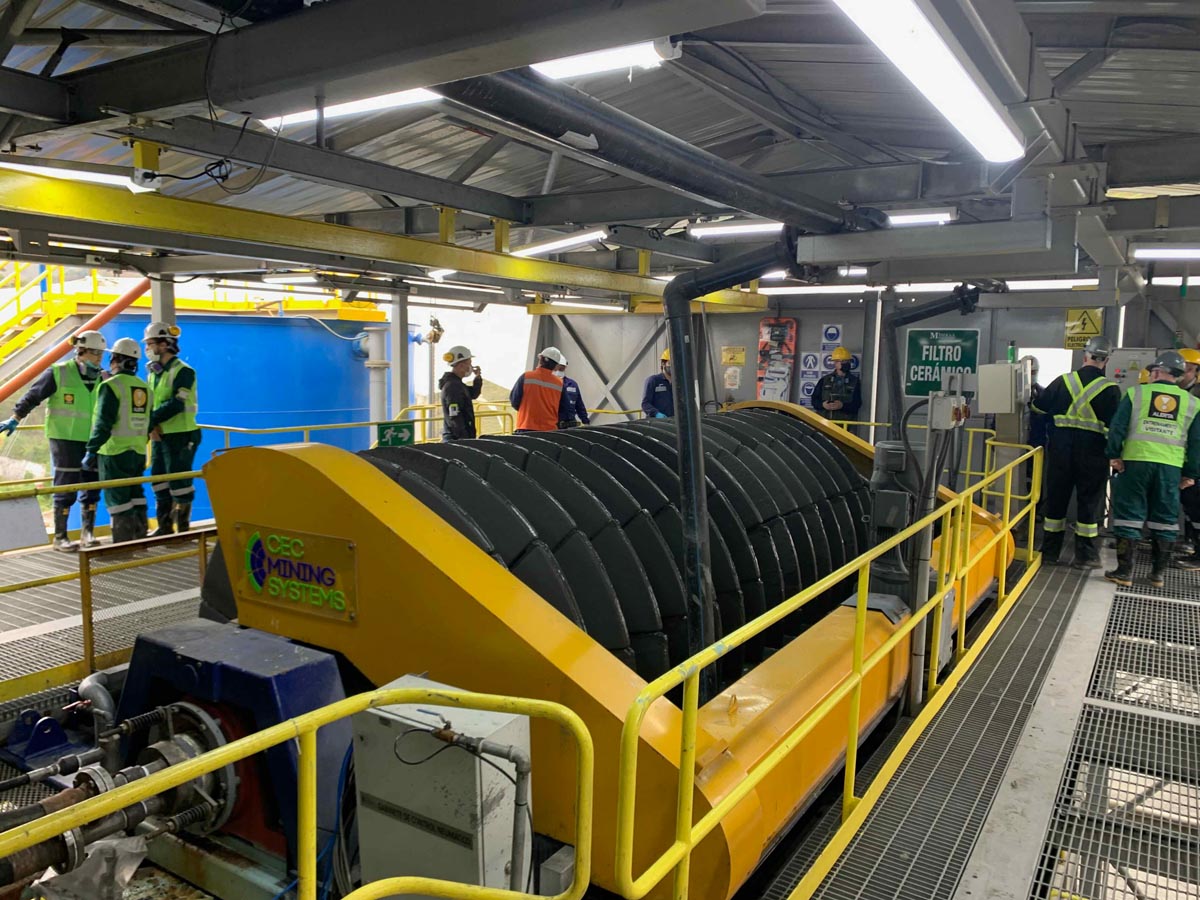
A ceramic filter plate operates on the principle of capillary action combined with vacuum pressure to separate fine particles from liquid slurries without the need for traditional filter media. In a typical vacuum ceramic filter system, a rotating drum or disc assembly submerged in a slurry basin uses these specialized plates to draw liquid through microscopic pores while retaining solid particles on the surface. The microporous ceramic filter membrane is engineered with precise pore sizes, ranging from 0.75 to 3.0 microns, which allows liquid to pass through while blocking fine mineral particles.
The defining characteristic of this technology is its reliance on capillary forces. Because the pores are so small, surface tension prevents air from entering the membrane during the drying phase of the rotation cycle. This means the vacuum system only needs to overcome the resistance of the liquid flowing through the pores and the filter cake, rather than pulling massive volumes of air. As a result, the vacuum pumps operate at a fraction of the capacity required by conventional systems, leading to substantial energy savings.
The rotating assembly accumulates solids on the surface of the alumina ceramic filter to form a filter cake. A scraper or discharge mechanism then removes the dry cake, and a brief wash cycle cleans the membrane before it re-enters the slurry basin. This continuous cycle eliminates the downtime associated with replacing torn or blinded filter cloths. The strong construction of the ceramic membrane ensures a lifespan of up to 24 months per campaign, providing reliable, continuous operation in demanding mineral processing environments. By maintaining a consistent vacuum and preventing air breakthrough, the system achieves exceptional energy efficiency and mechanical reliability.
What are the performance benefits for tailings dewatering?
Implementing ceramic disc filter technology in tailings dewatering circuits delivers measurable improvements in filtrate clarity, cake dryness, and overall water recovery. Mining operations transitioning to filtered tailings management or dry stacking require equipment that handles high volumes of fine materials while producing a stable, low-moisture geotechnical profile. The microporous nature of the ceramic membrane ensures that the recovered filtrate is exceptionally clean, routinely achieving suspended solids levels below 200 ppm (CEC Mining Systems, 2026) [1] . This high-quality water routes directly back into the process plant without requiring additional clarification, significantly reducing freshwater makeup demands in arid mining jurisdictions.
The physical properties of the discharged filter cake are equally critical for tailings management. Conventional vacuum filters struggle to achieve the low moisture contents required for safe, stable dry stacking. In contrast, modern ceramic filter systems achieve a cake moisture that is 1.0 to 4.0 percent drier than conventional vacuum disc or drum filters (CEC Mining Systems, 2026) [1] . This reduction in moisture improves the geotechnical stability of the stacked tailings, reduces the footprint of the tailings storage facility, and minimizes the risk of liquefaction or dam failure, aligning with international standards like the Global Tailings Review guidelines .
The operational efficiencies translate directly to the bottom line from a financial perspective. The elimination of filter cloth replacements, combined with lower energy consumption and reduced maintenance requirements, results in a total cost of ownership that is highly competitive. Industry data indicates that ceramic disc filtration provides 30 to 40 percent lower capital and operating costs over the equipment life cycle compared to conventional vacuum technologies (CEC Mining Systems, 2026) [1] . These savings are important for mining companies evaluating the economic feasibility of transitioning from wet tailings ponds to sustainable dry stack facilities. External research highlights the broader efficacy of advanced dewatering; for instance, pressure filtration methods achieve about 86 percent mass solids in iron ore tailings applications (University of Western Australia, 2026) [2] , underscoring the industry’s shift toward high-solids discharge methods.
How is this technology applied in concentrate filtration and paste backfill?
Beyond tailings management, ceramic membrane filtration plays an important role in metallurgical refining for concentrate dewatering and in underground mining for paste backfill preparation. In concentrate filtration, meeting strict moisture specifications is important for satisfying smelter contracts and minimizing shipping costs. Excess moisture in copper, zinc, or lead concentrates adds dead weight to export shipments and causes handling issues at the receiving port. The precise capillary action of the ceramic filter plate ensures uniform moisture extraction, producing a consistent filter cake that meets rigorous metallurgical standards without the risk of fine particle loss that plagues cloth-based filters.
For operations using paste backfill or cemented paste backfill to support underground stopes, the upstream dewatering step is critical to the overall economics of the mine. The paste plant requires a highly dewatered tailings stream to minimize the amount of expensive cementitious binder needed to achieve the required compressive strength. Because the ceramic disc filter yields a drier cake, the downstream paste mixing circuit requires less water and less binder. This reduction in cement consumption generates substantial ongoing cost savings over the life of the underground operation.
The reliability of the solid-liquid separation equipment is paramount in these continuous process circuits. A sudden failure in a conventional filter due to a torn cloth halts the entire paste plant, forcing the mine to curtail underground production. The durable alumina construction of the ceramic membrane eliminates this vulnerability, ensuring uninterrupted operation. The solids-free filtrate produced during concentrate or backfill dewatering recycles directly into the milling circuit, improving the overall site water balance. By providing a strong, low-maintenance solution for these specialized applications, the technology supports both the economic and operational stability of complex mineral processing flowsheets.
What factors influence the selection of solid-liquid separation equipment?
Selecting the optimal solid-liquid separation equipment requires a comprehensive evaluation of feed mineralogy, target throughput, site water balance constraints, and long-term operational costs. Every mining operation presents a unique set of challenges dictated by the specific particle size distribution, slurry chemistry, and abrasive characteristics of the material being processed. While a ceramic filter plate excels in fine particle capture and energy-efficient dewatering, other technologies are required for different stages of the flowsheet. For example, horizontal belt filters are preferred for applications demanding continuous counter-current washing and high-capacity throughput of coarser materials.
The decision-making process must begin with rigorous bench-scale and pilot-plant testwork. Conducting thorough filtration testing on representative site samples ensures that the selected equipment will meet performance guarantees under actual operating conditions. Testing parameters such as filterability, cake washing efficiency, and filtrate clarity provide the engineering data necessary to accurately size the equipment and model the site mass balance. This empirical approach mitigates the risk of underperforming equipment and prevents costly retrofits after commissioning.
Engineers must weigh the initial capital expenditure against the ongoing operational expenses. While some conventional filtration systems appear cheaper upfront, the recurring costs of replacing filter cloth, managing high-volume vacuum pumps, and treating poor-quality filtrate quickly erode any initial savings. Advanced ceramic systems offset their capital cost through drastically reduced energy consumption, minimal consumable requirements, and the ability to recover high-quality water that offsets freshwater procurement costs. Evaluating the total cost of ownership over a ten- to fifteen-year mine life reveals the true financial advantage of investing in high-efficiency dewatering technology, a principle widely supported by industry authorities such as the Society for Mining, Metallurgy & Exploration . Ultimately, the right choice aligns the mechanical capabilities of the equipment with the specific geotechnical, metallurgical, and environmental objectives of the project.
Your Most Common Questions
What is the lifespan of a ceramic filter plate in mining applications?
A ceramic filter plate lasts up to 24 months per campaign in continuous mining applications before requiring replacement or refurbishment. This extended lifespan significantly outperforms traditional filter cloths, which need changing every few weeks due to blinding, tearing, or chemical degradation. The durable microporous alumina construction resists abrasion and chemical attack, ensuring sustained filtration performance and minimizing scheduled maintenance downtime over the equipment’s operational life.
How does a ceramic filter plate improve water recovery in tailings management?
A ceramic filter plate improves water recovery by using capillary action to draw liquid through microscopic pores while blocking fine solid particles. This mechanism produces a high-clarity filtrate with suspended solids routinely below 200 ppm, allowing the recovered water to be reused directly in the mineral processing circuit without additional clarification. By maximizing water recycling, mining operations in arid regions drastically reduce their reliance on external freshwater sources and improve overall site sustainability.
Can ceramic disc filters handle high-throughput concentrate dewatering?
Ceramic disc filters handle high-throughput concentrate dewatering effectively, with modular designs scaling up to 204 square meters of filtration area per unit. These large-scale systems provide the necessary capacity for major metallurgical and refining operations while maintaining precise moisture control. The continuous rotary action and efficient cake discharge mechanisms ensure steady throughput, allowing plants to meet demanding export and smelter specifications without bottlenecking the production circuit.
What maintenance is required for a ceramic membrane filter system?
A ceramic membrane filter system requires routine automated cleaning, periodic vacuum system inspection, and occasional chemical washing to maintain optimal permeability. Unlike cloth filters that demand frequent media changes, the ceramic membranes are cleaned in place using automated wash cycles and ultrasonic cleaning to remove scale or blinding minerals. This automated maintenance approach reduces manual labor requirements and ensures consistent filtration efficiency throughout the operational campaign.
Comparing Filtration Technologies
Evaluating different dewatering methods is important for optimizing mineral processing circuits. The choice between technologies depends heavily on feed characteristics, moisture targets, and operational budgets. While conventional systems have historically dominated the market, the shift toward sustainable dry stacking and precise concentrate moisture control has driven widespread adoption of advanced capillary filtration methods. The table below outlines the primary operational differences between the leading solid-liquid separation approaches.
FeatureCeramic Disc Vacuum FilterConventional Cloth Vacuum FilterHorizontal Belt FilterFiltrate Quality< 200 ppm suspended solids [1]> 10,000 ppm suspended solidsVariable based on clothEnergy ConsumptionUp to 85% lowerHigh (air breakthrough)Moderate to HighMedia LifespanUp to 24 monthsWeeks to monthsMonthsPrimary ApplicationFine tailings, concentrateGeneral dewateringCoarse washing, high capacity
Transitioning from a conventional cloth filter to a ceramic disc system requires upfront capital but yields immediate operational savings through reduced energy consumption and the elimination of media replacement costs. Horizontal belt filters remain the preferred choice when aggressive cake washing is required, but they lack the extreme filtrate clarity and energy efficiency of the ceramic membrane in fine particle applications.
Advanced Solid-Liquid Separation Solutions from CEC Mining Systems
CEC Mining Systems (CECMS) is a new Canadian manufacturer specializing in advanced solid-liquid separation equipment and turn-key tailings dewatering projects. Established in 2011 and headquartered in Vancouver, British Columbia, we have installed and supported over 650 systems across eight countries. Our proprietary CX-Series Ceramic Disc Vacuum Filter uses microporous alumina technology to deliver unmatched performance in tailings dry stacking, concentrate filtration, and paste backfill applications.
CEC Mining Systems understands that successful project execution begins with accurate data. Our comprehensive Bench and Pilot Testing services, conducted through our CCMR subsidiary in Kamloops, BC, provide the critical filterability data required to de-risk your investment from the earliest feasibility stages. By combining rigorous testwork with our Engineering Studies, Turnkey and Integrated Plant Supply capabilities, we deliver full-cycle project execution from conceptual design through commissioning and operational support.
Whether you are developing a greenfield site in a water-constrained jurisdiction or optimizing an existing brownfield operation, our team provides the technical expertise and localized support necessary to achieve your production and sustainability targets. Stay updated on our latest projects and Follow CEC Mining Systems on LinkedIn to see how our filtration solutions are improving the global mining industry.
Best Practices for Filtration Circuit Optimization
Optimizing a solid-liquid separation circuit requires ongoing attention to feed conditions, equipment parameters, and maintenance schedules. Implementing the following best practices ensures that your filtration equipment operates at peak efficiency and delivers consistent results over its service life.
Operators must continuously monitor the feed slurry characteristics. Variations in particle size distribution, solids concentration, or slurry chemistry significantly impact filter cake formation and moisture content. Installing inline density meters and particle size analyzers allows operators to adjust flocculant dosing or vacuum parameters in real time, preventing upsets in the dewatering process.
Maintenance teams must maintain strict control over the cleaning cycles of the ceramic membranes. While the alumina plates are highly durable, the accumulation of scale or blinding minerals reduce permeability over time. Ensure that the automated wash systems are functioning correctly and use appropriate chemical cleaning agents during scheduled maintenance windows to restore full capillary action.
Integrating thickening and clarifying equipment upstream of the filtration circuit improves performance. Feeding a filter with a slurry that has been properly thickened to an optimal solids percentage improves cake formation rates and reduces the hydraulic load on the vacuum system. Proper flocculant mixing and addition prior to the thickener ensures that fine particles are aggregated effectively, protecting the downstream filter from excessive fines loading, a core principle of our Water and Tailings Management strategies.
Remote monitoring and predictive analytics track equipment health effectively. Modern filtration plants benefit from continuous data logging, which identifies subtle performance degradations before they result in unplanned downtime. By analyzing trends in vacuum pressure, filtrate flow rates, and motor amperage, maintenance teams schedule interventions proactively, maximizing overall equipment effectiveness and protecting the site water balance.
Wrapping Up
The transition toward sustainable mining practices demands reliable, high-efficiency dewatering solutions that minimize environmental impact while maximizing resource recovery. A ceramic filter plate provides the technological foundation for achieving these goals, offering superior filtrate clarity, lower cake moisture, and substantial reductions in both energy and consumable costs. By replacing traditional cloth-based systems with advanced capillary filtration, mining and metallurgical operations secure their water balance and improve the geotechnical stability of their tailings facilities. CEC Mining Systems is ready to partner with you on your next dewatering project, providing the testwork, engineering, and equipment necessary for success. Contact our team at info@cecminingsystems.com or visit our website to request a consultation and optimize your solid-liquid separation circuit today.
Sources & Citations
- Filtration in Mineral Processing. CEC Mining Systems.
https://cecminingsystems.com/filtration-in-mineral-processing/ - Tailings Dewatering and Water Recovery Case Study. University of Western Australia.
https://papers.acg.uwa.edu.au/d/2655_11_Roux/11_Roux.pdf - Copper Flotation Tailings Study. PubMed.
https://pubmed.ncbi.nlm.nih.gov/41096259/