Learn how a ceramic filter membrane works, why it beats filter cloth in mining dewatering, and how to maintain it for tailings, concentrate, and paste backfill.
At a Glance
A ceramic filter membrane is a rigid, microporous plate made from sintered alumina that separates liquid from solids in vacuum filtration. Capillary forces in its fine pores let filtrate pass while blocking air and particles, so mining plants use ceramic disc filters to produce drier filter cake, cleaner recovered water, and lower energy bills than cloth filters.
Introduction
A ceramic filter membrane is the component that decides how much water a mine gets back from its slurry and how dry its tailings or concentrate leave the plant. At CEC Mining Systems, we build our CX-Series ceramic disc vacuum filter around this membrane, and we supply it for tailings dewatering, concentrate filtration, and paste backfill projects across the Americas, Africa, Australia, and Asia.
Pressure on filtration circuits keeps rising. Operations in Chile’s Atacama and the Peruvian Andes face tight water permits, regulators in British Columbia and Ontario are scrutinizing tailings storage facilities more closely, and many plants still lose production to torn or blinded filter cloth. Ceramic membrane filtration addresses all three problems at the filter itself: the membrane passes clean water, rejects fine solids, and runs for months without a cloth change.
This guide explains what a ceramic filter membrane is made of, how the filtration cycle works inside a disc filter, where mining plants apply the technology, and how it compares with cloth and belt filters on cost and performance. We finish with maintenance practices drawn from our field experience and answers to the questions plant managers ask us most.
What Is a Ceramic Filter Membrane?
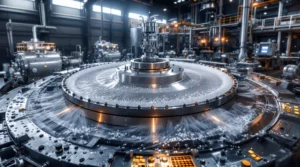
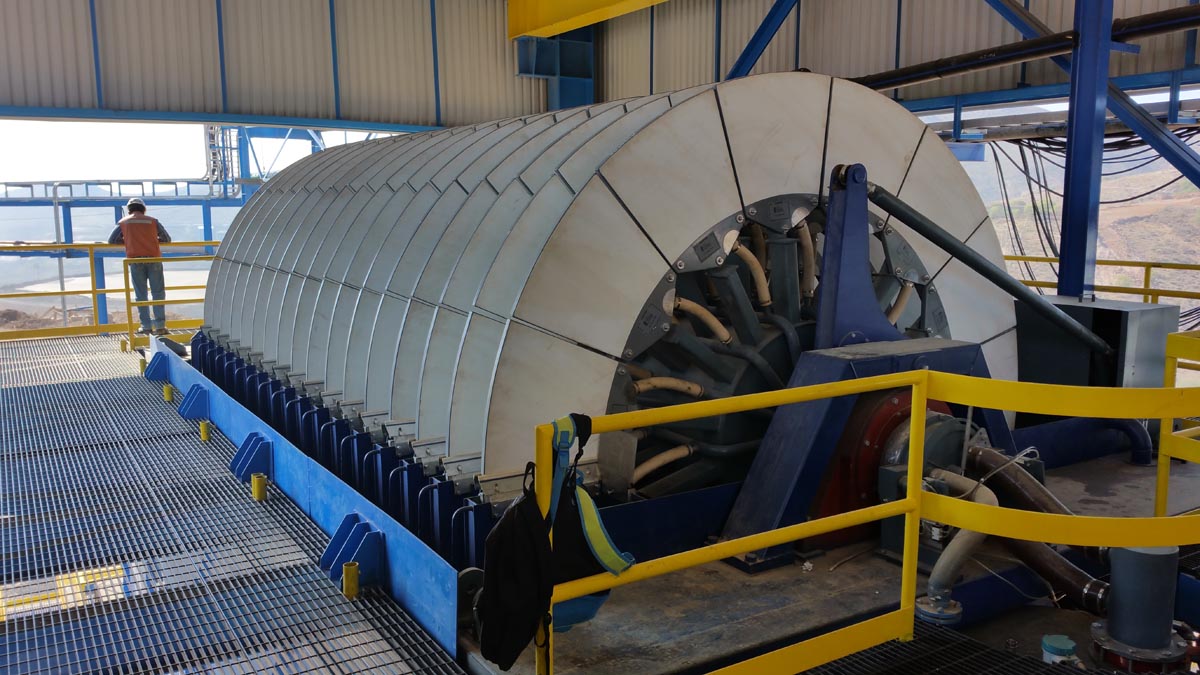
A ceramic filter membrane is a rigid, porous plate of alumina ceramic that separates liquid from solids using capillary action and vacuum. The plate replaces the woven polymer cloth used in conventional vacuum filters, and it is mounted in segments around a rotating disc that dips into a slurry basin.
Each ceramic segment has two main layers. A coarser support body gives the plate its mechanical strength and carries internal channels that route filtrate to the central shaft. A thin microporous layer on the outer surface does the actual separation. In our CX-Series filters, membrane pore sizes range from 0.75 to 3.0 microns, which is small enough to capture fine and ultrafine particles that pass straight through many filter cloths (CEC Mining Systems)[1].
Why capillary action matters
Capillary action is what separates a microporous ceramic membrane from every cloth medium. When the fine pores fill with water, surface tension holds that water in place so strongly that air cannot push through at normal vacuum levels. Liquid flows into the plate, while air stays out. A cloth filter behaves differently: once the cake cracks or thins, air rushes through the open weave, and the vacuum pump has to move that air continuously.
Capillary sealing drives most of the operating advantages of ceramic filtration. Because the ceramic disc membrane draws almost no air, the vacuum system only needs to handle liquid, so pumps are far smaller. The filtrate leaves the plate nearly free of solids, which means it returns to the process water circuit without further clarification in many flowsheets. The filter cake also dries more evenly because the vacuum holds steady across the full segment.
Material and durability
Alumina ceramic is hard, chemically stable, and resistant to the abrasion that wears out polymer media in mineral slurries. The trade-off is that a ceramic plate is brittle compared with cloth, so crews must handle it carefully during installation and protect it from tramp metal or oversize rock in the feed. Plants that screen their feed and follow a sound cleaning routine get long, predictable membrane campaigns. Full design details are available on our page for the CX-Series Ceramic Disc Vacuum Filter – proprietary ceramic membrane filtration technology for tailings dewatering, concentrate filtration, and paste backfill; 30-40% CapEx/OpEx savings versus conventional technologies.
How Does Ceramic Membrane Filtration Work in a Disc Filter?
Ceramic membrane filtration in a disc filter works as a continuous rotating cycle of cake formation, drying, discharge, and backwashing that repeats with every turn of the disc. Each ceramic filter membrane segment passes through all stages once per rotation, so the filter produces cake and filtrate without stopping.
Cake formation
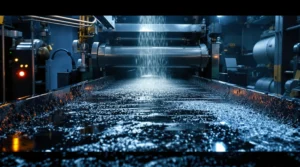
The lower part of each disc sits in a basin of agitated slurry. Vacuum applied through the internal channels of the segment, combined with capillary suction in the pores, pulls liquid into the ceramic and deposits a layer of solids on the surface. That layer becomes the filter cake.
Cake drying and discharge
Cake drying begins as the segment rises out of the slurry and vacuum continues to draw residual moisture from the solids. Because air does not break through the wet pores, the drying zone keeps working efficiently until the cake reaches a scraper. Ceramic scrapers set close to the membrane surface remove the cake, which falls onto a conveyor or into a chute for stacking, backfill preparation, or shipping.
Backwashing and cleaning
Backwashing follows discharge, pushing filtrate or clean water back through the segment in the opposite direction. The backwash clears particles lodged in the surface pores before the segment re-enters the slurry. Over longer intervals, operators combine ultrasonic cleaning with a dilute chemical wash to dissolve scale and fines that routine backwashing cannot remove. Consistent cleaning keeps the filtration rate stable over the full campaign.
What the cycle delivers
The ceramic filtration cycle shows its value in three measurements that plant teams track daily. The CX-Series uses up to 85% less energy than conventional vacuum filters, produces filtrate with suspended solids between 50 and 200 ppm compared with more than 10,000 ppm for conventional filters, and delivers cake moisture 1.0 to 4.0% lower at similar throughput (CEC Mining Systems)[1]. Cleaner water returns to the mill, drier cake is easier to handle, and the power bill falls. Our engineers post project updates and field notes regularly, so Follow CEC Mining Systems on LinkedIn to see ceramic filtration in operation.
Where Do Mining Operations Use Ceramic Filtration Membranes?
Mining operations use ceramic filtration membranes in three main circuits: tailings dewatering for dry stacking, concentrate filtration before shipping or smelting, and tailings preparation for paste backfill. Each application benefits from clean filtrate, low cake moisture, and continuous operation, but the design priorities differ.
Tailings dewatering and dry stacking
Filtered tailings let a mine stack solids instead of storing a slurry behind a dam. Dry stacking reduces the footprint of the tailings storage facility and recovers water that would otherwise sit in a pond or evaporate (CEC Mining Systems)[2]. In water-constrained regions such as Chile, Peru, Mexico, and Western Australia, that recovered water makes the difference in securing a permit. On one greenfield project in Latin America, we ran bench-scale testwork at our CCMR laboratory in Kamloops, BC, then delivered a CX-Series plant under an EPC contract that achieved filtrate below 200 ppm suspended solids and a cake suitable for efficient dry stack construction. Our approach to Water and Tailings Management – practical, new, cost-effective strategies to support site mass and water balance starts with that kind of site water balance thinking.
Concentrate filtration
Copper, zinc, and other concentrates must meet moisture limits set by shipping rules and smelter contracts. A ceramic filter membrane helps a concentrate plant hit those limits consistently because cake moisture stays stable as long as the membrane is clean. Where filtration alone cannot reach the target, our MIR Steel Belt Dryer takes the cake down further using vacuum and medium-wave infrared heat, without generating dust or vibration.
Paste backfill
Many underground hard-rock mines in Ontario, Quebec, and BC fill stopes with cemented paste made from tailings. Dewatering is the first step in paste preparation, and cake moisture affects how much binder the recipe needs. In one underground installation, the low moisture from our ceramic filter reduced binder demand and produced measurable savings on cement over the life of the system. Solids-free filtrate also reduces the load on clarifiers elsewhere in the plant.
Ceramic Membranes vs Filter Cloth: What Changes in Cost and Operation?
Switching from filter cloth to ceramic membranes lowers operating cost, reduces downtime, and improves water quality in most fine-particle dewatering duties. The CX-Series delivers 30-40% CapEx and OpEx savings compared with conventional filtration technologies, driven mainly by smaller vacuum systems, lower power draw, and fewer media changes (CEC Mining Systems)[1].
Cloth filters carry hidden costs that plant budgets underestimate. Cloth blinds, tears, and needs scheduled replacement, and every change stops the filter. The dirty filtrate from a cloth filter adds fines to the water circuit, which then loads thickeners and clarifiers. A ceramic filtration membrane removes most of that downstream burden because the filtrate is close to clean water when it leaves the plate.
A brownfield retrofit shows the effect in practice. An operating copper mine was struggling with high costs and frequent cloth failures on an aging vacuum filter. After our audit identified filtration as the main bottleneck, the mine installed CX-Series ceramic disc filters, cut filter-related operating costs by 35%, eliminated scheduled cloth-change downtime, and improved concentrate moisture consistency.
How long does a ceramic filter membrane last?
A ceramic filter membrane in our CX-Series lasts up to 24 months per campaign, supporting long periods of continuous filtration between replacements (CEC Mining Systems)[1]. Actual life depends on feed abrasiveness, slurry chemistry, and the discipline of the cleaning program.
Where ceramic is not the right choice
Ceramic membranes are not a universal answer, and we tell clients so. Duties that need heavy counter-current cake washing and very high throughput of coarser material suit a horizontal belt filter better. Feeds with large amounts of oversize or tramp material need screening first, or the plates risk mechanical damage. For fine tailings, fine concentrates, and backfill feed, our recommendation is clear: a ceramic disc filter is the lower-cost, lower-water-loss option. We share retrofit results as projects come online, so Follow CEC Mining Systems on LinkedIn for the latest operating data.
What People Are Asking
What is a ceramic filter membrane made of?
A ceramic filter membrane is made of microporous alumina ceramic, formed into a strong support body with a thin surface layer of fine pores. Alumina is used because it is hard, chemically stable, and resistant to the abrasive wear that damages polymer filter cloth in mineral slurries. In our CX-Series filters, membrane pore sizes range from 0.75 to 3.0 microns, so the plate captures fine and ultrafine particles while letting water through. The alumina surface is hydrophilic, which means the pores fill with water and create the capillary seal that keeps air out during filtration. Each plate is shaped as a segment, and a set of segments forms one filter disc. Because there is no woven fabric, the membrane cannot tear or stretch, although it does need protection from oversize rock and tramp metal in the feed.
How long does a ceramic filter membrane last in a mining plant?
A ceramic filter membrane in our CX-Series filters lasts up to 24 months per campaign when the plant maintains a steady cleaning program. Three factors shorten or extend membrane life. Abrasive feeds with sharp, hard particles wear the surface faster. Slurry chemistry matters too, since some process waters deposit scale that must be dissolved regularly. The third factor is operating discipline: skipped cleaning cycles let fines and scale build up, and aggressive recovery cleaning after neglect is harder on the plate than routine care. Filtration rate is the best early warning. When the rate stops recovering after a full cleaning cycle, the membrane is approaching the end of its campaign. Our Remote Access and Operational Services program tracks these trends so plants can plan plate replacement during scheduled shutdowns.
How do you clean a ceramic filter membrane?
You clean a ceramic filter membrane through backwashing on every rotation, plus periodic ultrasonic cleaning and a dilute chemical wash to remove scale. Backwashing pushes filtrate or clean water outward through the plate just after cake discharge, clearing particles from the surface pores before the segment returns to the slurry. Ultrasonic cleaning uses high-frequency vibration in the basin to dislodge fines that backwashing leaves behind. Chemical cleaning with a dilute acid dissolves mineral scale that forms from process water chemistry. The right frequency and chemistry depend on the ore, reagents, and water quality at each site, which is why we set the cleaning regime during commissioning and adjust it as feed conditions change. Plants that follow the program keep filtration capacity stable and avoid the throughput losses that come with blinded pores.
Is a ceramic disc filter better than a cloth vacuum filter for tailings?
For fine tailings, a ceramic disc filter beats a cloth vacuum filter on energy use, filtrate quality, cake moisture, and downtime. The CX-Series uses up to 85% less energy than conventional vacuum filters and produces filtrate between 50 and 200 ppm suspended solids, compared with more than 10,000 ppm from conventional filters (CEC Mining Systems)[1]. Cake moisture runs 1.0 to 4.0% lower at similar throughput, which improves dry stack stability and reduces binder use in paste backfill. The exception is tailings that are coarse, need heavy washing, or carry large amounts of oversize material. Those duties suit a horizontal belt filter or require screening upstream. Bench-scale testwork on your actual tailings sample is the fastest way to confirm which technology fits your circuit.
Ceramic Disc, Cloth, and Belt Filters Compared
Choosing a filter for a mining circuit means weighing filtrate quality, energy use, maintenance, and the type of feed each technology handles best. The table below compares a ceramic disc vacuum filter with a conventional cloth vacuum filter and a horizontal belt filter, the three options that appear most in our tailings and concentrate studies.
| Feature | Ceramic disc vacuum filter | Conventional cloth vacuum filter | Horizontal belt filter |
|---|---|---|---|
| Filter medium | The ceramic disc filter uses a ceramic filter membrane of microporous alumina. | The cloth filter uses woven polymer filter cloth. | The belt filter uses a continuous polymer filter belt. |
| Filtrate suspended solids | Ceramic filtrate runs 50-200 ppm suspended solids [1]. | Cloth filtrate exceeds 10,000 ppm suspended solids [1]. | Belt filtrate quality depends on cloth selection and feed conditions. |
| Energy use | Ceramic filters use up to 85% less energy than conventional vacuum filters [1]. | Cloth filters need large vacuum pumps that move air through the cake. | Belt filters need vacuum pumps sized for air flow through the cake. |
| Cake washing | Ceramic disc filters offer limited cake washing. | Cloth disc filters offer limited cake washing. | Belt filters provide strong counter-current cake washing. |
| Media maintenance | Ceramic membrane campaigns last up to 24 months [1]. | Cloth filters need regular cloth changes that stop production. | Belt filters need belt and cloth replacement at intervals. |
| Best fit | Ceramic disc filters suit fine tailings, concentrates, and paste backfill feed. | Cloth filters suit legacy installations and less demanding duties. | Belt filters suit coarse, high-throughput feeds that need washing. |
Our position is direct: for fine-particle dewatering where water recovery and power cost matter, the ceramic disc filter is the stronger choice. Belt filters earn their place where washing efficiency drives the process.
How CEC Mining Systems Supports Ceramic Filtration Projects
CEC Mining Systems designs, manufactures, and supports ceramic disc filtration plants from the first sample to full production. Since 2011, our Vancouver-based team has installed and supported over 650 systems in eight countries, and we hold ISO 9001 and ISO 14000 certification.
Every CEC Mining Systems project starts with data. Our subsidiary, Canadian Critical Minerals Research (CCMR), runs filterability testing on your tailings or concentrate at its laboratory in Kamloops, BC, and our AI-assisted benchmarking draws on a decade of operating and laboratory results to shorten the path from sample to design criteria. Learn more about Bench and Pilot Testing – giving you the data and confidence to power your project from the earliest stages.
Once CCMR testing is complete, we size the ceramic filter membrane area, specify the CX-Series units, and deliver the plant under the contract model that suits you: equipment supply, EPC, EPCM, or BOOT. Our Engineering Studies, Turnkey and Integrated Plant Supply – save time, reduce costs, and build greater efficiency through full-cycle project execution service gives you one point of contact through commissioning and the first hundred days of production.
A dedicated multidisciplinary team stays with each project, backed by in-country partners across Latin America, Africa, Australia, and Asia. To discuss a tailings, concentrate, or backfill application, call us at +1 604 685 7823 or email info@cecminingsystems.com with your project details.
Practical Tips for Ceramic Membrane Performance
Ceramic membrane performance depends as much on how the plant runs the filter as on the filter design itself. These practices come from our commissioning and operating experience across tailings, concentrate, and backfill circuits.
- Test your actual slurry at bench scale before sizing any filter, because particle size distribution and mineralogy control filtration rate more than any catalog figure.
- Screen the filter feed to remove tramp metal, wood, and oversize rock, since hard debris chips or cracks ceramic plates.
- Keep feed density and flocculant dosing steady, because swings in slurry solids change cake thickness and moisture from hour to hour.
- Follow the backwash, ultrasonic, and chemical cleaning schedule set at commissioning rather than waiting for the filtration rate to drop.
- Track filtration rate after each cleaning cycle, since a rate that no longer recovers is the clearest sign that a membrane campaign is ending.
- Store spare ceramic plates in their packaging and train crews on correct installation and alignment to prevent breakage.
- Route clean filtrate straight back to the process water circuit to cut freshwater intake and ease the load on thickeners.
Remote monitoring is becoming standard practice for ceramic filtration plants. Pairing the filter with remote monitoring and predictive analytics lets your team spot a falling filtration rate or an irregular cleaning result days before it affects throughput, and it gives our engineers the same view of the data without a site visit.
Before You Go
A ceramic filter membrane turns vacuum filtration into a low-energy, low-maintenance process that returns clean water to the mill and produces drier cake for dry stacking, shipping, or paste backfill. For fine tailings and concentrates, ceramic disc filtration outperforms filter cloth on power use, filtrate quality, and uptime, provided the feed is screened and the cleaning program is followed. The most useful next step is to test your own material. Send a representative tailings or concentrate sample to our team, and we will run bench-scale filtration tests and recommend a CX-Series configuration for your circuit. Call us at +1 604 685 7823, email info@cecminingsystems.com, or visit our office at Suite 460 – 688 West Hastings St, Vancouver, BC. For ongoing project news, Follow CEC Mining Systems on LinkedIn.
Further Reading
- CX-Series Ceramic Disc Vacuum Filter. CEC Mining Systems.
https://cecminingsystems.com/technologies/ceramic-disc-filtration/ - Water and Tailings Management. CEC Mining Systems.
https://cecminingsystems.com/industries/water-tailings-management/