Ceramic filter media provides superior solid-liquid separation for mining and water treatment facilities. Discover how porous ceramic filters improve recovery and cut site costs.
Introduction
CEC Mining Systems engineers solid-liquid separation equipment. We engineer solutions that address the most pressing challenges in mineral processing, from reducing tailings storage facility footprints to maximizing site water balance. Through advanced materials science and rigorous in-house testwork, we deliver filtration systems that outperform traditional alternatives in both efficiency and longevity.
The selection of the right filtration medium dictates the success of downstream processes, influencing everything from filter cake moisture to filtrate clarity. The following sections explore the material science behind porous ceramic filters, their important role in modern dry stacking operations, and the measurable environmental advantages they offer over legacy systems.
What Is Ceramic Filter Media and How Does It Work?
Ceramic filter media is a microporous solid-liquid separation material engineered from sintered alumina, clay, or silicon carbide, designed to capture suspended solids while allowing liquid to pass through via capillary action and vacuum pressure. Unlike woven synthetic fabrics, these rigid membranes feature a highly controlled pore size distribution that resists blinding and structural deformation under high differential pressure. The manufacturing process involves firing ceramic materials to create the membrane technology that defines the operational boundaries of the filtration.
The versatility of ceramic filter media spans from heavy-duty mineral processing to household purification. Shannon M. Lott, a researcher at the University of Rhode Island, notes that point-of-use ceramic water filters from nano to macro represent a versatile technology where materials selection and pore structure are tailored to balance flow performance with microbial removal (Lott, 2024) [1] . By adjusting the sintering temperature and particle size of the raw materials, manufacturers produce media capable of removing parasitic protozoa. In industrial applications, these rigid structures prevent the fine particle penetration that degrades the performance of flexible cloth filters.
Capillary Action and Vacuum Filtration
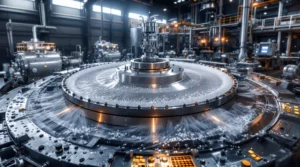
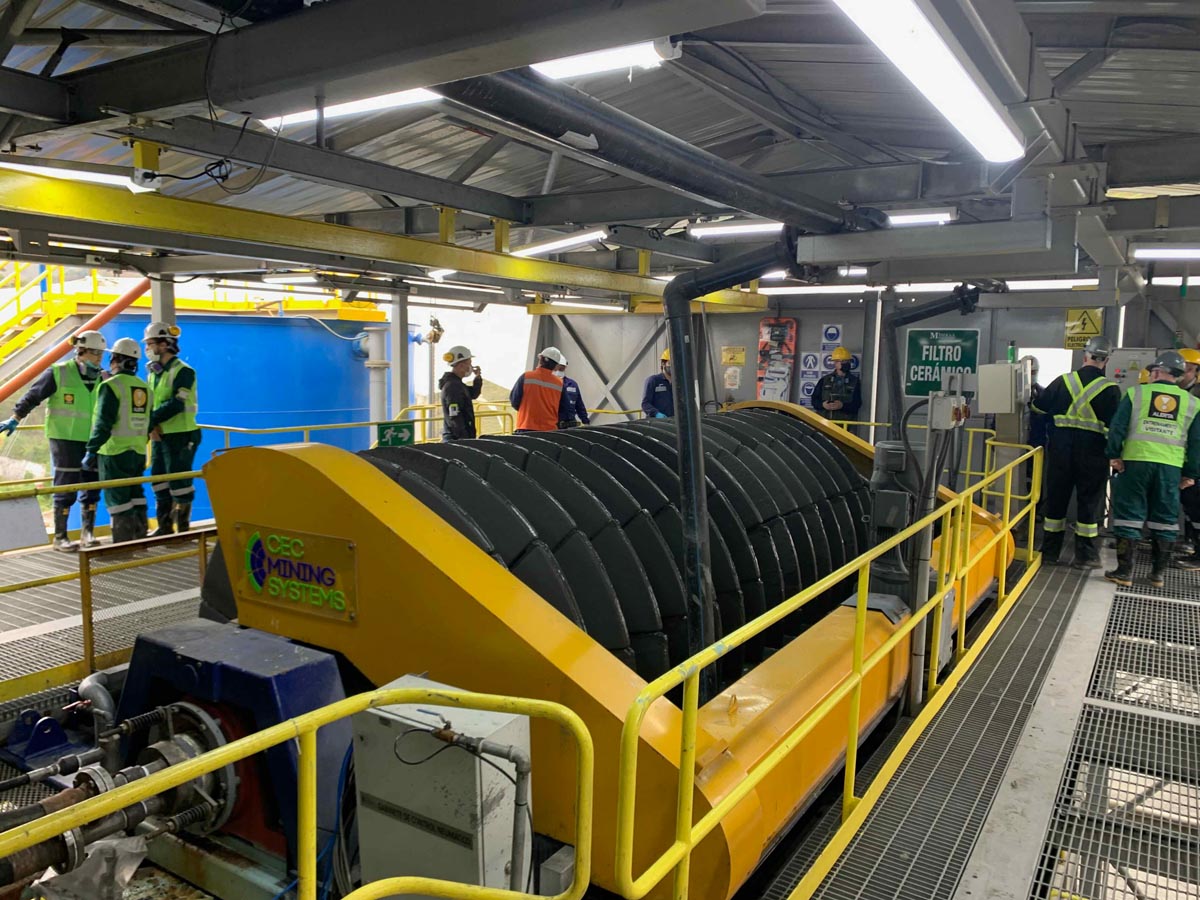
In a vacuum filtration system like the CX-Series Ceramic, a hydrophilic ceramic membrane is submerged in a slurry basin. A vacuum is applied to the interior of the disc, but because the pores are so fine, air cannot easily pass through the water-filled capillaries. This creates a powerful driving force that pulls liquid through the media while producing a dry filter cake. The unique mechanism eliminates the need for high-pressure pumps, drastically reducing energy consumption compared to filter presses or conventional vacuum filters that rely on continuous high-capacity air.
The rigidity of ceramic disc filters also enables continuous automated scraping. As the disc rotates out of the slurry, a discharge mechanism scrapes the cake off, and a backwash of filtrate clears any residual particles from the surface. This continuous cycle ensures sustained continuous filtration campaigns without the progressive blinding that plagues conventional media.
How Does Ceramic Filter Media Improve Tailings Dewatering?
Ceramic filter media improves tailings dewatering by producing a significantly drier filter cake and high-clarity water recovery streams that enable dry stacking and paste backfill applications. As tailings management shifts away from conventional wet impoundments toward filtered tailings management, water scarcity in jurisdictions like Chile’s Atacama Desert and Western Australia has made filtered tailings a regulatory and operational necessity.
Disc vacuum filtration using optimized ceramic filter media significantly improves the water recovery and dry stacking potential of fine tailings streams (Testa, 2025) [10] . When integrated into a Water and Tailings Management strategy, the technology captures fine and ultrafine particles that would otherwise bypass cloth filters. The resulting filtrate contains suspended solids below 200 ppm, allowing the water to be returned directly to the process circuit without overloading downstream clarifiers or heat exchangers.
High-quality water recovery from ceramic filter media is highly beneficial for sites facing severe water constraints. By maximizing the site mass balance, mining operators drastically cut their freshwater make-up requirements. Also, the drier cake moisture content achieved by ceramic disc filters reduces the demand for cementitious materials and energy required to transport and stack the tailings, directly lowering the operating costs of the dry stack facility. The structural integrity of the stack is improved, reducing geotechnical risks and aligning with global tailings management standards for dam safety.
Paste Backfill Integration
For underground hard rock mining, solid-liquid separation is an important upstream step in preparing cemented paste backfill. The low cake moisture achieved by ceramic filters minimizes the water content introduced into the paste mix. This reduction in moisture directly translates to lower cement consumption, as less cement is required to achieve the target strength for underground stope stability. The continuous, uninterrupted operation of ceramic disc filters ensures that the paste plant receives a steady, consistent feed of dewatered tailings, preventing costly batch interruptions.
What Are the Environmental and Operational Benefits?
The environmental and operational benefits of ceramic filter media include significantly lower energy consumption, superior filtrate quality, and a reduced environmental footprint across multiple life cycle impact categories. Unlike high-pressure dewatering equipment that demands massive electrical loads, vacuum ceramic filtration relies on capillary forces that require up to 85% less energy than conventional vacuum or pressure filtration methods. This dramatic reduction in power requirements lowers the carbon footprint of the mineral processing plant.
A comprehensive life cycle assessment confirms these advantages. Alessandra A. Ribeiro, a researcher at the Federal University of Campina Grande, states that ceramic filters also exhibit better environmental performance for four of five evaluated life cycle impacts: energy use, water use, global warming potential, and particulate matter emissions (Ribeiro, 2013) [4] . The 2013 Ribeiro study found that ceramic media outperformed competing technologies in 4 out of 5 life cycle impact categories, making it a preferred choice for operations targeting strict Sustainability and ESG mandates.
Beyond the industrial sector, ceramic filter media is highly effective in municipal and household applications. Crushed ceramic filter media achieves maximum turbidity removal efficiencies between 76 and 86 percent at a media bed height of 60 cm and a filtration rate of 4 cubic meters per hour (PAUC Journal, 2024) [1] . In drinking water biofiltration tests, ceramic media filters delivered run times that were 1.5 to 2.3 times longer than anthracite media while achieving similar turbidity reduction (PubMed, 2018) [2] . This extended run time reduces the frequency of backwashing, conserving water and lowering the operational burden on treatment facilities.
For point-of-use treatment, silver-coated ceramic water filters achieve a 99.999 percent bacterial removal rate, while uncoated ceramic filters reach approximately 99.99 percent bacterial removal (Scientific Research Publishing, 2025) [3] . These metrics highlight the material’s ability to provide safe drinking water in remote or off-grid locations, aligning with EPA drinking water treatment guidelines for microbial safety.
How Does Ceramic Media Compare to Conventional Filter Cloth?
Ceramic media compares to conventional filter cloth by offering a vastly superior lifespan, eliminating cloth blinding, and providing consistent filtrate quality without the ongoing cost of replacement fabrics. Conventional cloth filters, whether used on drum filters or belt presses, are highly susceptible to blinding-the irreversible clogging of the weave by fine particles. Once blinded, the cloth must be chemically cleaned or physically replaced, resulting in significant downtime and high ongoing operating costs.
In contrast, the rigid, microporous structure of ceramic membranes prevents fine particles from penetrating deeply into the media. Any surface accumulation is easily removed by the automated scraper and backwash system. The lifespan of a ceramic membrane extends up to 24 months of continuous operation, whereas conventional filter cloths require replacement every few weeks or months depending on the abrasiveness of the slurry. This durability translates to a 30-40% reduction in operating costs over the life of the plant.
Filtrate quality is another major differentiator. Conventional cloth filters yield filtrate with suspended solids exceeding 10,000 ppm, especially as the cloth degrades or develops minor tears. This high solids loading forces the plant to route the filtrate to secondary thickeners or clarifiers, adding capital and operational complexity. Ceramic filter media consistently produces solids-free filtrate below 200 ppm, allowing the water to be recycled directly into the milling circuit. This eliminates the need for secondary clarification and protects downstream equipment, such as heat exchangers and reverse osmosis membranes, from abrasive scaling and fouling.
Also, the mechanical durability of ceramic disc filters allows them to handle highly abrasive slurries, such as those found in iron ore or copper tailings, without the rapid wear associated with synthetic fabrics. The initial capital cost of a ceramic filtration system is comparable to or slightly higher than some conventional setups, but the total cost of ownership is overwhelmingly lower due to the elimination of media replacement costs, reduced energy consumption, and minimized maintenance labor.
What People Are Asking
What is the typical lifespan of ceramic filter media?
Ceramic filter media lasts up to 24 months in continuous industrial filtration campaigns, significantly outlasting conventional cloth filters that require frequent replacement. The rigid alumina structure resists abrasion and chemical degradation, ensuring sustained performance over extended operational cycles without the need for scheduled media change-outs.
Can ceramic filtration media handle high solids loading?
Ceramic filter media handles high solids loading effectively by using microporous alumina membranes that resist blinding and maintain consistent throughput under demanding conditions. The automated scraper and backwash mechanisms continuously clear the surface, preventing the deep particle penetration that degrades the performance of flexible synthetic fabrics.
How does pore size affect filtrate quality in ceramic filters?
Pore size dictates filtrate quality, as microporous ceramic membranes from 0.75 to 3.0 microns capture fine particles to achieve suspended solids below 200 ppm. This precise control over pore size distribution ensures that ultrafine tailings and colloidal materials are retained in the filter cake, yielding exceptionally clear filtrate for direct process reuse.
Is ceramic media suitable for municipal water treatment?
Ceramic filter media is highly suitable for municipal water treatment, providing exceptional turbidity reduction and microbial removal without chemical leaching from synthetic alternatives. Studies show that crushed ceramic media and silver-coated filters achieve up to 99.999% bacterial removal, making them a strong solution for both large-scale biofiltration and point-of-use purification.
Filtration Technology Comparison
Selecting the right dewatering technology requires a clear understanding of how different systems perform regarding energy use, maintenance, and filtrate clarity. The table below compares ceramic disc vacuum filters, horizontal belt filters, and conventional cloth vacuum filters across key operational metrics relevant to mining and industrial water treatment.
| Metric | Ceramic Disc Vacuum Filter | Horizontal Belt Filter | Conventional Cloth Vacuum Filter |
|---|---|---|---|
| Filtration Medium | Microporous ceramic membrane | Synthetic filter cloth | Synthetic filter cloth |
| Energy Consumption | Low (capillary action driven) | Moderate to High | High (continuous vacuum/blinding) |
| Filtrate Quality | < 200 ppm suspended solids | Variable, often > 1,000 ppm | > 10,000 ppm (degrades over time) |
| Maintenance Downtime | Minimal (no cloth changes) | Moderate (belt tracking/tension) | High (frequent cloth replacement) |
| Primary Application | Tailings dry stacking, paste backfill | Heavy-duty washing, coarse dewatering | General concentrate dewatering |
While horizontal belt filters excel in applications requiring continuous counter-current washing, ceramic disc vacuum filters dominate in scenarios where water recovery, low energy consumption, and ultra-dry cake moisture are the primary objectives.
CEC Mining Systems Solid-Liquid Separation Solutions
CEC Mining Systems Corp. (CECMS) is a Canadian manufacturer specializing in advanced solid-liquid separation equipment, with a core focus on proprietary ceramic disc-vacuum filtration systems for the global mining and metallurgical industries. Since 2011, we have installed and supported over 650 systems across eight countries, delivering turn-key tailings dewatering projects that help operations transition to safer, more sustainable filtered tailings management. Our CX-Series Ceramic Disc Vacuum Filter uses microporous alumina membranes to deliver 30-40% CapEx and OpEx savings compared to conventional filtration technologies.
Our approach to project delivery is rooted in rigorous data collection and metallurgical testwork. Through our subsidiary, Canadian Critical Minerals Research (CCMR), we provide comprehensive Bench and Pilot Testing to characterize tailings filterability and establish precise design criteria before capital is committed. This in-house capability, combined with AI-assisted project benchmarking, accelerates project de-risking from the earliest feasibility stages through to EPC/EPCM execution.
We understand that modern mining operations face immense pressure to optimize site water balance and reduce environmental liabilities. Our technologies are engineered to recover high-quality process water, eliminate the need for conventional tailings ponds, and support paste backfill operations in underground mines. To stay updated on our latest technological advancements and global project executions, we invite you to Follow CEC Mining Systems on LinkedIn . Whether you are advancing a greenfield project in Latin America or optimizing a brownfield site in Australia, our multidisciplinary team is ready to deliver a tailored, cost-effective filtration solution.
Practical Tips for Optimizing Ceramic Filtration
Implementing and maintaining ceramic filtration systems requires attention to feed preparation, operational parameters, and routine maintenance to ensure maximum throughput and membrane longevity. The following best practices help you optimize your solid-liquid separation circuit.
Optimize Feed Flocculation
Ceramic membranes perform best when fine particles are aggregated into larger, porous flocs. Work with your reagent suppliers to identify the optimal flocculant type and dosage for your specific tailings mineralogy. Proper flocculation increases the permeability of the filter cake, allowing for faster filtration rates and drier cake moisture. Ensure your flocculant mixing and addition systems are calibrated to prevent polymer degradation before the slurry reaches the filter basin.
Monitor and Control Slurry pH
While alumina ceramic media is highly resistant to a wide range of chemical environments, extreme pH levels eventually impact the hydrophilic properties of the membrane surface. Regularly monitor the slurry pH and adjust it to remain within the manufacturer’s recommended operating window. Maintaining stable chemistry not only protects the ceramic segments but also ensures consistent flocculant performance upstream.
Calibrate Backwash and Scraper Mechanisms
The automated discharge system is important for preventing surface blinding. Ensure that the scraper blades are properly aligned and exert the correct pressure against the ceramic surface-too little pressure leaves residual cake, while too much pressure causes mechanical wear over time. Also, verify that the backwash pulse uses clean, solids-free filtrate at the correct pressure to effectively clear the micropores without damaging the membrane structure.
Conduct Routine Ultrasonic Inspections
Implement a predictive maintenance schedule that includes ultrasonic testing of the ceramic segments. This non-destructive evaluation method identifies internal micro-fractures or structural weaknesses before they lead to a vacuum loss or filtrate contamination. Catching a compromised segment early prevents unplanned downtime and protects the overall efficiency of the filtration disc.
Before You Go
Ceramic filter media represents a fundamental shift in how the mining and water treatment industries approach solid-liquid separation. By replacing conventional filter cloths with durable, microporous ceramic membranes, operations achieve exceptional levels of water recovery, drastically reduce energy consumption, and produce drier filter cakes for safe dry stacking. The long-term operational savings and environmental benefits make it an indispensable technology for modern, sustainable resource extraction.
If you are evaluating filtration options for your next tailings management or concentrate dewatering project, CEC Mining Systems is ready to support your objectives from initial testwork through to commissioning. Contact our technical team today via our website to discuss how our CX-Series technology optimizes your site mass balance and reduces your operating costs.
Further Reading
- Optical and Physical analyses of water Turbidity for Different Filter Media. Petroleum and Agricultural University of Craiova (PAUC Journal).
https://cis01.central.ucv.ro/pauc/vol/2024_34/6_PAUC_2024_63_86.pdf - Chemical analysis and filtration efficiency of ceramic point-of-use water filters. National Center for Biotechnology Information.
https://pmc.ncbi.nlm.nih.gov/articles/PMC10393750/ - Low-Cost Ceramic Filters and Biochar Filters as Point of Use Water Treatment Systems. Scientific Research Publishing.
https://www.scirp.org/journal/paperinformation?paperid=142244 - Evaluating the Sustainability of Ceramic Filters for Point-of-Use Drinking Water Treatment. American Chemical Society (Environmental Science & Technology).
https://pubs.acs.org/doi/abs/10.1021/es4026084 - Influence of particle size distribution on disc vacuum filtration for dry stacking of niobium flotation tailings. Paste 2025: Proceedings of the 27th International Conference on Paste, Thickened and Filtered Tailings.
https://papers.acg.uwa.edu.au/c/paste2025 - Point-of-use ceramic water filters from nano to macro: materials selection, advances in manufacturing and field performance, and research needs. University of Rhode Island Digital Commons.
https://digitalcommons.uri.edu/cve_facpubs/501/