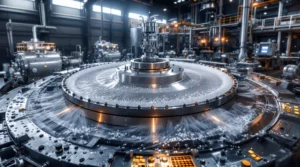
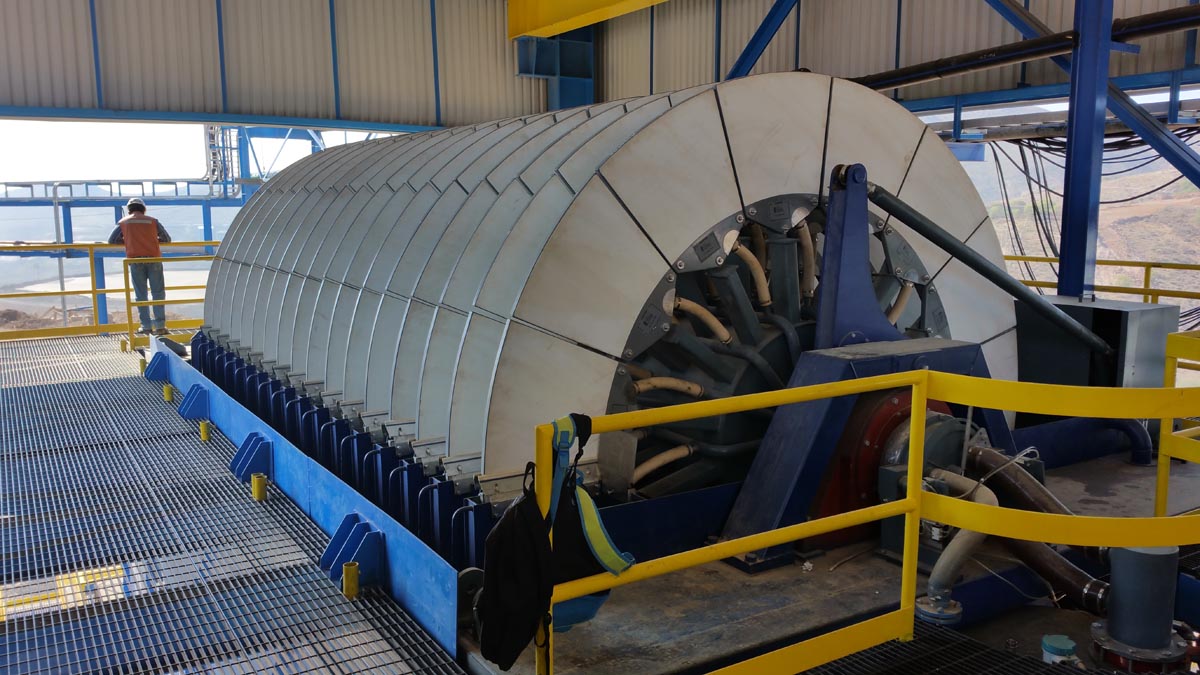
A ceramic disk filter uses capillary action and microporous membranes for efficient solid-liquid separation, reducing energy use and improving water recovery.
At a Glance
Ceramic disk filter technology uses microporous alumina membranes and capillary action to achieve highly efficient solid-liquid separation. This advanced filtration method significantly reduces energy consumption, lowers operating costs, and delivers superior filtrate clarity for demanding mining and industrial dewatering applications.
By the Numbers
- A 45-square-meter ceramic disk filter consumes only 15 kilowatts of power, compared to 170 kilowatts for conventional cloth filters (Wikipedia, 2026) [1] .
- Ceramic filtration achieves up to 90 percent lower energy consumption by eliminating air flow through the filter media (Wikipedia, 2026) [1] .
- Filtered tailings systems using this technology reach 93 percent water recovery efficiency with suspended solids below 200 ppm (MDPI Water, 2025) [2] .
- Real-world data shows a 1.0 to 4.0 percentage point reduction in final cake moisture compared to alternative vacuum filters (Porvoo, 2026) [3] .
Introduction
A ceramic disk filter represents a major advancement in solid-liquid separation technology, fundamentally changing how mining and industrial operations manage tailings and process water. Unlike traditional cloth-based vacuum filters that rely on high-volume air flow to draw liquid through a porous medium, this advanced equipment uses capillary action within microporous alumina membranes. The result is a dramatic reduction in energy consumption and a significant improvement in filtrate clarity. For operations facing strict environmental regulations and water scarcity, adopting this technology is no longer just an option but a strategic necessity. CEC Mining Systems has been at the forefront of this technological shift, designing and manufacturing proprietary solid-liquid separation equipment that addresses the most complex dewatering challenges in the global mining sector. By integrating advanced filtration media with strong mechanical design, modern facilities achieve continuous, uninterrupted operation while drastically cutting both capital and operating expenses. This article explores the engineering principles, operational benefits, and diverse applications of this equipment, providing a comprehensive guide for plant managers, metallurgists, and process engineers looking to optimize their dewatering circuits and improve overall site sustainability.
What Is a Ceramic Disk Filter?
A ceramic disk filter is a specialized solid-liquid separation machine that uses microporous alumina membranes to extract liquid from slurries without allowing air to pass through the filter medium. This fundamental difference in operating principle separates it from conventional vacuum filtration systems, which rely on high-volume air flow to create a pressure differential across a cloth membrane. In this advanced system, the filter medium consists of rigid, hydrophilic ceramic segments arranged on rotating hollow shafts. When these segments are submerged in a slurry basin, a vacuum is applied to the interior of the shafts. Because the micropores in the ceramic material are extremely small and uniformly distributed, capillary forces draw the liquid through the membrane while the surface tension of the water prevents air from entering the pores. This phenomenon, known as capillary action, is the core mechanism that drives the exceptional energy efficiency of the equipment.
For a comprehensive overview of vacuum ceramic filter technology , industry literature highlights the massive reduction in energy requirements as the primary advantage. “The main advantage over other filtration systems is the reduction in energy consumption, up to 90% because no air flows through the discs due to the use of capillary force acting on the pores” (Wikipedia, 2026) [1] . By eliminating the need for massive vacuum pumps to move air, the mechanical footprint and electrical load of the dewatering circuit are drastically reduced. The structural integrity of the alumina membranes also means they do not stretch, tear, or blind in the same way that synthetic filter cloths do under high vacuum and abrasive conditions.
Modern manufacturing techniques allow ceramic disk filter segments to be produced with precise pore sizes, ranging from 0.75 to 3.0 microns, which enables the capture of fine and ultrafine particles that otherwise pass through conventional media. This level of precision is important in metallurgical and refining applications where product loss or downstream contamination must be minimized. Also, the rigid nature of the filter elements ensures a consistent cake thickness and uniform moisture profile across the entire filtration surface. As mining operations increasingly pivot toward filtered tailings management and dry stacking to mitigate the environmental risks associated with conventional tailings storage facilities, understanding the mechanical and thermodynamic advantages of this equipment becomes important for long-term project viability and regulatory compliance.
How Do Ceramic Disk Filters Work in Mining?
The operational cycle of a ceramic disk filter in a mining environment involves a continuous, multi-stage rotary process that transforms liquid slurry into a dry, handleable solid cake while recovering high-quality water. The process begins as the rotating ceramic discs dip into a feed basin containing the mineral slurry. A vacuum system, comprising a filtrate tank and a low-capacity vacuum pump, applies suction to the hollow ceramic shafts. Because the ceramic membrane is hydrophilic and the pores are microscopic, the liquid is immediately drawn into the pores via capillary action, while the solid particles are retained on the outer surface, rapidly forming a filter cake.
As the discs rotate out of the slurry basin, the cake continues to dewater under the influence of the vacuum. Since no air passes through the wet ceramic membrane, the vacuum is maintained with minimal energy input, and the liquid is efficiently evacuated from the cake structure. This stage is important for achieving the low moisture content required for downstream processes such as dry stacking, paste backfill preparation, or concentrate shipping. Once the disc reaches the discharge zone, the vacuum is reversed or replaced with a low-pressure air blow, combined with mechanical scrapers, to cleanly detach the solid cake from the ceramic surface. The discharged material falls onto a conveyor belt for transport to the tailings storage area or product stockpile.
Following cake discharge, the ceramic segments pass through a washing zone where high-pressure water or ultrasonic cleaning systems remove any residual particles lodged in the surface pores. This automated cleaning cycle ensures that the membrane maintains its permeability and capillary efficiency throughout continuous multi-day campaigns. The absence of flexible filter cloths eliminates the frequent downtime associated with cloth replacement, blinding, and mechanical tearing, which are chronic issues in conventional vacuum disc and drum filters. According to independent filtration performance data , “Data aggregated from 12 operations processing iron ore, copper, and coal tailings shows ceramic disk filters achieving comparable or superior filtration rates on fine slurries, with a consistent 1.0% to 4.0% reduction in final cake moisture under similar vacuum conditions” (Porvoo, 2026) [3] . This consistent performance allows mining engineers to accurately model site mass balances, optimize water recovery circuits, and design smaller, more cost-effective tailings storage infrastructure.
What Are the Benefits of Ceramic Disk Filtration?
The transition from conventional cloth-based vacuum filters to ceramic disk filtration delivers measurable advantages across capital expenditure, operating costs, environmental compliance, and process reliability. The most immediate benefit observed by plant operators is the dramatic reduction in electrical energy consumption. Because the system relies on capillary action rather than high-volume air evacuation, the installed power requirement is a fraction of what is needed by traditional equipment. A standard 45-square-meter ceramic unit consumes about 15 kilowatts of power, whereas a similar capacity cloth filter requires approximately 170 kilowatts (Wikipedia, 2026) [1] . This efficiency directly translates into lower monthly utility costs and a smaller carbon footprint for the processing plant.
Beyond energy savings, the quality of the recovered water is exceptionally high. Conventional tailings management methods recover only about 74 percent of water, with filtrate suspended solids exceeding 10,000 ppm (MDPI Water, 2025) [2] . In contrast, ceramic filtration achieves up to 93 percent water recovery efficiency, with the microporous membrane holding filtrate solids below 200 ppm (MDPI Water, 2025) [2] . Studies published in peer-reviewed water research journals confirm that this clarity allows the recovered water to be returned directly to the plant’s process circuit without requiring secondary clarification, drastically reducing the site’s freshwater make-up demand. In water-constrained jurisdictions like the Atacama Desert or Western Australia, this level of recovery is not just a sustainability metric but a fundamental operational requirement.
Also, the mechanical strength of the alumina segments allows them to operate continuously for up to 24 months without replacement. This durability eliminates the chronic downtime, labor costs, and safety risks associated with frequent manual cloth changes in conventional vacuum filters. The drier filter cake produced by this technology also has profound implications for geotechnical stability and logistics. A consistent 1.0 to 4.0 percentage point reduction in final cake moisture improves the structural integrity of dry-stacked tailings and reduces the cost of transporting concentrates to export terminals. For operations using paste backfill in underground mines, the drier cake reduces the volume of expensive cementitious binder required to achieve target ground support strength, yielding substantial savings over the life of the mine.
Where Are Ceramic Disk Filter Systems Used?
Ceramic disk filter systems are deployed across a wide spectrum of mineral processing, metallurgical, and industrial applications where precise moisture control and high-quality water recovery are important. The most prominent application is in tailings dewatering for dry stacking operations. As global regulations tighten around the safety of conventional tailings storage facilities, mining companies are increasingly adopting filtered tailings methods to eliminate or drastically reduce the footprint of liquid tailings ponds. Large-scale installations in major iron ore and copper producing regions routinely process thousands of tonnes of material daily. For example, dry stacking systems at Brazilian iron ore operations treat up to 13,344 tonnes of dry tailings per day, recovering approximately 9,700 cubic meters of water daily (Paste 2025 Conference, 2025) [6] . This massive throughput capability proves that the technology is viable for tier-one mining assets, not just small-scale or niche operations.
Another major application is concentrate filtration in metallurgical and refining plants. When metal concentrates are produced for export or smelter feed, strict moisture specifications must be met to prevent cargo liquefaction during ocean transport and to minimize freight costs. The uniform cake formation and low residual moisture achieved by ceramic membranes ensure that concentrates consistently meet these stringent commercial contracts. In cases where filtration alone cannot achieve the ultra-low moisture targets required by specific smelters, the equipment is paired with advanced thermal drying solutions, such as infrared steel belt dryers, to create a highly efficient, integrated dewatering and drying circuit.
Underground hard-rock mining represents a third important use case, specifically in the preparation of cemented paste backfill. Paste backfill requires a high-density, low-moisture tailings stream to minimize the amount of cement binder needed while ensuring rapid curing and structural stability in underground voids. The continuous, reliable dewatering provided by ceramic filtration ensures a steady feed to the paste plant, preventing bottlenecks that halt underground production. Also, the technology is finding growing adoption in municipal and industrial water treatment sectors, where the removal of ultrafine suspended solids from wastewater streams is required to meet environmental discharge permits. By providing a versatile, scalable, and highly efficient solid-liquid separation solution, this equipment has become an indispensable component of modern process flowsheets across diverse heavy industries.
Questions from Our Readers
How does a ceramic disk filter save energy compared to cloth filters?
A ceramic disk filter saves energy by using capillary action to draw liquid through micropores, eliminating the need for high-volume air flow. Because no air passes through the wet ceramic membrane, the vacuum pumps required are significantly smaller and consume up to 90 percent less electricity than the massive blowers used in conventional cloth vacuum filters. This fundamental shift in thermodynamics reduces the overall electrical load of the dewatering circuit, leading to substantial long-term operational savings and a lower carbon footprint for the processing facility.
What is the typical lifespan of ceramic filter membranes?
The typical lifespan of ceramic filter membranes is up to 24 months of continuous operation under normal mining and industrial conditions. Unlike synthetic filter cloths that stretch, tear, or blind rapidly when exposed to abrasive slurries and high vacuum pressures, the rigid alumina structure maintains its integrity and pore distribution over extended campaigns. This longevity drastically reduces maintenance downtime, lowers consumable inventory costs, and improves the overall safety of the plant by minimizing the frequency of manual media replacement tasks.
Can ceramic disk filtration be used for tailings dry stacking?
Yes, ceramic disk filtration is highly effective for tailings dry stacking because it produces a low-moisture, geotechnically stable filter cake suitable for mechanical stacking. The technology handles high throughputs while recovering up to 93 percent of process water, allowing mines to eliminate hazardous liquid tailings ponds and reduce their environmental footprint. Large-scale operations successfully use this equipment to process tens of thousands of tonnes of tailings daily, ensuring regulatory compliance and improving site water balance management in arid regions.
How clean is the water recovered from a ceramic disk filter?
The water recovered from a ceramic disk filter is exceptionally clean, containing less than 200 parts per million of suspended solids. The microporous alumina membrane acts as an absolute barrier to fine particles, preventing the solids bypass that commonly contaminates the filtrate of conventional cloth filters. This high clarity allows the recovered water to be routed directly back into the mineral processing circuit without requiring additional clarification or polishing steps, significantly reducing the site’s demand for fresh makeup water.
Ceramic Disk Filter vs Conventional Filtration
Selecting the right dewatering equipment requires a direct comparison of performance metrics, operating costs, and maintenance demands between modern ceramic disk filter systems and conventional cloth-based vacuum filters. While traditional technologies have served the industry for decades, their reliance on high-volume air flow and flexible media introduces inherent inefficiencies that impact the bottom line. The table below highlights the important operational differences that drive technology selection in modern mineral processing and tailings management circuits.
| Performance Metric | Ceramic Disk Filter | Conventional Cloth Vacuum Filter |
|---|---|---|
| Energy Consumption (45 m² unit) | 15 kW (Wikipedia, 2026) [1] | 170 kW (Wikipedia, 2026) [1] |
| Water Recovery Efficiency | Up to 93% (MDPI Water, 2025) [2] | Approximately 74% (MDPI Water, 2025) [2] |
| Filtrate Suspended Solids | Below 200 ppm (MDPI Water, 2025) [2] | Greater than 10,000 ppm (MDPI Water, 2025) [2] |
| Cake Moisture Reduction | 1.0% to 4.0% drier (Porvoo, 2026) [3] | Baseline standard |
| Media Lifespan | Up to 24 months | Weeks to months |
The data clearly shows that ceramic technology outperforms conventional alternatives in every important category. The massive energy savings and superior filtrate quality eliminate the need for downstream water clarification, while the extended media lifespan drastically cuts maintenance budgets. For operations prioritizing sustainability and cost control, the ceramic disk filter is the definitive choice.
CEC Mining Systems and Ceramic Disk Filter Solutions
CEC Mining Systems is a leading Canadian manufacturer specializing in advanced solid-liquid separation equipment, with a core focus on proprietary ceramic disk filter technology and turn-key tailings dewatering projects. Headquartered in Vancouver, British Columbia, we have successfully installed and supported over 650 systems across eight countries, helping mining and industrial clients overcome complex dewatering challenges since 2011. Our flagship CX-Series Ceramic Disc Vacuum Filter uses microporous alumina membranes to deliver up to 40 percent lower capital and operating costs compared to conventional filtration methods, while ensuring filtrate quality below 200 ppm.
We understand that every mineral processing circuit is unique. That is why our approach begins with rigorous Bench and Pilot Testing at our dedicated CCMR laboratory in Kamloops, BC. This in-house testing capability provides the empirical data necessary to accurately size equipment, de-risk projects, and optimize process flowsheets before capital is committed. From conceptual engineering through full Engineering Studies, Turnkey and Integrated Plant Supply , our multidisciplinary team manages the entire project lifecycle.
Whether you are designing a greenfield filtered tailings facility in Latin America or upgrading an aging concentrate filtration circuit in Australia, our CX-Series Ceramic Disc Vacuum Filter provides the reliability and efficiency required for continuous operation. Also, our comprehensive Water and Tailings Management solutions ensure that your site mass balance and water recovery targets are met, supporting both regulatory compliance and long-term environmental sustainability. Contact our technical team today to discuss how our proven filtration technologies optimize your dewatering circuit and reduce your operational footprint.
Practical Tips for Ceramic Disk Filter Optimization
Maximizing the performance and lifespan of a ceramic disk filter requires adherence to specific operational best practices and proactive maintenance routines. While the technology is inherently strong and designed for continuous duty, fine-tuning the process parameters ensures optimal cake moisture and filtrate clarity over extended campaigns.
First, maintaining consistent slurry feed density and particle size distribution is important. Fluctuations in the feed basin lead to uneven cake formation, which compromises the vacuum seal and reduces dewatering efficiency. Operators should use upstream thickening and flocculant addition systems to stabilize the feed slurry before it reaches the filter basin. Proper flocculation not only improves filtration rates but also protects the microporous ceramic surface from excessive abrasion by ultrafine, highly angular particles.
Second, the automated washing and cleaning cycle must be carefully calibrated. The high-pressure water sprays or ultrasonic cleaning systems that remove residual cake from the ceramic segments must be aligned perfectly to ensure complete pore clearance without causing mechanical damage to the alumina surface. Regular inspection of the scraper blades and wash nozzles prevents localized blinding, which creates dead zones on the filter discs and reduces overall throughput.
Third, monitoring the vacuum system and filtrate tank levels provides early warning of potential issues. Because the system relies on capillary action, any unexpected air ingress through worn seals, cracked shafts, or damaged ceramic segments will immediately degrade performance. Implementing predictive analytics and remote monitoring allows plant engineers to track vacuum trends and schedule preventative maintenance before a minor leak escalates into a significant production bottleneck. By integrating these practical optimization strategies, facilities fully realize the energy, water recovery, and cost-saving benefits of advanced ceramic filtration technology.
The Bottom Line
The adoption of a ceramic disk filter represents a strategic upgrade for any mining, metallurgical, or industrial operation seeking to improve dewatering efficiency, reduce energy consumption, and maximize water recovery. By replacing conventional cloth-based vacuum filters with advanced capillary action technology, facilities achieve superior filtrate clarity, drier filter cakes, and significantly lower operating costs. The environmental and geotechnical benefits of producing stable, dry-stacked tailings further cement this equipment as a cornerstone of modern, sustainable resource extraction. CEC Mining Systems is ready to support your next filtration project with proven technology, comprehensive testwork, and turn-key project delivery. To evaluate how our CX-Series solutions improve your solid-liquid separation circuit, contact our engineering team today to schedule a consultation and request a customized benchmarking analysis.
Useful Resources
- Vacuum ceramic filter. Wikipedia.
https://en.wikipedia.org/wiki/Vacuum_ceramic_filter - Water recovery performance of filtered tailings systems. MDPI Water.
https://cecminingsystems.com/mining-dewatering-equipment/ - Vacuum Ceramic Disk Filter Throughput vs Belt Filter. Porvoo.
https://porvoo.com.cn/blog/vacuum-ceramic-disk-filter-throughput-vs-belt-filter-real-world-capacity-data-from-12-mining-operations/ - Toncin Ceramic Vacuum Filters Energy & Cost Analysis. CEC Mining Systems.
https://cecminingsystems.com/rotary-disc-filter/ - Paste 2025 Conference Paper on Dry Stacking Systems. CEC Mining Systems.
https://cecminingsystems.com/mining-filtration/