Discover how a disc vacuum filter efficiently improves tailings dewatering, water recovery, and concentrate filtration in global mining with lower energy use.
At a Glance
Disc vacuum filter is a continuous solid-liquid separation technology using microporous ceramic membranes to dewater mineral slurries. By combining capillary action with vacuum pressure, it produces a dry filter cake and clear filtrate, significantly reducing energy consumption and operating costs in mining and metallurgical applications.
Quick Stats: Disc Vacuum Filter
- Filtered tailings achieved 94% overall water recovery in a comparative tailings-management study, compared with 86% for paste tailings (Australian Centre for Geomechanics, 2021) [1] .
- Two Brazilian iron-ore operations using filter-press technology processed 13,344 and 10,500 tonnes of dry tailings per day, respectively (Australian Centre for Geomechanics, 2025) [2] .
- The same Brazilian operations recovered 9,700 and 8,800 cubic meters of water per day from dry-tailings treatment (Australian Centre for Geomechanics, 2025) [2] .
- An industrial-scale phosphate-tailings study reported approximately 75% solids by mass after filtration under the best conditions (PubMed, 2025) [3] .
Introduction
Disc vacuum filter technology addresses the mining industry’s most pressing challenges: water scarcity, tailings storage risk, and high operating costs. As environmental regulations tighten globally, mining companies must transition from conventional wet tailings disposal to sustainable dewatering methods. CEC Mining Systems provides advanced solid-liquid separation equipment designed to meet these exact demands, offering turn-key solutions that convert slurry into recoverable water and stackable solids. This article explores the mechanics, applications, and engineering considerations of ceramic disc filtration, detailing why it outperforms legacy systems in modern mineral processing circuits.
The shift toward filtered tailings management and precise concentrate dewatering requires equipment that handles high throughput without sacrificing filtrate clarity or cake dryness. Legacy cloth-based filters struggle with blinding, high energy consumption, and frequent maintenance downtime. By using microporous alumina membranes, modern filtration systems overcome these limitations, delivering consistent performance across diverse mineralogies. Understanding the operational mechanics and engineering requirements of this technology is important for mining professionals seeking to optimize their water balance and reduce their environmental footprint.
How Does a Disc Vacuum Filter Work?
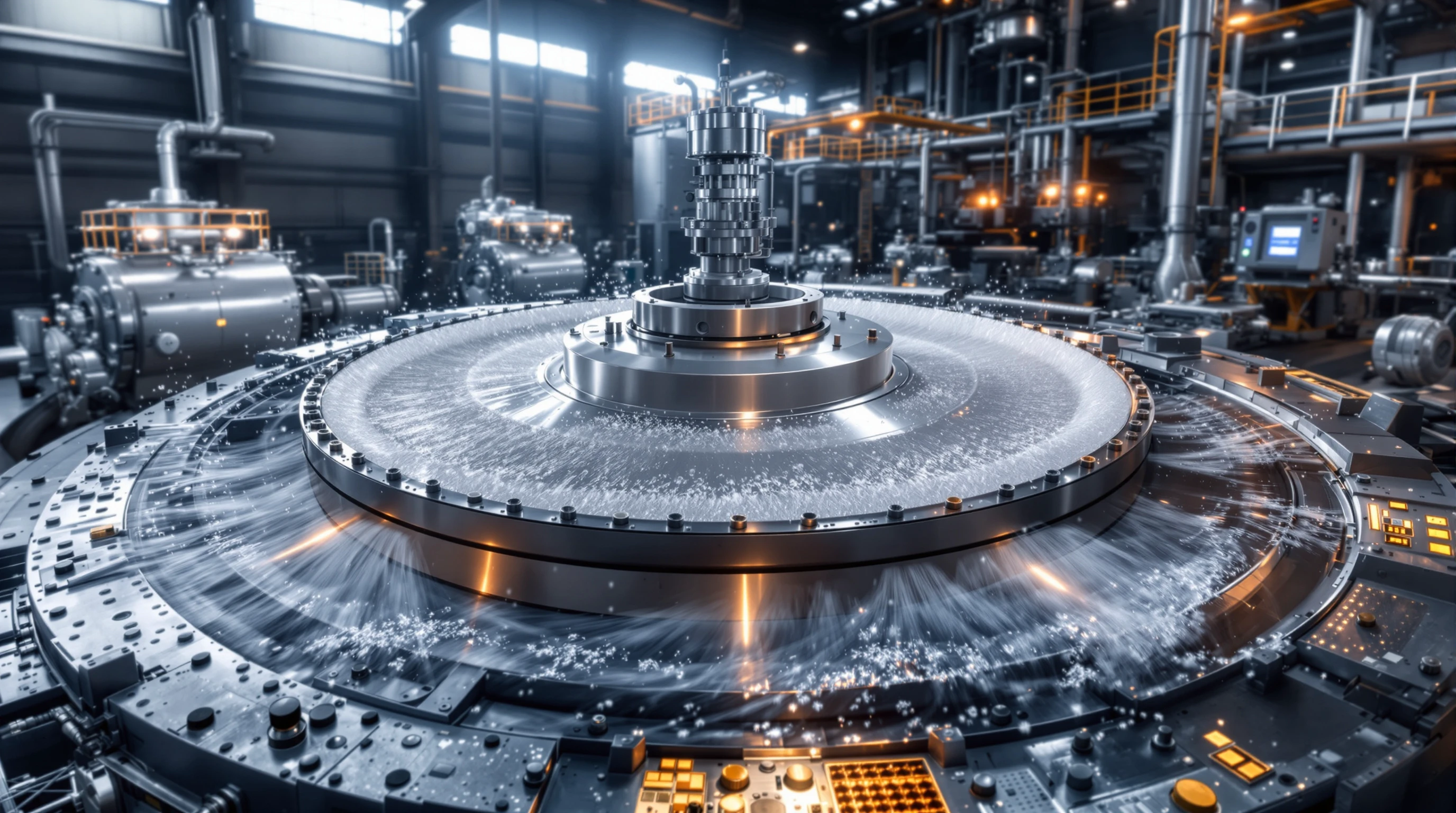
A disc vacuum filter operates by rotating microporous ceramic segments through a slurry basin, using vacuum and capillary forces to separate solids from liquids continuously. The core of the technology lies in the hydrophilic alumina ceramic membrane, which features precise pore sizes ranging from 0.75 to 3.0 microns. When the ceramic discs are submerged in the slurry basin, a vacuum applied to the interior of the discs draws water through the membrane. Because the membrane is hydrophilic and the pores are microscopic, capillary tension prevents air from entering the pores, allowing the system to maintain high vacuum efficiency with minimal air flow.
The rotating discs move out of the slurry, and the vacuum continues to pull air through the forming filter cake, further reducing the moisture content. The capillary action ensures that only liquid passes through the membrane, leaving the solids on the surface to form a uniform cake. Once the cake reaches the desired dryness, a pneumatic scraper gently removes it from the ceramic surface. The continuous rotation and automated cake discharge eliminate the batch-processing interruptions common in other filtration methods, ensuring uninterrupted operation in demanding mineral processing environments.
The ceramic membrane undergoes a rigorous backwash cycle after the cake discharge to remove any residual particles trapped in the pores. This backwash uses ultrasonic cleaning combined with a reverse water flow, restoring the membrane’s permeability without the need for chemical cleaning agents. The CX-Series Ceramic Disc Vacuum Filter exemplifies this design, achieving up to 85% lower energy consumption than conventional vacuum filters because the vacuum pump only needs to move liquid, not large volumes of air. This mechanical efficiency translates directly into lower operating costs and a smaller carbon footprint for the processing plant.
What Are the Primary Applications in Mineral Processing?
Mineral processing facilities deploy vacuum filtration systems primarily for tailings dry stacking, concentrate dewatering, and paste backfill preparation. Tailings dry stacking has become an important priority for mining companies aiming to comply with the Global Industry Standard on Tailings Management . By removing the majority of water from tailings before disposal, operators stack the material geotechnically, eliminating the need for large, high-risk tailings storage facilities. This approach not only mitigates the risk of catastrophic dam failures but also allows for progressive reclamation of the mine site.
Concentrate filtration represents another important application, particularly for metallurgical plants producing copper, zinc, or lead concentrates for export. Smelters and shipping ports enforce strict moisture limits to prevent cargo liquefaction and ensure efficient smelting processes. A disc vacuum filter consistently achieves the low moisture specifications required for these contracts, producing a drier cake than conventional cloth filters. For operations dealing with complex mineralogies, this consistent moisture control prevents costly penalties and ensures that the final product meets all commercial and regulatory standards.
Paste backfill preparation relies heavily on efficient solid-liquid separation to supply underground mining operations with structural fill material. The filtration step is important for reducing the moisture content of the tailings before they are mixed with cementitious binders. By delivering a drier filter cake, the filtration system reduces the amount of expensive cement required to achieve the target rheology and compressive strength. According to a 2025 engineering assessment, an optimized mining-tailings filtration system recovers up to 103,680 cubic meters of water annually (Latin American and Caribbean Consortium of Engineering Institutions, 2025) [4] . Implementing strong Water and Tailings Management strategies ensures that this recovered water is immediately returned to the process circuit, drastically reducing the site’s reliance on freshwater make-up.
Why Choose Ceramic Disc Vacuum Filter Technology Over Conventional Methods?
Ceramic disc filter technology delivers measurable advantages in capital expenditure, operating costs, and filtrate quality when compared to traditional cloth-based vacuum filters or filter presses. The most significant operational benefit is the elimination of filter cloth replacement. Conventional cloth filters are prone to blinding and physical degradation, requiring frequent shutdowns for media replacement and generating substantial ongoing consumable costs. In contrast, the microporous alumina ceramic membranes used in a disc vacuum filter have a lifespan of up to 24 months, supporting sustained continuous filtration campaigns with minimal maintenance intervention.
Filtrate quality is an area where ceramic technology excels. The precise pore structure of the membrane ensures that the recovered water contains less than 200 parts per million (ppm) of suspended solids. This exceptional clarity means the filtrate is returned directly to the process water circuit without requiring secondary clarification or polishing steps. In contrast, conventional vacuum filters produce filtrate with suspended solids exceeding 10,000 ppm, which causes scaling, pump wear, and interference with downstream flotation or leaching circuits. An industrial-scale phosphate-tailings study showed that optimized filtration increases solids concentration from 52% after thickening to approximately 75% solids by mass after filtration (PubMed, 2025) [3] .
The transition to ceramic disc filtration yields 30% to 40% savings in both capital and operating expenditures from a financial perspective. The lower energy requirements, reduced maintenance labor, and elimination of cloth consumables compound over the life of the mine to deliver a vastly superior net present value. Also, the modular design of modern ceramic filters allows for phased plant expansion, enabling mining companies to scale their dewatering capacity in line with production increases without undertaking massive, disruptive plant overhauls. The Australian Centre for Geomechanics notes that advanced filtration techniques are important for maximizing resource preservation in modern mining operations [2] .
How Do Engineers Size and Integrate a Vacuum Filtration System?
Sizing a vacuum filtration system requires rigorous bench-scale testwork, pilot validation, and detailed mass and water balance modeling to ensure performance guarantees are met. The filterability of a slurry is highly dependent on its particle size distribution, mineral composition, and chemical environment. Engineers must conduct capillary action tests, cake thickness measurements, and specific resistance analyses to determine the optimal membrane pore size and vacuum pressure. Conducting thorough Bench and Pilot Testing at a dedicated laboratory facility de-risks the project by providing validated design criteria before capital is committed to full-scale equipment procurement.
Engineers integrate the system into the broader plant flowsheet once the fundamental filtration parameters are established. This involves designing the auxiliary equipment that supports the filter, including vacuum pumps, filtrate receiver tanks, compressed air systems for cake discharge, and flocculant dosing stations. The piping and instrumentation diagrams (P&IDs) must account for the hydraulic head required to move the filtrate and the pneumatic requirements for the scraper and backwash systems. Proper integration ensures that the filter operates at a steady state, avoiding surges in slurry feed that compromises cake formation or overloads the vacuum pumps.
Modern engineering approaches also use artificial intelligence and historical operational data to refine plant design. AI-assisted benchmarking tools analyze decades of laboratory and field data to predict filter performance across varying feed conditions, reducing the time required to move from feasibility studies to detailed engineering. For large-capacity plants, engineers use modular configurations, such as the CX12-204 model with its 204 square meter filtration area, to achieve economies of scale. This modular approach simplifies logistics, reduces installation time, and provides a clear pathway for future capacity expansions as the mine’s life-of-plan evolves.
Important Questions About Disc Vacuum Filter
What is the typical moisture content of a filter cake?
A ceramic disc vacuum filter produces a filter cake with a typical moisture content ranging from 8% to 15%. The ceramic disc vacuum filter achieves this low moisture level through the combination of high vacuum pressure and the hydrophilic nature of the microporous alumina membrane, which efficiently extracts water while retaining fine solids. Achieving such low moisture content is important for mining operations that require dry stacking for geotechnical stability or need to meet strict shipping specifications for metallurgical concentrates. By reducing the residual water in the filter cake, mining companies significantly lower the energy required for downstream thermal drying processes and reduce the overall consumption of cementitious binders in paste backfill applications.
How often do ceramic membranes need replacement?
Ceramic membranes in a disc vacuum filter require replacement every 18 to 24 months, depending on slurry abrasiveness and maintenance rigor. The microporous alumina ceramic resists chemical degradation and mechanical wear, unlike conventional filter cloths that need changing every few weeks due to blinding or physical tearing. The extended lifespan of the ceramic segments drastically reduces the labor costs and operational downtime associated with media changes. Operators schedule membrane replacements during planned annual shutdowns, ensuring that the filtration plant maintains continuous availability throughout the rest of the production year without unplanned interruptions.
Can a disc vacuum filter handle ultrafine particles?
A disc vacuum filter effectively handles ultrafine particles by using ceramic membranes with pore sizes as small as 0.75 microns. The capillary action inherent in the hydrophilic ceramic structure ensures that even when processing high-slime materials, the filtrate remains exceptionally clear, frequently below 200 parts per million of suspended solids. This capability is particularly valuable in hydrometallurgical circuits and tailings dewatering operations where the loss of ultrafine particles to the water recovery system causes downstream scaling or environmental compliance issues. Proper flocculant addition upstream of the filter further enhances the capture efficiency of these ultrafine fractions.
What is the difference between a disc filter and a filter press?
A disc filter operates continuously with a rotating mechanism, whereas a filter press functions in batch cycles requiring periodic shutdowns. Disc filters use vacuum pressure and capillary action across ceramic membranes to achieve high throughput with significantly lower energy consumption and smaller physical footprints. Filter presses rely on high-pressure hydraulic pumps to force water out of static chambers, which demands more power, generates higher maintenance costs, and requires complex automation to manage the batch sequences. For large-scale mining operations requiring uninterrupted dewatering and consistent water recovery, the continuous operation of a disc filter offers superior process reliability and lower operating costs.
Filtration Technologies Compared
Selecting the appropriate dewatering equipment requires a careful evaluation of throughput requirements, moisture targets, and operational constraints. Different filtration technologies offer distinct advantages depending on whether the priority is maximum cake dryness, continuous operation, or heavy-duty washing capabilities. The table below compares the operational characteristics of ceramic disc filtration against conventional alternatives commonly used in mineral processing circuits.
| Technology | Cake Moisture | Energy Consumption | Maintenance Frequency | Best Application |
|---|---|---|---|---|
| Ceramic Disc Filter | Low (8-15%) | Very Low (Vacuum only) | Low (18-24 month membrane life) | Tailings dry stacking, concentrate filtration |
| Filter Press | Very Low (5-10%) | High (Hydraulic pumps) | High (Frequent cloth changes) | Small-scale, high-pressure dewatering |
| Horizontal Belt Filter | Moderate (15-25%) | Moderate | Moderate (Belt tracking/washing) | Heavy-duty washing, coarse particles |
| Conventional Cloth Disc Filter | Moderate (12-20%) | High (Air + Vacuum) | High (Frequent cloth blinding) | Legacy plant retrofits |
Ceramic disc filtration consistently outperforms conventional methods in continuous processing environments where energy efficiency and low maintenance are paramount. Filter presses achieve slightly lower moisture levels, but their batch-processing nature and high energy demands make them less suitable for high-tonnage mining applications. Horizontal belt filters remain the preferred choice when counter-current washing is required, but they do not match the filtrate clarity or energy savings of a ceramic disc vacuum filter in standard dewatering tasks.
How CEC Mining Systems Delivers Filtration Solutions
CEC Mining Systems (CECMS) is a Canadian manufacturer specializing in the design, fabrication, and delivery of advanced solid-liquid separation equipment for the global mining industry. Since our establishment in 2011, we have installed over 650 systems across eight countries, providing mining companies with reliable solutions for tailings dewatering, concentrate filtration, and paste backfill preparation. Our proprietary CX-Series technology is engineered to deliver measurable reductions in both capital and operating costs, ensuring that your operation remains competitive and environmentally compliant in increasingly stringent regulatory jurisdictions.
CEC Mining Systems extends its services beyond equipment supply. We provide comprehensive Engineering Studies, Turnkey and Integrated Plant Supply services, managing the entire project lifecycle from initial conceptual design through to commissioning and operational support. Our in-house testing subsidiary, Canadian Critical Minerals Research (CCMR), conducts rigorous bench-scale and pilot-plant testwork to validate design parameters and de-risk your investment before fabrication begins. This integrated capability ensures that every system we deliver is precisely calibrated to the unique mineralogical and operational challenges of your specific site.
CEC Mining Systems is committed to building long-term partnerships with our clients, offering remote monitoring, predictive analytics, and ongoing technical support to maximize equipment availability and performance. Our multicultural team and global network of in-country partners enable us to execute complex projects in remote and challenging environments across the Americas, Africa, Australia, and Asia. To stay updated on our latest technological advancements and project milestones, we invite you to Follow CEC Mining Systems on LinkedIn and connect with our engineering team to discuss your next dewatering challenge.
Practical Tips for Filtration Optimization
Achieving peak performance from a solid-liquid separation circuit requires diligent monitoring, proactive maintenance, and precise chemical management. Operators who implement structured optimization routines significantly extend membrane life, improve filtrate clarity, and reduce overall energy consumption. The following practical strategies are important for maintaining high availability and consistent product quality in demanding mineral processing environments.
Monitor vacuum pressure and filtrate clarity continuously to detect early signs of membrane blinding or system leaks. A sudden drop in vacuum efficiency or an increase in filtrate turbidity indicates that the ceramic pores are becoming obstructed or that a seal has failed. By integrating automated sensors into the plant’s distributed control system (DCS), operators trigger immediate backwash cycles or schedule targeted maintenance before the issue escalates into a full circuit shutdown. Maintaining strict control over the vacuum pump performance ensures that the capillary action remains uncompromised.
Optimize flocculant dosing rates to balance cake formation speed with moisture extraction. Over-dosing flocculants creates a dense, impermeable cake layer that traps moisture and resists vacuum extraction, while under-dosing leads to poor particle capture and high suspended solids in the filtrate. Conducting regular jar tests and using automated dosing systems that adjust to real-time changes in slurry density and flow rate ensures that the filter receives a consistently conditioned feed. This precision directly translates to higher throughput and drier cake discharge.
Schedule routine membrane backwashing and ultrasonic cleaning to prevent irreversible pore blockage. While the automated backwash system handles the majority of surface cleaning during operation, periodic deep-cleaning protocols are necessary to remove microscopic scaling and chemical precipitates that accumulate over time. Using appropriate cleaning agents that are compatible with the alumina ceramic and the specific mineralogy of the slurry restores membrane permeability without degrading the hydrophilic properties of the surface. Finally, conduct periodic brownfield audits to identify bottlenecks in auxiliary equipment, such as undersized filtrate pumps or inefficient compressed air delivery, which silently degrade the overall performance of the filtration plant.
Wrapping Up
The transition to sustainable mining practices demands filtration technologies that deliver high throughput, exceptional water recovery, and low operating costs. A disc vacuum filter equipped with microporous ceramic membranes meets these requirements by using capillary action and continuous rotation to produce dry filter cakes and ultra-clear filtrate. By eliminating the recurring costs and downtime associated with conventional filter cloths, this technology provides a superior return on investment for tailings dry stacking, concentrate dewatering, and paste backfill applications.
Optimizing your solid-liquid separation circuit is an important step toward improving your site’s water balance and ensuring long-term geotechnical stability. CEC Mining Systems offers the engineering expertise, proprietary technology, and turn-key project delivery required to modernize your filtration infrastructure. Contact our technical team today to schedule a bench-scale testwork program and discover how our ceramic disc filtration solutions improve your mineral processing operations.
Further Reading
- Filtered tailings water recovery study. Australian Centre for Geomechanics.
https://papers.acg.uwa.edu.au/d/2115_13_Kruyswijk/13_Kruyswijk.pdf - Brazilian iron-ore dry tailings operations. Australian Centre for Geomechanics.
https://papers.acg.uwa.edu.au/p/2555_04_Gerards/ - Industrial-scale phosphate-tailings filtration study. PubMed.
https://pubs.ncbi.nlm.nih.gov/ - Mining-tailings filtration water recovery system. Latin American and Caribbean Consortium of Engineering Institutions.
https://laccei.org/LACCEI2025-Mexico/full-papers/Contribution_1331_final_a.pdf