Discover how a Disc filter improves tailings dewatering, water recovery, and concentrate filtration in mining operations with advanced ceramic membrane technology.
Article Snapshot
Disc filter is a solid-liquid separation machine that uses rotating microporous ceramic membranes and vacuum pressure to extract water from mineral slurries, producing a dry filter cake and clear filtrate for industrial reuse.
Disc filter in Context
- Filtered tailings achieved 94 percent overall water recovery, compared with 86 percent for paste tailings (University of Western Australia, 2026) [1] .
- A modeled filtered-tailings scenario achieved 93 percent water-recovery efficiency, equivalent to 2,782 liters per second (Semantic Scholar, 2025) [2] .
- Disc vacuum filtration operations processing 100,000 to 200,000 metric tons per day reported over $100 million in capital-expenditure savings (Australian Centre for Geomechanics, 2025) [3] .
Introduction
Mining operations face mounting pressure to reduce freshwater consumption and eliminate the environmental risks associated with conventional tailings storage facilities. Achieving these sustainability targets requires reliable, high-capacity solid-liquid separation equipment capable of handling abrasive mineral slurries. The disc filter has emerged as a foundational technology for modern mineral processing, enabling efficient tailings dewatering, concentrate filtration, and paste backfill preparation. At CEC Mining Systems, we design and manufacture advanced ceramic disc-vacuum filtration systems that address these exact challenges, delivering measurable improvements in water recovery and operational cost efficiency.
This disc filter guide explores the mechanics, applications, and economic advantages of deploying a disc filtration system in demanding mining and metallurgical environments. We will examine how microporous ceramic membranes outperform traditional filter cloth, review the latest industry data on water recovery and capital savings, and outline the operational best practices necessary to maximize equipment lifespan. Whether you are evaluating a greenfield dry-stack project or upgrading an aging brownfield concentrate circuit, understanding the capabilities of this equipment is critical for making informed engineering decisions that protect both your operational margins and the surrounding environment.
How Does a Disc Filter Work in Mineral Processing?
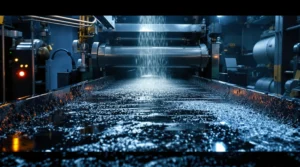
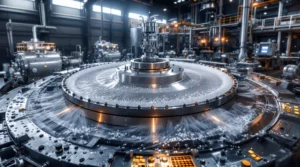
A disc filter operates by using a series of hollow, segmented discs submerged in a slurry basin, where vacuum pressure and capillary action drive the solid-liquid separation process. Unlike traditional filtration methods that rely on woven synthetic media, advanced models use a microporous ceramic membrane constructed from hydrophilic alumina. When the ceramic segments rotate through the slurry, a vacuum applied to the interior of the discs draws water through the microscopic pores while retaining solid particles on the surface. The continuous rotary mechanism forms a uniform filter cake that is subsequently dewatered in the drying zone before being discharged via a scraper or blowback system.
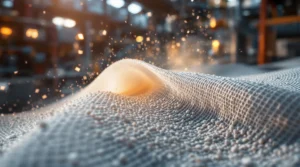
The fundamental advantage of the ceramic disc vacuum filter lies in the unique properties of the alumina membrane. The hydrophilic nature of the ceramic material ensures that the pores remain permanently primed with water, preventing air from entering the vacuum system and maintaining a consistent pressure differential. Capillary action allows the equipment to operate with significantly lower vacuum requirements than conventional systems, translating directly into reduced energy consumption. The rigid structure of the ceramic membrane eliminates the mechanical flexing and tearing associated with flexible filter cloths, ensuring uninterrupted continuous operation over extended campaigns without the risk of sudden media failure.
In mineral processing applications, the particle size distribution and slurry density dictate the specific pore size required for optimal performance. Membrane pore sizes range from 0.75 to 3.0 microns, allowing engineers to tailor the filtration media to fine and ultrafine particle capture. The resulting filtrate is exceptionally clear, frequently containing less than 200 parts per million of suspended solids, which permits direct return to the process water circuit without the need for secondary clarification. This closed-loop water management capability is a primary reason why mining companies specify a rotary disc filter for sites where freshwater access is severely restricted or heavily regulated by local authorities.
Why Is a Disc Filter Important for Tailings Dewatering?
Tailings management represents one of the most significant environmental and financial liabilities in the global mining sector. Transitioning from conventional slurry impoundments to filtered tailings and dry stacking requires high-throughput dewatering equipment capable of producing a stable, low-moisture filter cake. A disc filtration system is uniquely suited for this application because it combines massive processing capacity with superior moisture control, directly supporting the geotechnical stability required for dry stack construction. According to the Global Tailings Management Institute , dry-stack tailings facilities have represented approximately 4 to 6 percent of new tailings facilities in reported datasets since 1980, though this adoption rate is accelerating rapidly due to stricter environmental regulations and heightened ESG scrutiny [4] .
The economic and environmental benefits of filtered tailings are heavily dependent on the volume of water recovered from the process stream. A 2026 analysis by the University of Western Australia demonstrated that filtered tailings achieved 94 percent overall water recovery, compared with just 86 percent for paste tailings [1] . The water recovery differential represents millions of liters of saved freshwater annually for a mid-sized operation. Similarly, a 2025 modeled scenario published by Semantic Scholar found that a filtered-tailings configuration achieved 93 percent water-recovery efficiency, equating to a total recovery of 2,782 liters per second [2] . In practical terms, a gold-ore processing plant in Peru using advanced filtration was reported to recover 103,680 cubic meters of water annually, drastically reducing its reliance on external water sources in an arid jurisdiction [5] .
Beyond water conservation, deploying a vacuum disc filter for tailings dewatering significantly reduces the physical footprint of the tailings storage facility. Extracting maximum moisture before deposition allows operators to stack the material at higher angles and eliminate the need for massive containment dams. This not only lowers the initial capital expenditure associated with dam construction but also minimizes the long-term closure and reclamation liabilities. For operations located in water-constrained regions such as the Atacama Desert in Chile or Western Australia, the ability to recover and reuse process water is not merely an environmental preference but a fundamental prerequisite for maintaining a viable site mass balance and securing operational permits.
How Does a Disc Filter Compare to Conventional Vacuum Filters?
When engineers evaluate solid-liquid separation options, the comparison between a modern ceramic disc filter and conventional cloth-based vacuum filters reveals stark differences in both capital and operating expenditures. Traditional disc and drum filters rely on synthetic woven filter cloths that are prone to blinding, mechanical wear, and frequent tearing. Replacing these cloths requires scheduled downtime, increases maintenance labor costs, and introduces the risk of coarse particles bypassing the media and contaminating the filtrate. In contrast, the microporous ceramic membrane is highly resistant to abrasion and chemical degradation, offering a continuous operational lifespan of up to 24 months per campaign without the need for media replacement.
The financial implications of this technological divergence are substantial. A 2025 case study published by the Australian Centre for Geomechanics reported that a disc-filter installation handling copper tailings at a rate of 100,000 to 200,000 metric tons per day generated more than $100 million in capital-expenditure savings compared to conventional filtration alternatives [3] . These savings are driven by the equipment’s modular design, which requires a smaller physical footprint, reduced structural steel requirements, and lower auxiliary vacuum pump capacities due to the inherent energy efficiency of capillary action. Operating expenditures are similarly compressed, as the elimination of filter cloth procurement and the reduction in power consumption yield a 30 to 40 percent decrease in total circuit costs.
Filtrate quality is another critical differentiator. Conventional cloth filters frequently yield filtrate with suspended solids exceeding 10,000 parts per million, necessitating the installation of secondary thickeners or clarifiers before the water is reused. A ceramic vacuum disc filter consistently produces filtrate below 200 parts per million, effectively bypassing the need for downstream water treatment infrastructure. This superior clarity protects downstream heat exchangers, pumps, and reverse osmosis membranes from abrasive scaling and fouling. For metallurgical and refining applications where concentrate moisture must meet strict smelter specifications, the ceramic membrane delivers a filter cake that is 1.0 to 4.0 percent drier than what is achievable with conventional cloth media, directly impacting shipping costs and downstream processing efficiency.
What Are the Operational and Maintenance Requirements of a Disc Filter?
Maintaining optimal performance in a disc filtration system requires a disciplined approach to feed conditioning, vacuum management, and membrane cleaning. Unlike batch-operated equipment, a rotary disc filter operates continuously, meaning that any fluctuation in the upstream slurry feed immediately impacts cake formation and moisture content. Proper feed preparation is paramount; the slurry must be adequately thickened to ensure a high solids loading, and the correct flocculant dosing must be applied to promote particle agglomeration. When the feed is properly conditioned, the equipment sustains high throughput rates while maintaining a uniform cake thickness across the entire surface area of the ceramic segments.
One of the most common concerns among process engineers is how the equipment handles variations in ore mineralogy and particle size distribution. A 2025 study on disc vacuum filtration by the Australian Centre for Geomechanics concluded that small variations in tailings particle-size distribution had a low impact on filter-cake moisture, demonstrating the inherent operational reliability of the technology [6] . The filtration stability is largely due to the rigid, uniform pore structure of the alumina membrane, which does not stretch or deform under vacuum pressure like synthetic cloths. However, operators must still monitor the slurry basin level and vacuum pressure gauges to ensure that the discs are fully submerged during the cake formation zone and that the vacuum differential remains within the design parameters.
Maintenance routines for a ceramic disc vacuum filter are heavily focused on preventative cleaning and mechanical inspections. Over time, fine particles and chemical precipitates accumulate within the microporous structure of the ceramic, leading to a gradual decline in permeability. To counteract this, automated ultrasonic or chemical cleaning cycles are integrated into the equipment’s control logic, periodically flushing the membranes during scheduled maintenance windows. Mechanical maintenance is minimal, primarily involving the inspection of the scraper blades, agitator arms, and filtrate piping seals. Because the ceramic segments are modular, individual damaged membranes are isolated and replaced without dismantling the entire disc assembly, ensuring that the solid-liquid separation circuit remains online and productive.
Questions from Our Readers
What is the typical moisture content of a filter cake produced by a disc filter?
A ceramic disc filter produces a filter cake with moisture content 1.0 to 4.0 percent lower than conventional vacuum filters. This yields a stable, low-moisture solid suitable for dry stacking or concentrate shipping, reducing downstream handling costs and improving geotechnical stability.
How much water can a mining operation recover using a disc filtration system?
Mining operations using filtered tailings achieve up to 94 percent overall water recovery, enabling direct reuse of process water. This high recovery rate drastically reduces freshwater extraction requirements and supports sustainable site water balance management in arid jurisdictions.
Can a disc filter handle variations in tailings particle size distribution?
Yes, the rigid microporous ceramic membrane maintains structural integrity under vacuum pressure, ensuring minor particle size fluctuations have low impact. The operational reliability allows the equipment to deliver consistent cake moisture even when upstream mineralogical conditions vary.
What is the expected lifespan of the ceramic membranes in a disc vacuum filter?
Microporous alumina ceramic membranes offer a continuous operational lifespan of up to 24 months due to high abrasion and chemical resistance. The extended durability eliminates the frequent downtime and material costs associated with replacing synthetic filter cloths.
Filtration Technologies Compared
Selecting the appropriate solid-liquid separation equipment requires evaluating the specific demands of the mineral processing circuit, including throughput requirements, target cake moisture, and acceptable filtrate clarity. The table below contrasts the performance characteristics of advanced ceramic disc filtration against conventional cloth-based alternatives and horizontal belt systems to highlight the operational advantages of modern membrane technology.
| Feature | Ceramic Disc Filter | Conventional Cloth Disc Filter | Horizontal Belt Filter |
|---|---|---|---|
| Filtration Media | Microporous Alumina Ceramic | Synthetic Woven Cloth | Rubber Belt with Filter Cloth |
| Suspended Solids in Filtrate | < 200 ppm | > 10,000 ppm | Variable (> 5,000 ppm) |
| Media Replacement Frequency | Up to 24 months | Every 1-3 months | Every 1-3 months |
| Energy Consumption | Low (Capillary Action) | High (High Vacuum Required) | Moderate to High |
| Primary Application | Tailings Dry Stacking, Concentrate | General Dewatering | Heavy-Duty Washing, Coarse Solids |
While horizontal belt filters excel in applications requiring continuous counter-current washing, the ceramic disc filter remains the superior choice for high-volume tailings dewatering and concentrate filtration where filtrate clarity and low moisture content are paramount.
CEC Mining Systems Disc filter Solutions
CEC Mining Systems specializes in the design, manufacture, and deployment of advanced solid-liquid separation technologies for the global mining and metallurgical sectors. Our flagship CX-Series Ceramic Disc Vacuum Filter uses proprietary microporous alumina membranes to deliver exceptional dewatering performance, achieving up to 85 percent lower energy consumption than conventional vacuum filters. We support our clients through the entire project lifecycle, offering comprehensive Engineering Studies, Turnkey and Integrated Plant Supply to ensure smooth integration into complex processing flowsheets.
Our technical team uses data from extensive Bench and Pilot Testing at our CCMR laboratory to de-risk projects from the earliest feasibility stages, ensuring that the selected equipment matches the specific mineralogical profile of your site. By prioritizing sustainable Water and Tailings Management , we help operations minimize their environmental footprint while maximizing resource recovery. From initial conceptual design to commissioning and operational support, our multidisciplinary team delivers turn-key solutions that optimize site mass balance, reduce capital risk, and secure long-term operational efficiency for our partners worldwide.
Practical Tips for Disc filter Optimization
Achieving peak performance from a disc filtration system requires careful attention to upstream process variables and routine maintenance protocols. Implementing the following best practices will help maintain high throughput rates, ensure consistent filter cake moisture, and extend the lifespan of the ceramic membranes.
- Optimize Feed Thickening : Ensure the slurry feed is consistently thickened to the target solids concentration before entering the filter basin. A stable underflow density prevents fluctuations in cake thickness and maximizes the volumetric throughput of the ceramic membranes, reducing the load on the vacuum pumps and improving overall circuit efficiency.
- Calibrate Flocculant Dosing : Precise flocculant addition is critical for promoting particle agglomeration and improving filtrate clarity. Conduct regular jar testing and use automated dosing systems to adapt to changes in ore mineralogy, ensuring that the flocculant effectively binds fine particles without blinding the microporous ceramic surface.
- Implement Automated Cleaning Cycles : Schedule routine ultrasonic or chemical cleaning cycles to remove fine particulate blinding and chemical precipitates from the microporous ceramic structure. Proactive membrane maintenance preserves capillary action, sustains vacuum efficiency, and extends the operational lifespan of the disc segments, preventing costly unplanned downtime.
Wrapping Up
The transition toward sustainable mining practices necessitates the adoption of highly efficient dewatering technologies that minimize environmental risk and maximize resource recovery. A disc filter equipped with microporous ceramic membranes provides a definitive solution for tailings dry stacking, concentrate filtration, and paste backfill preparation, delivering superior filtrate quality and significant reductions in both capital and operating expenditures. By replacing conventional filter cloth with durable alumina segments, operations achieve uninterrupted continuous production while recovering process water in arid jurisdictions. To evaluate how advanced ceramic filtration optimizes your specific mineral processing circuit, contact our technical team today to discuss bench-scale testing and project feasibility.
Useful Resources
- Filtered vs Paste Tailings Water Recovery Analysis. University of Western Australia.
https://papers.acg.uwa.edu.au/d/2115_13_Kruyswijk/13_Kruyswijk.pdf - Modeled Filtered-Tailings Water Recovery Efficiency. Semantic Scholar.
https://pdfs.semanticscholar.org/be6d/8b003b01212123fa5548139d69e9763e05ff.pdf - Capital-Expenditure Savings in Copper-Tailings Filtration. Australian Centre for Geomechanics.
https://papers.acg.uwa.edu.au/p/2555_28_Hahn/ - Towards Zero Harm Compendium. Global Tailings Management Institute.
https://thegtmi.org/wp-content/uploads/2025/11/towards-zero-harm_compendium.pdf - Water Recovery in Gold-Ore Processing Filtration. LACCEI.
https://laccei.org/LACCEI2025-Mexico/full-papers/Contribution_1331_final_a.pdf - Impact of Particle-Size Distribution on Disc Vacuum Filtration. Australian Centre for Geomechanics.
https://papers.acg.uwa.edu.au/p/2555_08_Testa/