Discover how filter press filtration improves water recovery and tailings management in mining, and explore advanced ceramic alternatives for your site.
Article Snapshot
Filter press filtration is a solid-liquid separation method that uses hydraulic pressure to force liquid through filter cloths, producing a dry cake. It is widely deployed in mining for tailings dewatering, dry stacking, and concentrate processing.
Quick Stats: filter press filtration
- The global filter press market was valued at 1.95 billion U.S. dollars in 2025, with mining representing 24 percent of this total (Strategic Market Research, 2026) [1] .
- A filtered-tailings approach achieved 94 percent overall water recovery, a 10 percent improvement over paste tailings (University of Western Australia, 2026) [2] .
- Recent project designs specify large-scale filter presses with nominal capacities of 750 metric tons per day and design capacities up to 900 metric tons per day (WSP, 2026) [3] .
Introduction
Mining operations face mounting pressure to minimize water consumption and eliminate conventional tailings ponds. Filter press filtration has emerged as a primary technology to address these challenges by aggressively dewatering slurries into stackable solids. At CEC Mining Systems, we recognize that while pressure-based dewatering is effective, selecting the right solid-liquid separation equipment requires a careful evaluation of site-specific mass balances and mineralogies. This guide examines the mechanics, benefits, and limitations of pressure-based systems, and explores how advanced ceramic alternatives deliver superior operational efficiency for modern mineral processing plants.
The transition toward filtered tailings management is driven by both environmental stewardship and economic necessity. By recovering process water and reducing the physical footprint of tailings storage facilities, mining companies secure social licenses to operate in increasingly water-constrained jurisdictions. Understanding the operational realities of pressure filtration is the first step toward designing a resilient and cost-effective dewatering circuit.
What Is Filter Press Filtration in Mining?
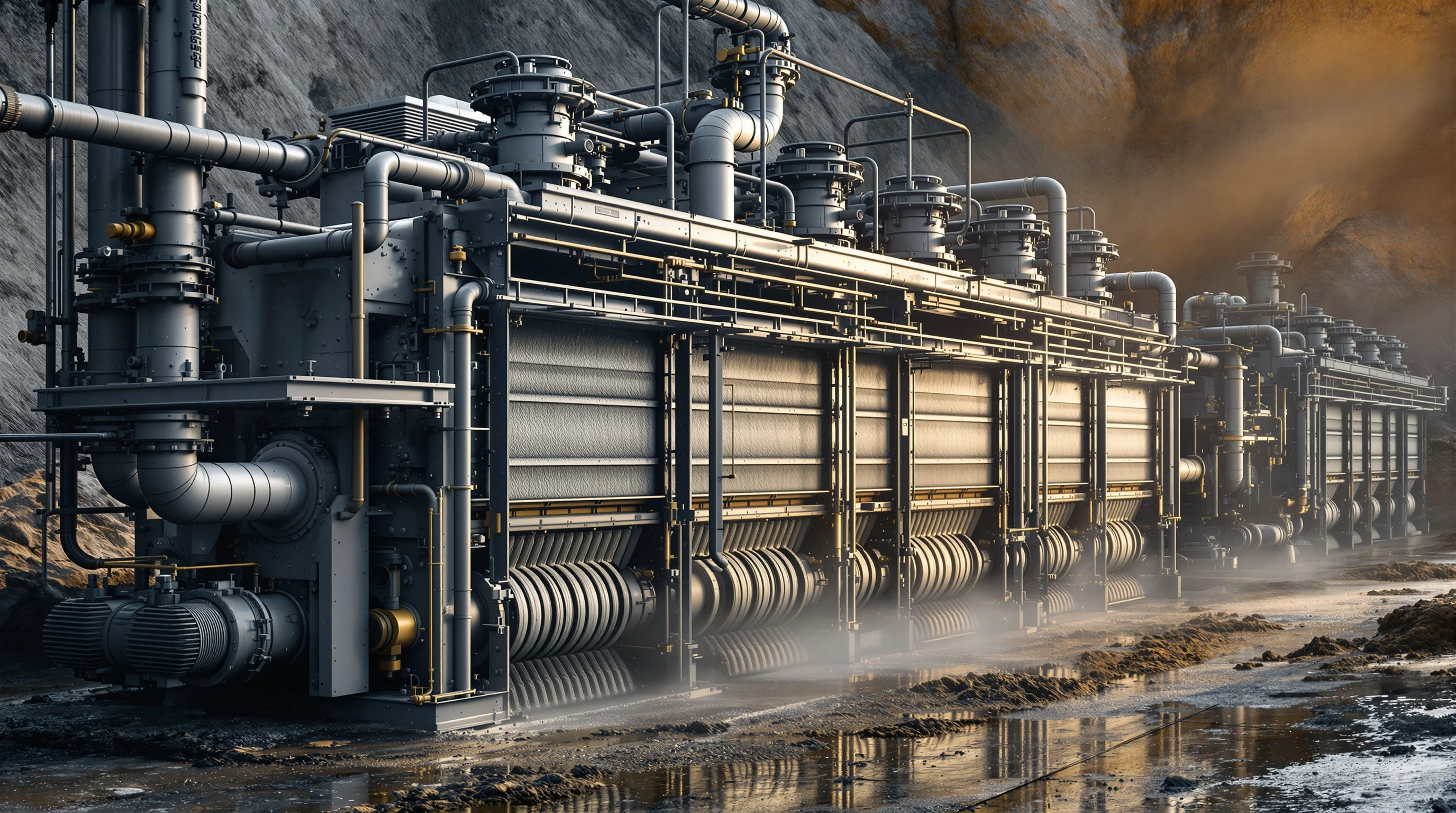
Filter press filtration in mining is a batch or semi-continuous pressure dewatering process that forces slurry into chambers to separate solids from liquids. The equipment consists of a series of vertical plates clad in specialized filter cloth, which are pushed together by a hydraulic cylinder to form sealed chambers. Slurry is pumped into these chambers under high hydraulic pressure, forcing the liquid through the cloth while the solids accumulate to form a filter cake. Once the chambers are full, the pressure is released, the plates are mechanically pulled apart, and the dry cake drops by gravity onto a conveyor system below.
The batch nature of filter press filtration defines the operational rhythm of the technology and heavily influences plant design. Operators must carefully time the filling, squeezing, blowing, and discharge cycles to maximize throughput without overloading the upstream thickener or downstream dry stack conveyor. The global demand for this technology is substantial. The global filter press market was valued at 1.95 billion U.S. dollars in 2025, with the mining sector accounting for 468.2 million U.S. dollars of that demand (Strategic Market Research, 2026) [1] . This market is projected to reach 3.17 billion U.S. dollars by 2032 as regulatory pressure on tailings storage facilities intensifies worldwide.
In mineral processing, pressure filtration is applied across multiple nodes of the flowsheet. It is the standard choice for tailings dry stacking, where the objective is to eliminate the need for a conventional dam. It is also used in concentrate filtration, where precise moisture control is required to meet smelter specifications and shipping contracts. Membrane filter presses are deployed to dewater materials destined for paste backfill, although the batch discharge cycle creates bottlenecks in continuous underground mining operations.
How Does Filter Press Filtration Improve Water Recovery?
Filter press filtration significantly improves site water balance by extracting maximum liquid from tailings streams before they reach storage facilities. In water-constrained jurisdictions such as Chile’s Atacama Desert, the Peruvian Andes, and Western Australia, the ability to recycle process water is the primary economic driver for investing in dewatering infrastructure. By applying extreme mechanical pressure, these systems squeeze out moisture that gravity thickeners and conventional vacuum filters leave behind, returning a high-quality filtrate directly to the process plant.
The quantitative benefits of this approach are well documented in recent geomechanical and metallurgical research. A filtered-tailings approach achieved 94 percent overall water recovery, a 10 percent improvement over paste tailings, which achieved 86 percent (University of Western Australia, 2026) [2] . As T. Kruyswijk notes, “the overall recovery of water improves 10% from 86% for paste tailings to 94% for filtered tailings” (University of Western Australia, 2026) [2] . This additional recovery drastically reduces the volume of freshwater makeup required from local aquifers or desalination plants, directly lowering both operational costs and environmental impact.
Beyond sheer volume, the quality of the recovered water is important for plant stability. The filtrate produced by a well-operated pressure filtration circuit is low in suspended solids, preventing the accumulation of fines in the process water circuit. This clarity improves the efficiency of upstream flotation and leaching circuits, where poor water quality interferes with chemical reagents. Adhering to ICMM tailings management guidelines further ensures that these water recovery strategies align with global best practices for sustainable mining and long-term site closure planning.
What Are the Operational Limitations of Plate-and-Frame Filter Presses?
Despite their high dewatering capability, plate-and-frame filter presses present distinct operational limitations related to batch processing, cloth maintenance, and capital intensity. The most significant operational hurdle is the inherent downtime associated with the batch cycle. Unlike continuous systems, a filter press must stop feeding to open the plates, discharge the cake, wash the cloths, and close the chambers. This cyclical interruption requires complex surge tank management and reliable automation to prevent upstream bottlenecks in the mineral processing plant.
The physical scale required to achieve modern mining throughputs also drives significant capital expenditure. A detailed filtered-tailings project design specified four filter presses with 2-by-2-meter plates and 90 chambers per press, each with a nominal treatment capacity of 750 metric tons per day and a design capacity of 900 metric tons per day (WSP, 2026) [3] . Equipment of this magnitude requires massive structural steel support, heavy-duty overhead cranes for maintenance, and a large physical footprint within the plant layout. Data tracked by the Global Tailings Portal increasingly highlights the spatial and geotechnical challenges of integrating such large-scale dewatering plants into rugged, high-altitude mining terrains.
The reliance on filter cloth introduces ongoing operational expenses. Fine particles, clays, and residual flocculant blind the pore size of the cloth, reducing filtration efficiency and necessitating frequent high-pressure washing or complete media replacement. Cloth failures are a primary cause of unplanned downtime in pressure filtration circuits, driving up OpEx and requiring dedicated maintenance crews to manage the heavy, cumbersome plates. These mechanical and consumable realities force operators to weigh the benefits of low cake moisture against the total cost of ownership over the life of the mine.
How Do Ceramic Disc Filters Compare to Filter Press Filtration?
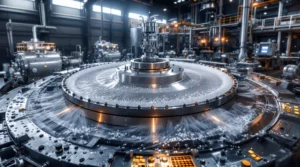
Ceramic disc vacuum filters offer a continuous, low-energy alternative to filter press filtration, particularly for fine tailings and concentrate applications. While pressure filtration relies on hydraulic force and batch cycling, ceramic disc technology uses capillary action and vacuum pressure to draw liquid through microporous alumina ceramic membranes. This fundamental difference in physics allows for uninterrupted, continuous rotation and discharge, eliminating the surge tank requirements and cyclical downtime that characterize plate-and-frame operations.
Filter Press Filtration vs. Continuous Vacuum Systems
The CX-Series Ceramic Disc Vacuum Filter developed by CEC Mining Systems exemplifies the advantages of continuous vacuum technology. Because the ceramic membrane does not rely on traditional filter cloth, it is immune to the blinding and tearing issues that plague pressure filtration. The system achieves filtrate quality below 200 ppm suspended solids without the need for secondary polishing, and it operates with up to 85 percent lower energy consumption than conventional vacuum or pressure systems. For mining operations processing ultrafine materials or managing strict concentrate moisture specifications, the continuous nature of ceramic disc filtration provides a stable, predictable output that batch systems struggle to match.
While plate-and-frame filter presses remain necessary for specific applications requiring extreme mechanical squeezing, ceramic disc filters deliver a 30 to 40 percent reduction in both CapEx and OpEx for the majority of tailings dewatering and metallurgical refining circuits. The extended lifespan of the ceramic segments-lasting up to 24 months per campaign-further insulates operators from the volatile supply chains and recurring costs associated with synthetic filter cloths.
Your Most Common Questions
What is the difference between a membrane filter press and a plate-and-frame filter press?
Membrane filter presses squeeze the cake using inflatable bladders, while plate-and-frame models rely solely on hydraulic pump pressure during the initial feed cycle. This secondary squeezing action in membrane presses yields a drier filter cake, which is advantageous for operations where moisture content directly impacts downstream transport costs or smelter contract specifications. However, the inflatable bladders introduce additional mechanical complexity and maintenance requirements that plant operators must manage over the equipment lifecycle.
How dry is the filter cake produced by pressure filtration?
Pressure filtration produces a filter cake with moisture content between 15 and 25 percent, depending on slurry particle size and applied hydraulic pressure. Achieving the lower end of this range requires the use of membrane squeeze plates and high-pressure air blowing cycles, which increase the overall cycle time and energy consumption of the dewatering plant. The final moisture level must be carefully balanced against the geotechnical requirements of the dry stack facility to ensure structural stability and prevent liquefaction during seismic events.
Can filter press filtration be used for paste backfill preparation?
Filter press filtration dewaters tailings for paste backfill, but the batch discharge cycle creates bottlenecks compared to continuous ceramic disc vacuum filtration systems. Underground mining operations require a steady, uninterrupted supply of filtered tailings to mix with cement and pump back into void spaces. The cyclical nature of pressure filtration necessitates large intermediate storage bins and complex material handling conveyors to smooth out the feed to the paste plant, adding capital cost and maintenance overhead to the backfill circuit.
Why do mining companies choose dry stacking over conventional tailings ponds?
Mining companies choose dry stacking to eliminate catastrophic failure risks associated with conventional ponds and to recover maximum process water for direct site reuse. Conventional tailings storage facilities pose significant environmental and financial liabilities, requiring perpetual monitoring and massive land footprints. By dewatering tailings into a stable, stackable solid, operators drastically reduce the physical footprint of the storage facility, lower the risk of groundwater contamination, and align their operations with stringent modern environmental regulations and community expectations.
Solid-Liquid Separation Technologies Compared
Selecting the right dewatering technology requires balancing cake moisture, throughput continuity, and operational costs. The following table compares the three primary solid-liquid separation methods used in modern mining and metallurgical circuits to highlight their distinct operational profiles and ideal applications.
| Technology | Operation Mode | Energy Consumption | Best Application |
|---|---|---|---|
| Plate-and-Frame Filter Press | Batch / Cyclical | High (Hydraulic Pumps) | Coarse tailings, extreme pressure dewatering |
| Ceramic Disc Vacuum Filter | Continuous | Low (Vacuum / Capillary) | Fine tailings, concentrate filtration, paste backfill |
| Horizontal Belt Filter | Continuous | Moderate (Vacuum / Drive) | Heavy-duty washing, high-capacity coarse dewatering |
While pressure filtration excels in generating high mechanical force, continuous vacuum systems like ceramic disc filters and horizontal belt filters provide superior process stability and lower energy footprints for high-volume mineral processing applications.
How CEC Mining Systems Optimizes Tailings Dewatering
CEC Mining Systems approaches solid-liquid separation as a comprehensive engineering challenge rather than a simple equipment supply contract. Our project lifecycle begins with rigorous Bench and Pilot Testing at our CCMR laboratory in Kamloops, British Columbia. By characterizing the specific filterability, rheology, and particle size distribution of your tailings or concentrate, we generate the validated data required to size equipment accurately and de-risk the project from the earliest feasibility stages.
Through our Engineering Studies, Turnkey and Integrated Plant Supply capabilities, we deliver full-cycle EPC, EPCM, and BOOT project execution. Whether you require a greenfield tailings dry stacking plant in the Andes or a brownfield concentrate filtration upgrade in Western Australia, our multidisciplinary team manages the process from conceptual design through commissioning and operational support. We invite you to Follow CEC Mining Systems on LinkedIn to stay updated on our latest project deployments and technological advancements in sustainable mining infrastructure.
Practical Tips for Tailings Filtration Circuits
Optimizing a dewatering circuit requires attention to upstream preparation and downstream material handling. The following best practices for tailings filtration improve filter performance, extend equipment life, and stabilize the overall site water balance.
- Invest in Comprehensive Testwork: Never rely on generic assumptions when sizing filtration equipment. Conduct bench-scale and pilot-plant testing across the full range of expected ore mineralogies to understand how variations in clay content and particle size will affect cake formation and filtrate clarity.
- Optimize Upstream Thickening and Flocculation: Filtration equipment performs best when fed a consistent, high-density underflow. Ensure your thickener is properly sized and that your flocculant mixing and addition systems are tuned to deliver optimal solids loading and rise rates before the slurry reaches the filter feed pump.
- Integrate Comprehensive Water Management: Evaluate your dewatering strategy within the context of your broader Water and Tailings Management plan. Ensure that the filtrate return lines are designed to handle peak flow rates without causing short-circuiting in your process water ponds, and account for seasonal evaporation rates when modeling your site mass balance.
Before You Go
Filter press filtration remains a cornerstone technology for mining operations seeking to eliminate conventional tailings ponds and maximize water recovery. However, the operational realities of batch processing, cloth maintenance, and high energy consumption demand a critical evaluation of all available solid-liquid separation options. Advanced continuous systems, such as ceramic disc vacuum filters, offer superior economics and process stability for modern mineral processing circuits.
If you are evaluating dewatering technologies for your next greenfield project or brownfield upgrade, partner with a team that understands the full lifecycle of tailings management. Contact CEC Mining Systems today at +1 604 685 7823 or via our website to discuss how our proprietary filtration solutions optimize your site mass balance and reduce your operational costs.
Further Reading
- Filter Press Market Report. Strategic Market Research.
https://www.strategicmarketresearch.com/market-report/filter-press-market - Innovation in tailings dewatering: case studies of the successful application of full-function plate-and-frame filter presses. University of Western Australia Australian Centre for Geomechanics.
https://papers.acg.uwa.edu.au/p/2555_07_Mare/ - Paste 2026 Project Design. WSP.
https://www.wsp.com/-/media/insights/latam/documents/paper-paste-2026_gerardo-gonzales_wsp.pdf