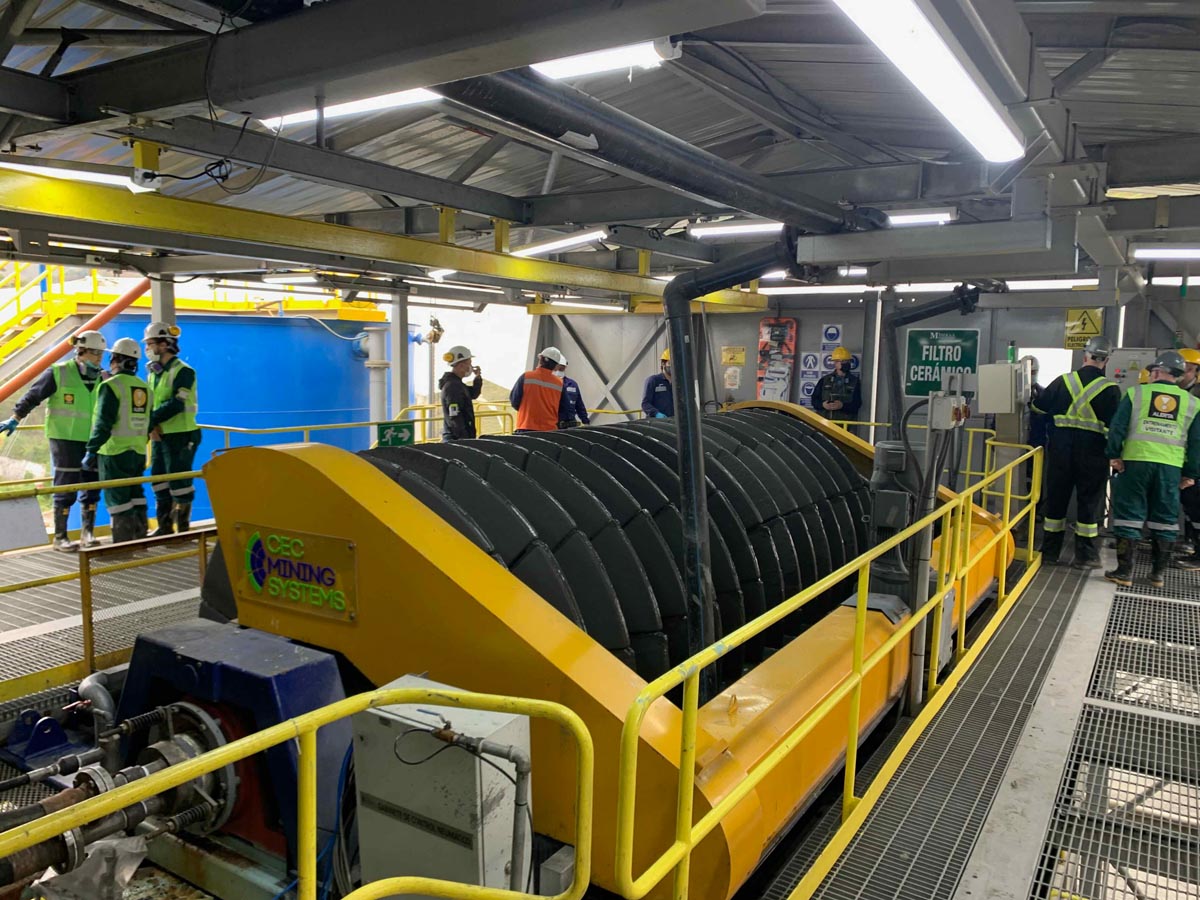
Ceramic filter manufacturer CEC Mining Systems delivers advanced microporous filtration equipment, ensuring mining operations achieve reliable solid-liquid separation and significant cost savings.
Quick Summary
A ceramic filter manufacturer is a specialized industrial engineering company that designs and builds microporous ceramic filtration solid-liquid separation equipment for mining, metallurgical, and water treatment applications.
Key Statistics
- The global ceramic filters market was valued at USD 1.69 billion in 2024 (Grand View Research, 2024) and is projected to reach USD 2.45 billion by 2030 (Grand View Research, 2024) [1] .
- The dewatering case work achieved approximately 86 percent solids content after pressure filtration with ceramic disc filters (University of Western Australia, 2026) [2] .
- The Government of Alberta awarded $46 million dollars in grants for nine projects focused on mine water treatment and tailings management (Government of Alberta, 2026) [3] .
- Asia Pacific accounted for 36.0 percent of global revenue in the ceramic filters market in 2024 (Grand View Research, 2024) [1] .
Introduction
A ceramic filter manufacturer delivers engineered solutions that separate solids from liquids using advanced microporous alumina technologies. In mining and metallurgical operations, effective dewatering performance is critical.
Tailings management and water recovery are important components of mineral processing. When evaluating a ceramic filter manufacturer, mining operators and metallurgical processing plants require reliable equipment that delivers consistent filtrate quality, reduces operating costs, and reduces energy consumption. CEC Mining Systems (CECMS) specializes in manufacturing ceramic disc-vacuum filtration systems and delivering turn-key tailings dewatering projects. With over 650 systems installed in eight countries, the company supports mining operations from bench-scale testwork through full-cycle lifecycle project execution. We explore how a specialized manufacturer designs advanced filtration technologies, examine the operational advantages, and outline key selection criteria for project success.
The mining industry faces increasing pressure to minimize environmental impact and maximize resource efficiency. Traditional dewatering methods struggle to meet these demands due to high energy consumption and frequent maintenance requirements. A ceramic filter manufacturer addresses these challenges by providing advanced microporous filtration solutions that separate solids from liquids with exceptional precision. These systems are particularly valuable in arid regions where water scarcity dictates strict recycling mandates. By implementing ceramic disc-vacuum filtration, mines reduce their freshwater intake and lower the overall footprint of their tailings storage facilities. The shift toward dry stacking and filtered tailings has made the selection of the right filtration technology a strategic priority for modern mining operations.
What Does a Ceramic Filter Manufacturer Do?
A ceramic filter manufacturer develops specialized solid-liquid separation equipment for tailings dewatering and concentrate metallurgical applications. A ceramic filter manufacturer provides proprietary filtration like the CX-Series, which uses capillary action to draw water through ceramic segments while blocking fine particles. This technology represents a significant advancement over conventional vacuum filters that rely on high-energy pumps and disposable filter cloths. The microporous structure of the ceramic segments ensures that only liquid passes through, leaving behind a dry filter cake that is ideal for dry stacking or paste backfill applications.
- A ceramic filter manufacturer engineers and fabricates solid-liquid separation equipment for demanding mineral processing environments.
- The disc vacuum filters replace conventional filter cloth with durable alumina membranes with a lifespan of up to 24 months, significantly reducing maintenance downtime.
- Full-scale project delivery includes bench testwork, engineering, equipment supply, and commissioning support. This comprehensive support ensures that mining operators receive assistance from feasibility studies to full-scale plant commissioning and ongoing operational support.
- Ongoing manufacturing focuses heavily on filtration and filtrate quality while reducing energy consumption. Specialized equipment achieves filtrate quality below 200 ppm, compared to over 10,000 ppm for conventional cloth filters.
- A ceramic filter manufacturer customizes equipment for unique mineralogies. Through in-house testing, manufacturers like CECMS’s CCMR in Kamloops, BC, generate validated filtration sizing, water balance modeling, capital cost estimation, and de-risk projects in early stages.
The engineering process begins with a thorough analysis of the specific mineralogy and particle size distribution of the target material. This data informs the design of the ceramic segments, ensuring optimal pore size and capillary action for the given application. Manufacturers conduct extensive laboratory testing to determine the most effective vacuum levels and disc rotation speeds. This rigorous approach guarantees that the final equipment installation meets the precise dewatering requirements of the mining operation, delivering consistent performance across varying feed conditions.
How Do Ceramic Filters Improve Mine Water Recovery?
Ceramic filters improve mine water recovery by producing a solids-free filtrate that allows mining operations to recycle water directly back into the process circuit, minimizing freshwater demand.
- Solid-free filtrate eliminates fines loading, reducing the workload on downstream clarifiers.
- The capillary action of ceramic membranes draws water without allowing air to pass through, creating a high-efficiency dewatering process that significantly reduces energy consumption compared to conventional filtration.
- High-quality water recovery reduces the tailings storage facility footprint, supporting dry stacking methods that eliminate conventional tailings ponds, mitigate environmental risks, and improve water-constrained jurisdictions.
- Lower operation without cloth change downtime ensures mining plants maximize water recovery rates.
By replacing cloth media with durable ceramic segments, mining operations minimize maintenance and improve plant availability. This continuous filtration approach ensures that high-quality water is consistently recovered, supporting sustainable mining practices and environmental compliance objectives. The elimination of fine particles in the recovered water also protects downstream equipment, such as heat exchangers and cooling towers, from scaling and fouling. This extends the lifespan of ancillary plant infrastructure and reduces the chemical dosing required to maintain water quality in closed-loop circuits.
Furthermore, the high recovery rates achieved by ceramic disc filters enable mines to operate with a significantly smaller water make-up supply. This is a critical advantage in remote or arid mining locations where securing water rights is expensive and politically complex. The ability to recycle up to 95 percent of process water directly from the dewatering circuit transforms the site’s overall water balance, turning a potential environmental liability into a highly efficient, closed-loop resource management system.
What Services Does a Ceramic Filter Manufacturer Provide?
A ceramic filter manufacturer provides comprehensive engineering services to deliver a complete solid-liquid separation plant. Manufacturers deliver full-cycle project execution.
- Bench and pilot-plant testing: Specialized manufacturers like CECMS use AI-assisted benchmarking and dedicated laboratories to test tailings filterability and establish accurate engineering parameters.
- Brownfield audits and optimization: For existing plants, manufacturers perform audits to identify bottlenecks and upgrade aging equipment to modern ceramic filter technologies.
- EPCM/BOOT execution: Manufacturers manage projects from procurement to commissioning.
- Remote access and operational services support: A specialized manufacturer implements remote monitoring, predictive analytics, and support on operating plants globally, allowing proactive issue identification.
- Upgrades and rebuilds: A manufacturer extends equipment life and incorporates the latest advancements, ensuring long-term viability and optimization.
This comprehensive service spans from testwork to ongoing support. A dedicated team provides a single point of contact for clients to manage risks and optimize filtration performance over the mine lifecycle. The integration of digital twin technology and remote monitoring platforms allows the manufacturer to track equipment health in real-time. This data-driven approach enables predictive maintenance, alerting site operators to potential issues before they result in unplanned downtime. The continuous optimization of operating parameters ensures the filtration system adapts to changes in feed material over the life of the mine.
Brownfield optimization services are particularly valuable for mature mining operations looking to increase throughput or improve tailings density without the capital expenditure of a completely new plant. By replacing legacy filter presses or belt filters with modern ceramic disc systems, operators achieve immediate improvements in cake moisture and filtrate clarity. The manufacturer’s engineering team manages the entire integration process, ensuring minimal disruption to ongoing production while delivering a rapid return on investment through reduced operating costs.
How Does a Ceramic Filter Manufacturer Impact CapEx and OpEx?
- Lower energy consumption: Ceramic disc-vacuum filtration uses up to 85% less energy than conventional filters, directly reducing electrical costs.
- Reduced maintenance costs: With ceramic membranes lasting 24 months, mining operators eliminate frequent cloth replacement cycles and drastically reduce downtime.
- Drier filter cake: Reduces paste backfill applications, cutting binder costs.
- Lower capital costs: A specialized manufacturer uses modular designs and supply chains, enabling competitive capital costs regardless of project location or geography, reducing shipping and logistical costs for international mining sites.
- Eliminating filter blinding: The microporous alumina membranes prevent blinding, maintaining consistent throughput and reducing cleaning chemical costs.
- Increased paste backfill efficiency: Drier cake moisture reduces cement consumption in cemented paste backfill operations, lowering binder costs.
The combined effect of reduced capital and operational costs ensures that mining operations achieve a strong return on investment. By optimizing the mass water balance, a ceramic filter manufacturer provides measurable results that improve site sustainability, reduce tailings storage risks, and ensure compliance with tightening environmental standards. The modular design of the filtration units allows for phased capacity expansions, aligning capital expenditure with production ramp-up schedules. This financial flexibility is a significant advantage for new mining projects managing tight initial budgets.
Operational expenditure savings accumulate rapidly due to the elimination of consumables. Conventional filtration requires continuous purchasing, storing, and disposing of thousands of filter cloths, which represents a substantial ongoing material cost. Ceramic membranes eliminate this cost entirely, leaving only minor chemical cleaning expenses. Additionally, the lower moisture content of the dewatered tailings reduces the volume and mass transported to the tailings storage facility, lowering hauling haulage or pumping costs associated with tailings disposal.
Frequently Asked Questions
What is a ceramic filter manufacturer?
A ceramic filter manufacturer is a specialized engineering firm that designs and builds solid-liquid separation equipment using ceramic membranes for mining tailings and water treatment applications.
How long do ceramic filter membranes last?
High-quality ceramic filter membranes last up to 24 months of continuous operation, significantly reducing maintenance costs and eliminating frequent cloth replacements.
How does a ceramic filter manufacturer save energy?
Ceramic disc-vacuum filters consume 85% less energy than conventional vacuum filters by using capillary forces to draw liquids through membranes while blocking air passage.
How do ceramic filters improve mine water recovery?
Ceramic filters produce solids-free filtrate below 200 ppm suspended solids, allowing direct recycling into process water circuits and reducing freshwater demand.
Comparison of Filtration Technologies
A ceramic filter manufacturer provides equipment that outperforms conventional technologies in several key metrics. Ceramic disc filters use capillary action, whereas conventional vacuum filters rely on high-vacuum pumps and filter cloths. This fundamental difference results in significantly lower energy consumption and higher filtrate quality for ceramic systems. Belt filters and filter presses require frequent cloth changes and consume more power, making ceramic disc filters the superior choice for long-term operational efficiency and reduced maintenance downtime.
When comparing ceramic disc filters to traditional pressure filters, the operational advantages become even more pronounced. Pressure filters operate in batch cycles, requiring complex valve sequencing and high-pressure pumps that draw substantial electrical power. In contrast, ceramic disc filters operate continuously, providing a steady output of dewatered cake and clear filtrate. This continuous operation simplifies the downstream material handling systems and eliminates the surge loading issues associated with batch discharge processes, resulting in a smoother, more predictable plant operation.
CEC Mining Systems
CEC Mining Systems (CECMS) is a leading ceramic filter manufacturer specializing in ceramic disc-vacuum filtration systems. The company delivers turn-key tailings dewatering projects and has installed over 650 systems across eight countries. CECMS supports mining operations from bench-scale testwork through full-cycle lifecycle project execution, ensuring optimal solid-liquid separation and water recovery.
The company’s commitment to research and development has resulted in proprietary advancements in ceramic membrane technology, increasing the durability and filtration efficiency of their systems. CECMS operates dedicated testing facilities where client materials are evaluated under simulated plant conditions. This rigorous testing protocol ensures that every system delivered is perfectly sized and configured for the specific mineralogical challenges of the target mine, guaranteeing performance and reliability from day one of operation.
Practical Tips
When selecting a ceramic filter manufacturer, mining operators should request comprehensive bench and pilot-plant testing to validate filtration sizing and water balance modeling. It is important to evaluate the manufacturer’s ability to provide full-scale project delivery, including engineering, equipment supply, and commissioning support. Operators should also inquire about remote monitoring and predictive analytics services to ensure proactive issue identification and long-term equipment optimization.
Mining engineers should also assess the manufacturer’s track record with similar mineralogies and particle size distributions. Requesting case studies and references from comparable mining operations provides valuable insight into the real-world performance and reliability of the proposed equipment. Furthermore, evaluating the local availability of spare parts and the responsiveness of the manufacturer’s technical support team is critical for minimizing potential downtime and ensuring the long-term success of the dewatering installation.
Final Thoughts on Ceramic Filter Manufacturers
Choosing the right ceramic filter manufacturer ensures mining operations achieve reliable solid-liquid separation and significant capital and operating cost savings across global projects. Advanced microporous ceramic filtration technologies provide a sustainable and efficient solution for tailings dewatering and mine water recovery.
The transition toward filtered tailings and dry stacking is accelerating as environmental regulations tighten and water scarcity becomes a more pressing global issue. Partnering with an experienced ceramic filter manufacturer positions mining companies to meet these challenges head-on, transforming tailings management from a costly liability into an optimized, sustainable process. The long-term operational and environmental benefits of ceramic filtration make it an indispensable technology for the future of responsible mining.
References
- Grand View Research. (2024). Ceramic Filters Market Size, Share & Trends Analysis Report. Grand View Research .
- University of Western Australia. (2026). Dewatering Case Work and Pressure Filtration Studies. University of Western Australia .
- Government of Alberta. (2026). Mine Water Treatment and Tailings Management Grants. Government of Alberta .