Cemented paste backfill combines dewatered tailings and binder into a paste for underground mine backfilling. Learn about CPB mix design, UCS requirements, ceramic disc filtration, and the measurable benefits for mine stability and tailings management.
Key Takeaway
Cemented paste backfill is a backfill technique that mixes dewatered tailings, cementitious binders, and water into a cohesive paste for underground placement. It replaces conventional slurry backfill, reducing water demand and improving ground support. The cemented paste backfill process relies on effective solid-liquid separation to achieve the required paste density.
Cemented Paste Backfill in Context
- Design target unconfined compressive strength (UCS) at 28 days for cemented paste backfill ranges from 0.7 MPa to 2.0 MPa (James Cook University, 2018)[4].
- In operating underground mines, the highest reported UCS for cemented paste backfill reaches approximately 5 MPa at Lucky Friday Mine and 6 MPa at Kidd Mine (Australian Centre for Geomechanics, 2022)[2].
- A mine producing 500,000 m³ of CPB per year saves an estimated 23,275,000 liters of water annually by replacing 50 L of mix water with 50 L of foam per cubic meter (Cellular Concrete Technologies, 2021)[10].
Cemented paste backfill (CPB) has become a preferred backfill method in underground mining because it delivers superior ground support, reduces tailings surface storage, and recovers process water. At the heart of efficient CPB production is reliable solid-liquid separation technology—the kind that CEC Mining Systems has supplied to mining operations worldwide since 2011. Through its CX‑Series ceramic disc vacuum filters, the company provides precisely dewatered tailings that achieve the paste consistency needed for high-quality cemented paste backfill. Follow CEC Mining Systems on LinkedIn for the latest on tailings management and filtration innovation.
This article explores the fundamentals of cemented paste backfill, from dewatering and binder mixing to strength requirements and placement. You will learn how ceramic disc filtration optimizes tailings moisture content, why unconfined compressive strength targets matter, and what benefits CPB delivers compared to hydraulic or rock fill. Whether you are evaluating a new tailings management strategy or upgrading an existing backfill plant, understanding cemented paste backfill design and the role of advanced filtration will help you build a safer, more sustainable operation.
What Is Cemented Paste Backfill?
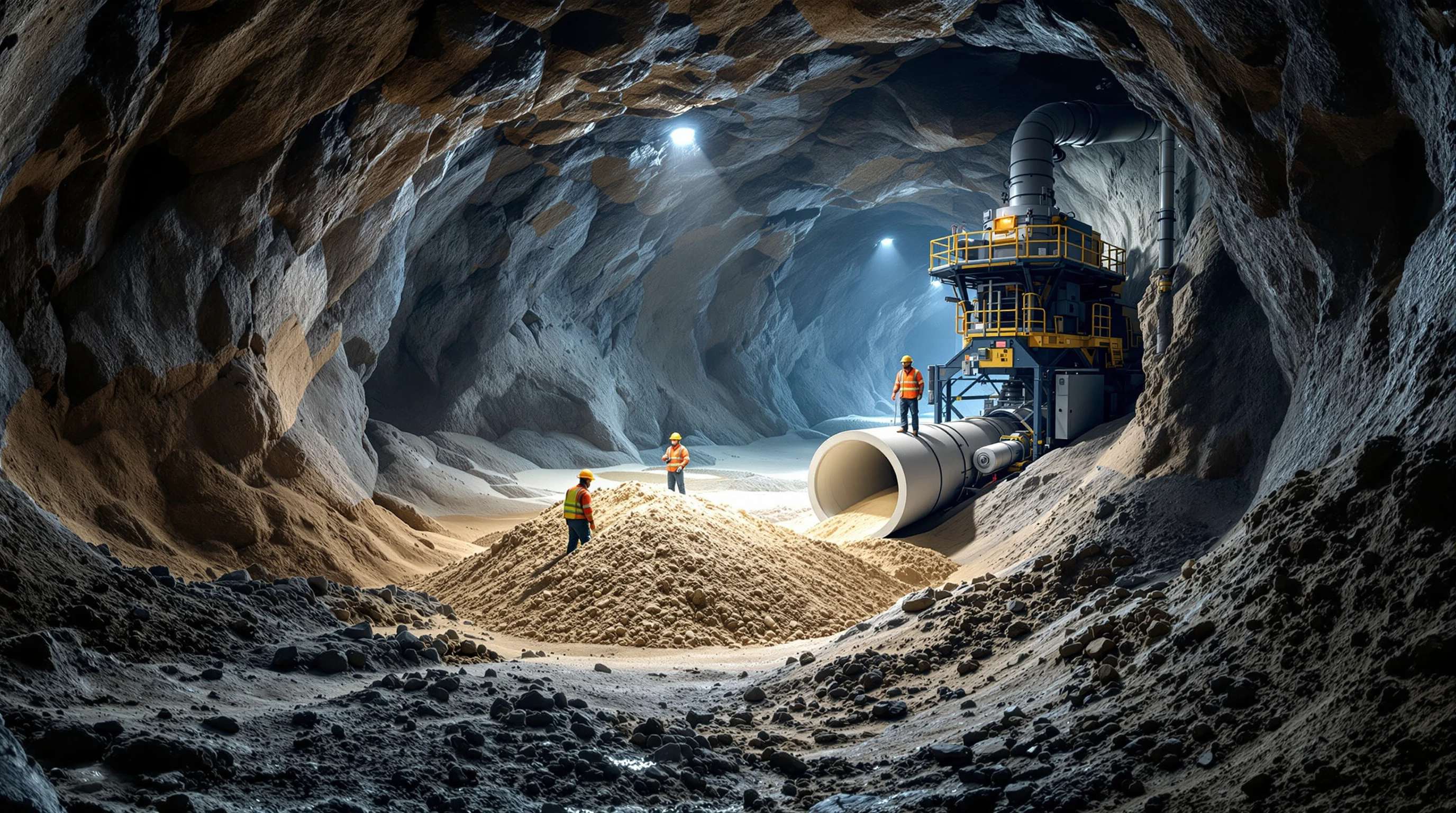
Cemented paste backfill is a high-density backfill material produced by dewatering mill tailings to a paste consistency and mixing them with hydraulic binders, typically Portland cement, fly ash, and ground granulated blast furnace slag. The resulting paste has a slump of 6 to 10 inches and contains minimal bleed water, allowing pipeline transport to underground stopes without segregation. Unlike conventional hydraulic fill, cemented paste backfill gains enough early strength to support the surrounding rock mass, reducing ore dilution and improving the overall stability of the mining operation.
A typical CPB plant integrates three core unit operations: tailings thickening and filtration to achieve the target solids concentration, binder storage and metered addition, and continuous mixing to produce a homogeneous paste. The solid-liquid separation step is often the most design-critical because the filter cake moisture directly dictates binder efficiency, paste strength, and pumpability. CEC Mining Systems’ approach to water and tailings management focuses on achieving the lowest practical moisture while recovering high-quality filtrate for reuse, a combination that materially reduces the cost and environmental impact of the cemented paste backfill cycle.
Because CPB behaves as a non-Newtonian fluid with a yield stress, transport systems require careful rheological characterization. Paste that is too dry causes pipeline blockages, while paste that is too wet leads to segregation and poor in‑stope strength development. Achieving the right balance starts with reliable filtration technology that produces a consistent, low‑moisture filter cake batch after batch.
Solid-Liquid Separation: Preparing Tailings for Paste Backfill
Producing cemented paste backfill hinges on one physical step: dewatering tailings to a filter cake moisture that enables the paste to be pumped and placed. Ceramic disc vacuum filtration has become the industry benchmark for this duty because it delivers filtrate with suspended solids below 200 ppm and cake moisture 1.0–4.0% drier than conventional vacuum filters. These performance gains translate directly into lower binder consumption, stronger backfill, and a smaller carbon footprint for the mining operation.
The CX‑Series ceramic disc vacuum filter engineered by CEC Mining Systems uses microporous alumina membranes to capture ultrafine particles that would otherwise blind conventional filter cloth. The capillary action of the ceramic medium produces a crystal‑clear filtrate that is returned directly to the process water circuit, eliminating the need for secondary clarification. At the same time, the drier filter cake improves cemented paste backfill quality because less free water remains to interfere with cement hydration.
Bench‑scale testwork confirms that a specific tailings stream filters to the target moisture and that the resulting cake forms a stable, pumpable paste when blended with binder. CEC Mining Systems’ CCMR laboratory in Kamloops, BC performs filterability tests, binder optimization, and paste rheology measurement, giving project teams the data they need to size equipment and design a reliable cemented paste backfill plant.
Mix Design and Strength Performance of Cemented Paste Backfill
Designing a cemented paste backfill mix requires balancing binder type, binder content, and tailings characteristics to achieve the target unconfined compressive strength (UCS). According to research, the 28‑day UCS for most CPB applications falls between 0.7 MPa and 2.0 MPa (James Cook University, 2018). However, reported peak values in operating mines can reach 5–6 MPa, as documented at Lucky Friday Mine (5 MPa) and Kidd Mine (6 MPa) (Australian Centre for Geomechanics, 2022). Grabinsky (2022) noted that “Cemented paste backfill strength profiles for continuous pouring … UCS in the range of 10² to 10³ kPa have been reported, with the highest UCS being about 5 MPa for Lucky Friday Mine and 6 MPa for Kidd Mine” (Australian Centre for Geomechanics, 2022).
Mix design is influenced by the water‑to‑cement ratio, the tailings particle size distribution, and the reactivity of the binder blend. When a ceramic disc filter produces a consistently dry cake, less binder is needed to achieve a given strength target, directly lowering operating costs. In some CPB formulations, novel sustainable binders are being trialled to further reduce cost and carbon emissions. Safari (2025) highlighted “Delithiated beta spodumene as a sustainable binder in cemented paste backfill: case study” (Papers ACG, 2025), indicating that the search for lower‑carbon alternatives is gathering pace.
Post‑placement, the cemented paste backfill must develop sufficient early strength to allow adjacent stopes to be mined safely. Li et al. (2025) observed that “there is a dry‑wet cycles threshold value (5 times) for CPB samples. Below the dry‑wet cycles threshold, the strength of CPB increases gradually … Above this threshold, however, dry‑wet degradation occurs” (Scientific Reports, 2025). This kind of data helps geotechnical engineers forecast long‑term backfill performance and design appropriate stope exposure sequences.
Key Benefits of Cemented Paste Backfill in Underground Mining
Cemented paste backfill offers several distinct operational and environmental advantages that are driving its adoption across the global mining industry. First, it dramatically reduces surface tailings disposal because the majority of the mill tailings are returned underground as structural fill. This lowers the footprint and long‑term liability of tailings storage facilities while recovering valuable process water.
Second, CPB provides a self‑supporting fill mass that improves mine stability. The paste binds to the stope walls, enabling more complete ore extraction with less dilution. In deep, high‑stress mines, the early strength of cemented paste backfill is a critical factor in maintaining safe production rates. Third, the low water content of CPB—typically 15–25% by weight—means that far less water must be handled in the underground environment than with hydraulic or slurry fills. In water‑constrained jurisdictions such as Chile’s Atacama region or Western Australia, this alone justifies the capital investment in a paste plant.
Finally, the solid‑free filtrate generated by ceramic disc filtration allows nearly complete water recovery. In a cemented paste backfill circuit built around CEC Mining Systems’ CX‑Series filters, the filtrate is below 200 ppm suspended solids and is returned directly to the concentrator’s process water loop, reducing freshwater demand and simplifying site water balance. Mines operating foam‑modified CPB have reported water savings on the order of 23 million liters per year for a 500,000 m³ backfill operation (Cellular Concrete Technologies, 2021), further improving the water efficiency of the cemented paste backfill method.
Important Questions About Cemented Paste Backfill
What is the typical unconfined compressive strength required for cemented paste backfill?
For most underground applications, cemented paste backfill achieves a 28‑day unconfined compressive strength of 0.7–2.0 MPa to provide adequate ground support while remaining cost‑effective. Specific target values depend on mining depth, stope dimensions, and the required stand‑up time. Operating mines have reported UCS as high as 6 MPa where exceptional early strength is needed (Australian Centre for Geomechanics, 2022).
How does ceramic disc filtration improve cemented paste backfill quality?
Ceramic disc filters produce a consistently dry filter cake with moisture content as low as 8–12%, which reduces binder demand and ensures the paste achieves the required consistency for pipeline transport. The ultrafine filtrate quality (below 200 ppm) also recovers clean process water, enhancing overall site water balance and directly lowering the cost of the cemented paste backfill cycle.
What binders are commonly used in cemented paste backfill?
Typical CPB binders include Portland cement, fly ash, ground granulated blast furnace slag, and lime. Novel sustainable binders, such as delithiated beta spodumene, are being researched to reduce carbon footprint and cost (Safari, 2025). The choice of binder significantly affects paste strength, setting time, and overall cemented paste backfill economics.
How does cemented paste backfill compare to hydraulic sand fill?
Cemented paste backfill has lower water content, higher strength, and minimal segregation compared to hydraulic fill. It eliminates the need for extensive drainage and reduces water handling infrastructure, making it more suitable for deep, high‑stress mining environments. CPB also returns process tailings underground, minimizing surface tailings disposal.
Comparison of Mine Backfill Methods
Selecting the right backfill method depends on mining conditions, tailings characteristics, and cost. The table below compares cemented paste backfill with hydraulic fill, rock fill, and paste fill without cement, highlighting key differences that influence design and performance.
| Method | Binder Content | Water Content | Typical 28‑day UCS | Key Advantage |
|---|---|---|---|---|
| Hydraulic Fill | None or low | 25–40% | <1 MPa | Low cost, simple placement |
| Cemented Paste Backfill | 2–10% by weight | 15–25% | 0.7–2.0 MPa (design)[4]; up to 6 MPa[2] | High strength, water recovery, tailings reuse |
| Rock Fill | Cemented rock | Low | Variable | Highest strength, but high cost |
CEC Mining Systems and Cemented Paste Backfill Solutions
CEC Mining Systems supports cemented paste backfill projects worldwide with its industry-leading ceramic disc filtration technology and full‑lifecycle project services. The CX‑Series ceramic disc vacuum filter, capable of producing filter cake moisture 1.0–4.0% lower than conventional filters, is the backbone of many tailings dewatering circuits that feed CPB plants. With a filtration area up to 204 m² on the CX12‑204 model—the world’s largest ceramic filter—CECMS equipment scales from pilot installations to high‑capacity production plants. Follow CEC Mining Systems on LinkedIn for the latest updates.
Beyond equipment supply, CEC Mining Systems offers bench and pilot testing through its CCMR laboratory in Kamloops, BC. The data‑driven test programs characterize tailings filterability, determine optimal binder dosages, and validate paste rheology, de‑risking CPB plant design from the earliest feasibility stage. For operators seeking to optimize an existing backfill circuit, brownfield audits and optimization identify bottlenecks and upgrade paths that improve throughput and lower operating cost.
When you need a partner for a greenfield cemented paste backfill plant or an upgrade to existing infrastructure, CEC Mining Systems provides turnkey engineering, procurement, and construction management services. Our team works alongside EPC/EPCM firms and mine owners to integrate filtration, thickening, mixing, and distribution into an integrated backfill system. Contact us today to discuss your backfill project and schedule bench‑scale testwork.
How to Implement Cemented Paste Backfill in 4 Steps
Dewater tailings to paste consistency
Use a ceramic disc vacuum filter to achieve a filter cake with moisture below 15% and a paste slump between 6 and 10 inches. The low moisture reduces binder demand and ensures the paste is pumped without segregation. CEC Mining Systems’ CX‑Series provides solid‑free filtrate that recycles directly to the process water circuit.
Select binder and design the mix
Determine the target unconfined compressive strength based on geomechanical requirements, typically 0.7–2.0 MPa at 28 days. Test different binder combinations—Portland cement with fly ash or slag—using bench‑scale trial mixes. Use data from filterability testwork to link tailings moisture to paste strength.
Design the paste transport system
Design a positive‑displacement pump or gravity‑assisted pipeline network that handles the paste’s rheology without blockages. Install pressure sensors, flowmeters, and automated valves to control the filling process and prevent excessive pipeline wear.
Place and monitor the backfill
Place the paste into the stope in lifts, allowing adequate curing time between pours. Monitor stope barricades, backfill temperature, and UCS development using in‑situ sensors and sample testing. Adjust binder dosage if early strength fails to meet safety targets.
Key Takeaways
Cemented paste backfill is a proven backfill method that strengthens underground mine operations while reducing environmental footprint. Reliable solid‑liquid separation, effective binder selection, and engineered paste transport are the pillars of a successful CPB system. With advanced ceramic disc filtration, mining companies achieve the low‑moisture tailings required for optimal paste consistency at a lower operating cost than conventional filtration. CEC Mining Systems supports the full CPB project lifecycle from bench‑scale testing to plant commissioning, backed by over 650 installations worldwide. Contact our team to explore how ceramic disc filtration improves your cemented paste backfill operations. For more industry insights, follow us on LinkedIn.
Further Reading
- Impact of cemented paste backfill on mechanical properties and stability of coal pillar systems. National Library of Medicine, 2026.
https://pmc.ncbi.nlm.nih.gov/articles/PMC12891497/ - Cemented paste backfill strength profiles for continuous pouring and exposure conditions. Australian Centre for Geomechanics, 2022.
https://papers.acg.uwa.edu.au/d/2355_19_Grabinsky/19_Grabinsky.pdf - Experimental study on mechanical properties of cemented ultra-fine tailings backfill. Frontiers in Materials, 2021.
https://www.frontiersin.org/journals/materials/articles/10.3389/fmats.2021.723878/full - Cemented paste backfill modification using different types of binders. James Cook University, 2018.
https://researchonline.jcu.edu.au/53672/1/53672-niroshan-2018-thesis.pdf - Mechanical behavior of cemented paste backfill under the coupled effect of loading rate and water states. PLOS ONE, 2026.
https://journals.plos.org/plosone/article?id=10.1371/journal.pone.0334084 - Experimental investigation on in situ cemented paste backfill containing coal gangue and fly ash. Hindawi (Advances in Civil Engineering), 2020.
https://onlinelibrary.wiley.com/doi/10.1155/2020/7964267 - Red mud neutralized by phosphogypsum for cemented paste backfill. Journal of Environmental Management, 2025.
https://pubmed.ncbi.nlm.nih.gov/40749556/ - Basalt fiber reinforced cemented paste backfill for mine backfilling. Scientific Reports, 2025.
https://pubmed.ncbi.nlm.nih.gov/40128295/ - Mechanical behavior and meso-degradation mechanism of cemented paste backfill under coupled disturbance damage and dry-wet cycles. Scientific Reports, 2025.
https://pubmed.ncbi.nlm.nih.gov/40253537/ - Foam-modified cemented paste backfill overview. Cellular Concrete Technologies, 2021.
https://cellularconcretetechnologies.com/wp-content/uploads/2022/02/FMF-Overview-Sept-2021.pdf - Delithiated beta spodumene as a sustainable binder in cemented paste backfill: case study. Papers ACG, 2025.
https://papers.acg.uwa.edu.au/p/2555_20_Safari/ - A Review of Underground Mine Backfilling Techniques with a Paste Backfill Process. IJIRT, 2025.
https://ijirt.org/article?manuscript=185014 - Cemented paste backfill strength profiles for continuous pouring – Grabinsky. Australian Centre for Geomechanics, 2022.
https://papers.acg.uwa.edu.au/d/2355_19_Grabinsky/19_Grabinsky.pdf - Mechanical behavior of CPB under coupled disturbance damage and dry-wet cycles – Li. Scientific Reports, 2025.
https://pubmed.ncbi.nlm.nih.gov/40253537/ - Mechanical behavior of CPB under loading-rate and water states – Zhang. PLOS ONE, 2026.
https://journals.plos.org/plosone/article?id=10.1371/journal.pone.0334084