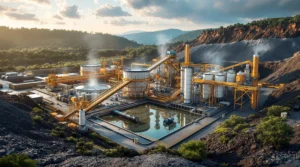
Ceramic filter disc technology uses microporous alumina membranes for solid-liquid separation, delivering up to 94% water recovery and 85% lower energy costs than conventional filtration – learn how it improves mining sustainability.
Article Snapshot
A ceramic filter disc is a rotary vacuum filtration device that uses microporous alumina ceramic membranes instead of conventional filter cloth to separate solids from liquids in mining and industrial slurries. It produces crystal-clear filtrate below 200 ppm suspended solids while consuming up to 85% less energy than traditional vacuum filters, making it the most cost-effective dewatering technology for tailings, concentrates, and process water recovery.
Market Snapshot
- Filtered tailings using ceramic disc filtration achieve up to 94% overall water recovery compared with 86% for paste tailings (University of Western Australia, 2026)[1]
- Ceramic disc vacuum filtration reduces energy consumption by up to 85% versus conventional cloth disc filters (CEC Mining Systems, 2024)[2]
- Vacuum ceramic disk filters consume 0.5-1.5 kWh per ton of processed solids – up to 30% less than comparable belt filter presses (Porvoo, 2025)[3]
- Ceramic disc filters for sludge dewatering yield filter cakes with 15-25% moisture and outflow solids under 50 ppm (Hexin Filter Machine, 2026)[4]
What Is a Ceramic Filter Disc and Why Does It Matter for Modern Mining?
A ceramic filter disc is a solid-liquid separation device that forms the heart of modern dewatering circuits in mining and mineral processing. Unlike conventional cloth-based vacuum filters that rely on fabric media to capture particles, a ceramic filter disc uses microporous alumina membranes with precisely controlled pore sizes – typically ranging from 0.75 to 3.0 microns – to draw liquid through capillaries while retaining solids on the membrane surface as a filter cake. This fundamental design difference produces filtrate quality that cloth filters cannot match, with suspended solids consistently below 200 ppm. CEC Mining Systems, a Canadian manufacturer specializing in ceramic disc-vacuum filtration systems since 2011, provides solutions that use this technology for tailings dry stacking, concentrate dewatering, and paste backfill applications. The importance of ceramic filter disc technology has grown sharply as mining operations face tightening water regulations and escalating energy costs. Ceramic membranes deliver up to 85% lower energy consumption than conventional vacuum filters (CEC Mining Systems, 2024)[2] because the capillary action of the microporous ceramic requires significantly smaller vacuum pumps and lower air flow rates. This combination of superior separation performance and dramatically reduced operating cost makes the ceramic filter disc a strategic asset for any operation seeking to improve water recovery, reduce tailings storage risk, and lower its environmental footprint.
How Does a Ceramic Filter Disc Work?
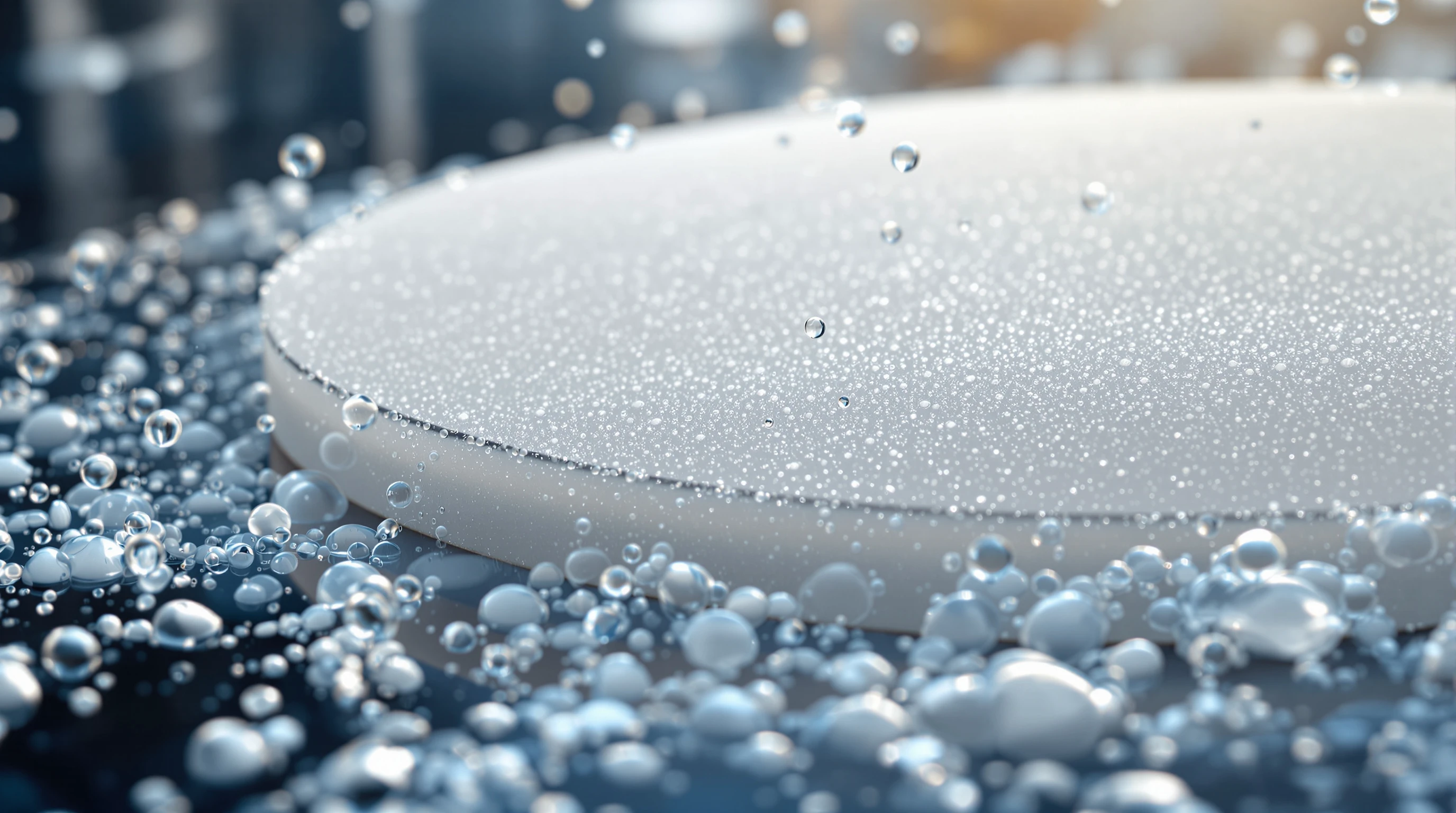
A ceramic filter disc operates through a rotary vacuum process that continuously separates solids from liquids. The equipment consists of multiple ceramic disc segments mounted on a central shaft that rotates slowly through a slurry trough. As each disc segment submerges, vacuum applied through the shaft creates capillary suction within the microporous alumina membrane. Liquid passes through the membrane pores while a cake of solid particles builds up on the disc surface. The capillary force within the membrane’s microscopic pores prevents air from breaking through, meaning the filtrate remains crystal clear throughout the filtration cycle – a characteristic that cloth media simply cannot replicate. As the disc emerges from the slurry, the cake remains on the surface and continues to dewater under vacuum. Scraper blades then remove the filter cake, which drops onto a discharge conveyor, and the cleaned ceramic segment re-enters the slurry to repeat the cycle. A continuous backwash system periodically flushes the membrane surface to maintain permeability and extend the ceramic filter disc operating life, which reaches up to 24 months per campaign under proper operating conditions.
The process physics behind ceramic filter disc performance explain the energy savings. Conventional cloth filters consume significant energy drawing large volumes of air through the filter media to create pressure differential. A ceramic filter disc uses capillary action as the primary driving force, requiring only a small vacuum pump to assist filtrate transport. The process engineering team at CEC Mining Systems (2024) states, “Ceramic membrane technology excels in energy efficiency with smaller vacuum flow rates and pump sizes per filtration area compared to cloth disc filters, resulting in up to 85% less energy consumption than conventional methods.”[2] This fundamental difference in how the ceramic filter disc separates liquids from solids – capillary action rather than brute-force vacuum – produces the combination of low energy use and high filtrate quality that defines the technology’s value proposition in modern mineral processing circuits.
Membrane Properties and Cake Formation
The ceramic filter disc membrane is engineered from high-purity alumina with tightly controlled porosity. Pore sizes ranging from 0.75 to 3.0 microns provide particle retention comparable to ultrafine screens while maintaining sufficient permeability for commercially viable filtration rates. In a fine flotation tailings dewatering project, ceramic filtration using a 1.5-micron pore size membrane achieved residual filter cake moisture of 16% w/w at filtration rates of 0.47 tonnes per hour per square metre (CEC Mining Systems, 2017)[5]. The hydrophilic nature of ceramic is essential for this performance. Because water wets the ceramic membrane surface, the capillary columns formed within the pores resist air breakthrough. This liquid seal is what enables the ceramic filter disc to produce filtrate quality below 200 ppm total suspended solids – a standard unattainable by conventional vacuum disc or drum filters, which typically produce filtrate with suspended solids above 10,000 ppm due to cloth bypass and blinding.
What Makes Ceramic Filter Disc Performance Superior?
The performance advantages of a ceramic filter disc over conventional filtration technologies stem from measurable differences in energy consumption, water recovery, and operating continuity. Data from across the mining industry consistently place ceramic disc filtration ahead of belt filters, cloth disc filters, and pressure filters on key operational metrics. A ceramic filter disc achieves its performance edge through three interrelated characteristics: the capillary-driven filtration mechanism that slashes energy demand, the ceramic membrane’s ability to capture ultrafine particles that pass through cloth media, and the elimination of scheduled cloth replacement downtime. For mining operations where filtration circuit availability directly affects plant throughput, this combination transforms process economics. Vacuum ceramic disk filters in mining applications process between 200 and 1,500 kilograms per square metre per hour, with energy consumption of 0.5-1.5 kilowatt-hours per ton of processed solids (Porvoo, 2025)[3]. This specific energy figure sits 30% below comparable belt filter presses, and the gap widens to 85% when compared with cloth disc filters operating on the same duty (CEC Mining Systems, 2024)[2].
Water recovery is where the ceramic filter disc most clearly outperforms alternatives. In a 2026 analysis of tailings management strategies, filtered tailings achieved 94% overall water recovery, compared with 86% for paste tailings under comparable conditions (University of Western Australia, 2026)[1]. The same analysis showed that filtered tailings reduced water losses to the tailings storage facility by 59% versus paste tailings. For operations in water-constrained jurisdictions like Chile’s Atacama region or parts of Western Australia, this difference in ceramic filter disc water recovery determines whether a project meets its water license conditions. T. Kruyswijk, a researcher at the University of Western Australia, confirms the finding directly: “The overall recovery of water improves 10% from 86% for paste tailings to 94% for filtered tailings.”[1] The practical implication is that a mine investing in ceramic filter disc technology recovers millions of additional cubic metres of process water annually – water that would otherwise be lost to evaporation, seepage, or retention within the tailings impoundment.
Operating Cost and Continuity Advantages
Beyond water and energy, the ceramic filter disc delivers cost savings through continuous operation without the frequent media replacement that bedevils cloth-based filters. A cloth disc filter operating on abrasive or chemically aggressive slurry requires cloth changes every few weeks, with each change representing hours of lost production. Ceramic membranes operate for months – often up to two years – before requiring regeneration, eliminating scheduled downtime for media replacement and the associated labour and consumable costs. This continuity is particularly valuable in concentrate filtration circuits, where consistent moisture specifications for shipping and smelter contracts depend on uninterrupted filter operation. For tailings applications, the ceramic filter disc enables dry stacking as a viable alternative to conventional tailings storage facilities. The low cake moisture and high solids capture – filtrate below 200 ppm means negligible fines return to the water circuit – combine to support geotechnically stable dry stack construction while recovering process-quality water for direct reuse (CEC Mining Systems, 2026)[6].
Where Are Ceramic Filter Discs Applied in Mining and Beyond?
A ceramic filter disc finds application across three primary mining process areas – tailings dewatering, concentrate filtration, and paste backfill preparation – with growing adoption in industrial water treatment. Each application uses the technology’s unique ability to recover clean filtrate while producing a handleable, low-moisture filter cake at low operating cost. Tailings dewatering represents the largest and fastest-growing market for ceramic filter disc installations. As mining companies respond to dam safety regulations and water scarcity by shifting toward filtered tailings (dry stack) disposal, the ceramic disc filter provides the dewatering capacity and reliability required for full-scale tailings filtration. A case study on fine flotation tailings dewatering demonstrated that a ceramic filter disc produced filtrate below 200 ppm total suspended solids while recovering 13 cubic metres per hour of clear filtrate for direct reuse in the gravity concentration circuit (CEC Mining Systems, 2026)[6]. This recovered water supplemented 25% of the circuit’s fresh process water demand, delivering annualized savings equal to 15% of total water consumption. The filtered tailings formed a stable, trafficable cake suitable for dry stacking – eliminating the need for a conventional tailings pond and the associated long-term environmental liability.
Concentrate filtration is the second major application area. Copper, zinc, lead, nickel, and iron ore concentrates destined for smelter processing or seaborne export must meet strict moisture specifications – typically 8% to 12% depending on the commodity and transport mode. A ceramic filter disc routinely achieves moisture levels 1.0% to 4.0% lower than conventional vacuum disc filters on the same concentrate, directly translating into reduced shipping penalties, lower drying costs, and improved handling characteristics. The elimination of cloth blinding issues is especially important on concentrates with variable particle size distribution or clay content that would rapidly foul conventional filter cloth. Paste backfill preparation represents the third mining application. Underground hard-rock mines that use paste backfill to fill stopes require tailings dewatering as an integral upstream step. A ceramic filter disc producing low-moisture filter cake reduces the binder (cement) demand in the paste mix, generating measurable savings in backfill operating costs. Beyond mining, ceramic filter disc technology is also applied to municipal and industrial sludge dewatering, where it yields filter cakes with 15% to 25% moisture and outflow solids under 50 ppm, often below 20 mg/L (Hexin Filter Machine, 2026)[4], enabling direct reuse or compliant discharge without further treatment.
Regional and Regulatory Drivers
Adoption of ceramic filter disc technology concentrates in jurisdictions where water scarcity, tailings regulation, or concentrate export logistics make filtration a strategic priority. Chile’s Atacama region – the driest non-polar desert on earth – hosts multiple large-scale ceramic disc filter installations supporting copper tailings dry stacking. Peru’s Andean mining operations, facing seasonal water variability and tightening discharge permits, increasingly specify ceramic filter disc dewatering in feasibility studies and plant upgrades. In British Columbia and Western Australia, post-Mount Polley and post-Brumadinho regulatory environments have accelerated filtered tailings adoption, with ceramic disc filters forming the core dewatering technology in several approved tailings management plans. These regional patterns reflect the fundamental value proposition of the ceramic filter disc: wherever water is scarce, tailings dam safety is scrutinized, or filtrate quality directly affects downstream processes, the technology becomes the preferred solid-liquid separation solution for new projects and brownfield upgrades alike.
Questions from Our Readers
How does a ceramic filter disc achieve lower energy consumption than conventional filters?
A ceramic filter disc achieves lower energy consumption by using capillary action within its microporous membrane as the primary driving force for filtration, eliminating the need for the large vacuum pumps and high air flow rates that conventional cloth filters require. The ceramic membrane’s fine pores – typically 0.75 to 3.0 microns – form liquid-filled capillaries that resist air breakthrough, meaning the vacuum system only needs to overcome the relatively low flow resistance of transporting filtrate rather than continuously pulling large volumes of air through the media. This fundamental difference in operating physics enables a ceramic filter disc to consume up to 85% less energy than conventional cloth disc filters on comparable duties (CEC Mining Systems, 2024)[2]. The smaller vacuum pumps also reduce capital costs for the vacuum system, compounding the energy savings with lower installed equipment costs.
What is the typical filtrate quality a ceramic filter disc can produce?
A ceramic filter disc produces filtrate with total suspended solids below 200 parts per million, commonly in the 50-200 ppm range, which is clean enough for direct reuse in mineral processing circuits without further treatment. This filtrate quality is dramatically better than conventional cloth vacuum disc filters, which produce filtrate with suspended solids exceeding 10,000 ppm due to cloth bypass, pore blinding, and irregular cake formation. In a fine flotation tailings dewatering case study, a ceramic filter disc achieved filtrate below 200 ppm TSS using a 1.5-micron pore size membrane (CEC Mining Systems, 2017)[5]. For municipal and industrial sludge applications, ceramic disc filters produce outflow solids under 50 ppm, often below 20 mg/L, meeting direct discharge standards without post-treatment (Hexin Filter Machine, 2026)[4].
How long does a ceramic filter disc membrane last before replacement?
A ceramic filter disc membrane operates for up to 24 months per campaign before requiring regeneration or replacement, with the actual lifespan depending on slurry characteristics, operating conditions, and the effectiveness of the backwash and chemical cleaning regime. Factors that extend membrane life include maintaining proper backwash frequency, avoiding abrasive particle concentrations above design limits, and monitoring for chemical scaling or fouling that progressively reduces permeability. The 24-month target compares favourably with conventional cloth filter media, which requires replacement every few weeks or months depending on the duty, making the ceramic filter disc membrane life a significant factor in the technology’s lower operating cost. When regeneration is required, the ceramic segments are removed and ultrasonically cleaned or chemically treated to restore permeability, after which they return to service for additional operating cycles.
What are the main differences between ceramic and cloth disc filter technologies?
The main differences between ceramic and cloth disc filter technologies are the filtration medium (microporous alumina ceramic versus woven synthetic cloth), the driving force for separation (capillary action versus bulk vacuum), the filtrate quality (below 200 ppm versus above 10,000 ppm TSS), and the energy consumption (up to 85% lower for ceramic disc filters). Ceramic disc filters achieve 1.0% to 4.0% lower cake moisture than cloth disc filters at similar throughput rates and eliminate scheduled downtime for cloth changes, since ceramic membranes operate continuously for months without replacement. The trade-off is that ceramic disc filters have higher upfront capital cost per square metre of filtration area and require more careful control of feed chemistry to avoid scaling or chemical attack on the alumina membrane. However, the operating cost savings – from energy, media replacement, and water recovery – recover the capital premium within the first one to two years of operation, making the ceramic filter disc the lower total-cost-of-ownership option for most mining and industrial dewatering applications.
Ceramic Filter Disc vs. Other Dewatering Technologies
Choosing the right dewatering technology for a mineral processing circuit requires evaluating multiple solid-liquid separation options against project-specific criteria. The ceramic filter disc competes primarily with conventional cloth vacuum disc filters, horizontal belt filters, and pressure filters. Each technology has a defensible operating envelope, but the ceramic disc filter increasingly emerges as the preferred solution for fine particle dewatering where filtrate quality, energy consumption, and operating continuity are priority drivers. The table below compares key performance characteristics to support technology selection in conceptual and feasibility-level engineering.
| Technology | Filtrate Quality (TSS) | Energy (kWh/tonne) | Cake Moisture | Media Life |
|---|---|---|---|---|
| Ceramic Filter Disc | 50-200 ppm[5] | 0.5-1.5[3] | 8-16% w/w | Up to 24 months |
| Cloth Vacuum Disc Filter | Greater than 10,000 ppm | 3-10 | 10-20% w/w | Weeks to months |
| Horizontal Belt Filter | Variable; moderate | 1-4 | 12-25% w/w | Months |
| Pressure Filter | Less than 50 ppm | 2-6 | 6-12% w/w | Months to 1 year |
The ceramic filter disc occupies a unique position: it approaches pressure filter cake moisture and surpasses pressure filter filtrate quality in many applications while consuming the least energy of any dewatering technology. For tailings dry stacking and concentrate filtration applications – especially at large scale – this combination supports lower total cost of ownership than any competing approach.
Turn-Key Ceramic Filter Disc Solutions from CEC Mining Systems
CEC Mining Systems has installed and supported over 650 solid-liquid separation systems in eight countries since its founding in 2011, with the CX-Series Ceramic Disc Vacuum Filter forming the core of its technology portfolio. Headquartered in Vancouver, British Columbia, the company delivers full-cycle ceramic filter disc projects – from bench-scale testwork through engineering, procurement, construction, commissioning, and operational support – across the Americas, Africa, Australia, and Asia. The CX-Series ceramic disc filter achieves the performance metrics discussed throughout this article: filtrate quality below 200 ppm TSS (CEC Mining Systems, 2017)[5], energy consumption up to 85% lower than conventional cloth disc filters (CEC Mining Systems, 2024)[2], and cake moisture 1.0% to 4.0% drier than comparable vacuum filters. The product line scales to the CX12-204 – the world’s largest ceramic filter at 204 m² of filtration area – enabling the economies of scale essential for large-capacity tailings dewatering plants.
For clients advancing from concept to execution, CEC Mining Systems provides bench and pilot testing through its subsidiary, Canadian Critical Minerals Research (CCMR) in Kamloops, BC. This in-house laboratory generates filterability data, membrane selection criteria, and process design inputs – eliminating the coordination risk that comes with relying on external test facilities. AI-assisted benchmarking, drawing on CECMS’ decade of operational data, accelerates the transition from sample receipt to preliminary design parameters. For operating plants, the company’s remote access and operational services program provides predictive analytics and performance monitoring, while brownfield audits identify opportunities to improve ceramic filter disc circuit throughput, availability, or cake quality. Full EPC and EPCM project delivery modalities, combined with a global network of in-country partners, enable CECMS to execute projects in remote and logistically complex jurisdictions. To discuss your dewatering requirements or request a testwork proposal, contact CEC Mining Systems at info@cecminingsystems.com or call +1 604 685 7823.
How to Implement a Ceramic Filter Disc System in 5 Steps
Characterize your slurry through bench-scale testwork
Begin with a representative sample of the slurry you intend to dewater. Bench-scale filtration testing determines the filterability of your material – measuring cake formation rate, achievable moisture, required membrane pore size, and filtrate clarity. This data establishes the design basis for ceramic filter disc sizing and confirms whether your slurry chemistry poses any scaling or chemical compatibility risk to the alumina membrane. Without this step, filter selection is a guess. CEC Mining Systems’ CCMR laboratory in Kamloops, BC conducts this testwork using actual ceramic membrane segments, generating project-specific data that feeds directly into filter sizing and plant engineering.
Size the ceramic filter disc to your mass balance and throughput targets
Using the filtration rate data from bench-scale testing – expressed in tonnes per hour per square metre – calculate the total filtration area required to handle your design throughput with appropriate contingency. A ceramic filter disc operating on fine tailings achieves 0.4 to 0.6 t/h/m², while coarser concentrates may exceed 1.0 t/h/m². Select a filter model (or multiple units) that satisfies both normal and peak operating conditions while providing N+1 redundancy where uptime is critical. The modular design of CX-Series ceramic disc filters simplifies this step by enabling phased capacity expansion as production grows.
Integrate the filter into your plant water balance and process flowsheet
A ceramic filter disc does not operate in isolation. The filtrate it produces – typically below 200 ppm suspended solids – returns directly to the process water circuit, altering your site water balance. Model this integration carefully: quantify the fresh water offset, confirm that the recovered water quality is compatible with upstream processes (flotation, grinding, leaching), and design the filtrate return piping, tankage, and pumping. In tailings applications, confirm that the filter cake moisture supports the intended dry stacking geometry and trafficability. A ceramic filter disc delivering 13 m³/hr of recovered water, as demonstrated in the fine flotation tailings case study (CEC Mining Systems, 2026)[6], offsets 25% or more of a circuit’s fresh water demand – but only if the plant design captures and routes that water effectively.
Plan and execute commissioning with operational readiness front of mind
Commissioning a ceramic filter disc system requires operator training, slurry chemistry management, and a structured ramp-up plan. The ceramic membrane is strong but requires proper backwash programming and periodic chemical cleaning to sustain permeability over months of continuous operation. During the first hundred days, the operational support team – whether in-house or provided by the filter supplier – should monitor filtrate turbidity, cake moisture, membrane permeability trends, and vacuum system performance to establish baseline operating parameters and identify any adjustments needed for long-term reliability. CEC Mining Systems’ operational readiness program includes HAZID/HAZOP analysis, workforce training, and on-site commissioning oversight to ensure the filter integrates smoothly into production.
Monitor performance data and optimize continuously
Once the ceramic filter disc is in steady-state operation, collect and trend performance data – filtrate quality, energy consumption, membrane permeability, cake moisture, and throughput – to identify optimization opportunities. Compare actual performance against the design basis and against benchmarks from similar installations. Adjust backwash frequency, acid wash schedules, and feed conditioning (flocculant type and dosage) based on observed trends. As ore characteristics change over the mine life, the filter may require re-tuning. Remote monitoring platforms, such as CECMS’ Remote Access and Operational Services program, enable proactive issue identification and performance optimization without requiring full-time on-site filtration specialists. Follow CEC Mining Systems on LinkedIn for operational insights and technology updates that support continuous improvement.
Final Thoughts on Ceramic Filter Disc
The ceramic filter disc has moved decisively from niche technology to mainstream dewatering solution in mining and mineral processing. The data supporting its performance is unambiguous: up to 94% water recovery, up to 85% lower energy consumption than conventional filtration, and filtrate quality that enables direct water reuse without post-treatment. For operations in water-constrained jurisdictions under tightening environmental regulation, a ceramic filter disc is the dewatering solution that aligns operational performance with sustainability objectives. As the mining industry continues its shift toward filtered tailings, dry stacking, and closed-loop water circuits, the ceramic disc filter will grow in importance. Companies that invest early in understanding and adopting this technology position themselves ahead of regulatory requirements while reducing operating costs. To explore how ceramic filter disc technology improves your dewatering outcomes and sustainability performance, reach out to CEC Mining Systems for a project consultation or testwork proposal – the first step toward data-driven filtration design.
Further Reading
- Filtration in Mineral Processing: A Complete Guide. CEC Mining Systems / University of Western Australia.
https://cecminingsystems.com/filtration-in-mineral-processing/ - Ceramic Disc Filtration. CEC Mining Systems.
https://cecminingsystems.com/technologies/ceramic-disc-filtration/ - What is a Vacuum Ceramic Disk Filter? Porvoo.
https://porvoo.com.cn/blog/what-is-a-vacuum-ceramic-disk-filter/ - Ceramic Disc Filters for Sludge Dewatering Reduce Wastewater Disposal Costs by up to 50%. Hexin Filter Machine.
https://www.hexinfiltermachine.com/ceramic-disc-filters-for-sludge-dewatering-reduce-wastewater-disposal-costs-by-up-to-50/ - Fine Flotation Tailings Dewatering: Reducing Water Consumption and Environmental Impact. CEC Mining Systems.
https://cecminingsystems.com/wp-content/uploads/2017/06/Fine-Flotation-Tailings-Dewatering-Case-Study.pdf