Explore how advanced dewatering equipment like ceramic disc filters improves tailings dewatering and water recovery for mining. Learn key benefits, market trends, and technology comparisons.
Quick Summary
Dewatering equipment is machinery used to separate water from solid materials in slurry streams, commonly applied in mining, construction, and wastewater treatment. Advanced systems like ceramic disc vacuum filters achieve over 90% water recovery while reducing tailings storage footprint and operating costs.
By the Numbers
- The global dewatering equipment market reached an estimated 6.7 billion U.S. dollars in 2024 (Strategic Market Research, 2024)[1]
- Projected growth to 9.4 billion U.S. dollars by 2030 (Strategic Market Research, 2024)[1]
- Filtered tailings achieve up to 94% total water recovery, compared to 86% for paste tailings (Australian Centre for Geomechanics, 2021)[2]
- High‑capacity dewatering technology recovers up to 89% of water from mine tailings (Semantic Scholar, 2014)[3]
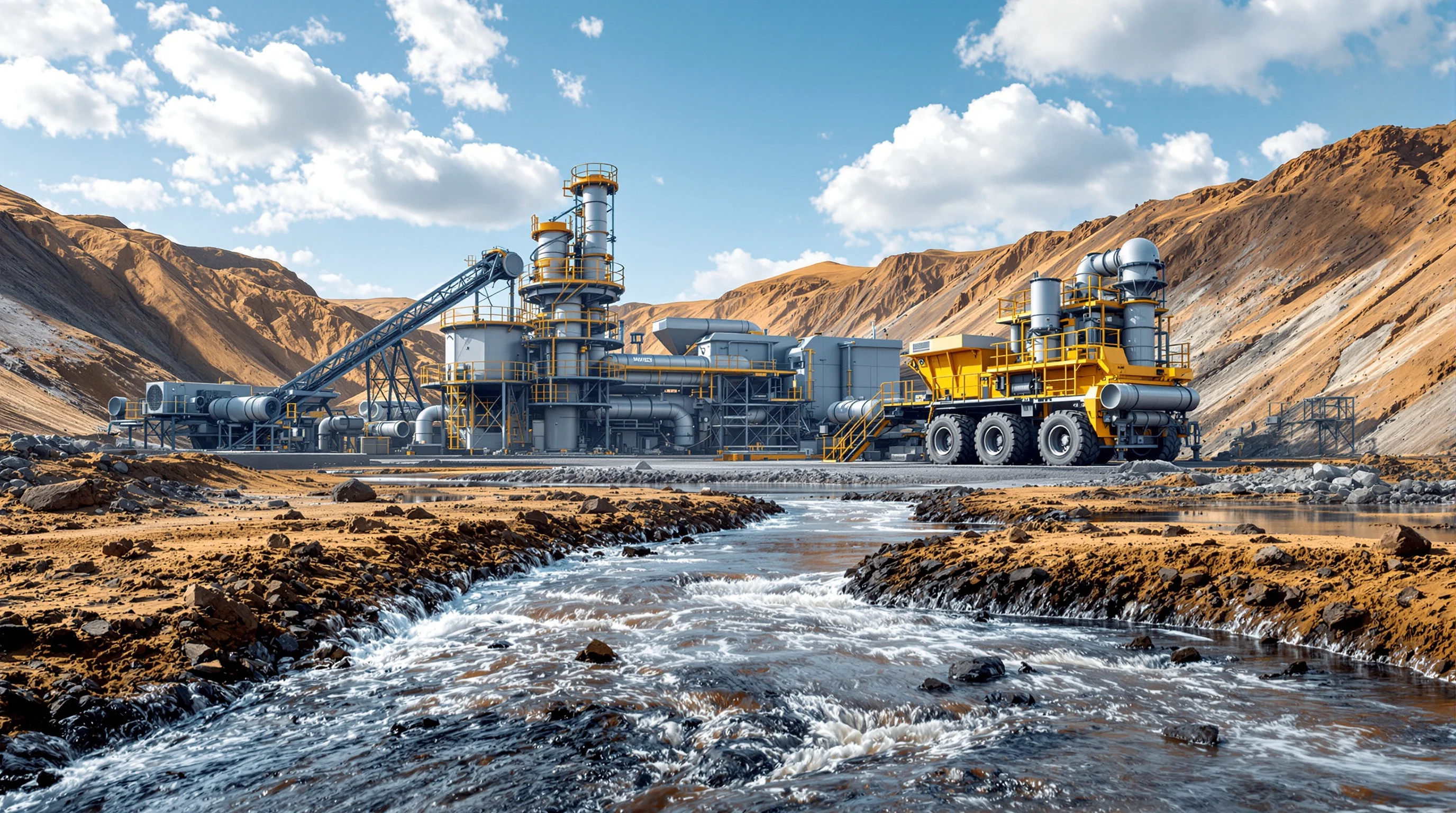
Dewatering equipment supports modern mining operations aiming to recover process water, minimize tailings volumes, and meet increasingly stringent environmental regulations. Companies like CEC Mining Systems Corp. provide advanced dewatering equipment that integrates ceramic disc vacuum filtration to deliver cost‑effective solid‑liquid separation. The global dewatering equipment market continues to expand, driven by water scarcity, stricter tailings management standards, and the push for sustainable mineral processing. This article examines what dewatering equipment is, the benefits it delivers, the main technology types available, and how to select the right system for a mining project.
What Is Dewatering Equipment and How Does It Work?
Dewatering equipment encompasses a range of mechanical devices designed to separate water from solid particles in slurry streams, reducing moisture content for disposal, reuse, or further processing. In mining, dewatering equipment is used to treat tailings, concentrates, and process water to recover valuable water and produce stackable solids. The separation relies on applying a driving force – vacuum, pressure, centrifugal acceleration, or gravity – to draw liquid through a porous medium while retaining solid particles on the surface. The result is a drier filter cake and a clarified liquid stream that is returned directly to the process circuit.
Vacuum‑driven ceramic disc filters represent one of the most energy‑efficient classes of dewatering equipment available today. These systems use microporous alumina ceramic membranes that permit only clean water to pass under capillary action. The ceramic rotary disc rotates through a slurry basin, forming a cake that is subsequently discharged by a scraper. Filtrate quality falls below 200 ppm suspended solids, far cleaner than the 10,000 ppm commonly seen with conventional cloth filters. This level of solid‑liquid separation makes ceramic disc dewatering equipment particularly valuable in regions where water is scarce and every liter must be recovered for reuse.
Other dewatering systems operate on similar principles but use different driving forces. Belt filters apply a pressure differential across a moving fabric, while centrifuges spin slurry at high speed to multiply gravitational force and accelerate drainage. Each type of dewatering equipment offers distinct trade‑offs in energy consumption, cake moisture, throughput, and maintenance requirements. Understanding how each technology works is the first step toward selecting the right solution for a given tailings stream or concentrate product.
Key Benefits of Dewatering Equipment in Mining
Dewatering equipment delivers measurable operational, environmental, and economic advantages that directly support the viability of modern mining projects. One of the most compelling benefits is water recovery. Filtered tailings recover up to 94% of total water from the tailings stream, compared to only 86% for conventional paste tailings (Australian Centre for Geomechanics, 2021)[2]. For a large operation processing tens of thousands of metric tons per day, this difference translates into millions of cubic meters of water that stays in the process circuit instead of being lost to evaporation or locked in a tailings storage facility.
High‑capacity dewatering equipment also enables dry stacking, a practice that eliminates the need for large tailings ponds. Dry stacked tailings reduce geotechnical risk, lower closure costs, and respond to tightening regulatory requirements in jurisdictions like Chile, Peru, and Western Australia. Dewatering equipment supports this shift by producing a filter cake that is transported and compacted mechanically, freeing the mine from dependence on impoundment designs that carry long‑term liability.
The economic case for dewatering equipment extends beyond water savings. Advanced systems like the CX‑Series ceramic disc vacuum filter deliver 30–40% lower capital and operating expenditures compared to conventional vacuum filters, due largely to their reduced energy consumption and extended ceramic membrane lifespan. Because ceramic discs do not suffer from the same blinding and wear patterns as cloth media, maintenance intervals lengthen and filter availability rises. The U.S. sludge thickening and dewatering equipment market, valued at 672.9 million U.S. dollars in 2024, illustrates the scale of investment in this technology space (Grand View Research, 2023)[4]. The combined benefits of dewatering equipment help mining companies improve their environmental performance while protecting their bottom line.
Types of Dewatering Equipment for Mining Applications
Selecting the right dewatering equipment means understanding the capabilities and limitations of the main technologies applied in mineral processing. Four broad categories dominate the mining sector:
- Ceramic Disc Vacuum Filters – Use microporous ceramic membranes for fine and ultrafine particle capture, achieving filtrate clarity below 200 ppm and cake moisture 1–4% drier than conventional vacuum filters. The CX‑Series exemplifies this class, with available filtration area up to 204 m².
- Horizontal Belt Filters – Continuous, heavy‑duty machines suited to high‑capacity dewatering and counter‑current washing applications. They handle coarse and fast‑settling solids well but require more wash water and maintenance than ceramic alternatives.
- Centrifuges – Rely on high‑speed rotation to separate solids from liquids. Effective for fine particle dewatering but with higher energy consumption and wear costs on rotating components.
- Filter Presses – Batch‑operated pressure filters that achieve very low cake moisture, but with lower throughput and higher labor requirements compared to continuous systems.
Each type of dewatering equipment fits a specific process niche. Ceramic disc filters excel in tailings dewatering and concentrate filtration where low operating cost and high water recovery are priorities. Belt filters are preferred when washing efficiency is critical. The choice depends on particle size distribution, required throughput, and the final moisture specification of the cake. For example, base metal concentrators shipping to a smelter need precisely controlled moisture to avoid penalties, making a combination of vacuum filtration and downstream drying the optimal solution.
How to Choose the Right Dewatering Equipment for Your Project
Choosing the right dewatering equipment involves a systematic evaluation of material properties, process goals, and site‑specific constraints. Begin with a thorough characterization of the slurry. Bench and pilot testing generate key data on filterability, cake formation rate, and achievable moisture for the actual tailings or concentrate material. Without this data‑driven foundation, equipment sizing becomes guesswork and performance guarantees carry unnecessary risk.
Define the process requirements for dewatering equipment with precision. Dewatering equipment must meet target figures for cake moisture, filtrate clarity, and solids throughput while operating within the available footprint and utility supply. For tailings dry stacking, the filter cake must be transportable and stackable immediately after discharge. For concentrate filtration, the moisture specification must match shipping and smelter contracts. Quantify water recovery goals so the economic value of every percentage point is weighed against capital cost.
Consider the operational environment for dewatering equipment. Remote mine sites with limited access to spare parts and technical support benefit from dewatering equipment that combines low maintenance requirements with remote monitoring capability. Ceramic disc filters, for instance, run continuously without frequent cloth changes and are well‑suited to sites where uptime is critical. The global dewatering equipment market’s projected growth to 9.4 billion U.S. dollars by 2030 (Strategic Market Research, 2024)[1] reflects the industry’s recognition that the right equipment selection pays dividends over the full asset lifecycle.
Important Questions About Dewatering Equipment
What is dewatering equipment used for in mining?
Dewatering equipment removes water from mining slurry streams such as tailings and concentrates to produce drier solids and recover process water for reuse. This reduces tailings storage volumes, lowers water consumption, and helps mines meet environmental discharge limits.
How does a ceramic disc vacuum filter work?
A ceramic disc vacuum filter rotates microporous alumina discs through a slurry basin, using vacuum to pull water through pores and leave a solid cake. A vacuum inside the discs draws water through the ceramic pores via capillary action, leaving a solid cake on the disc surface that is scraped off while clean filtrate exits for reuse.
What are the environmental benefits of using dewatering equipment?
Dewatering equipment conserves water by recovering up to 94% of process water and enables dry stacking to eliminate tailings ponds. It also lowers geotechnical risk and long‑term closure liabilities associated with conventional wet tailings storage.
How do I select the right dewatering equipment for my mine?
Selecting the right dewatering equipment requires material testing, target cake moisture and water recovery definitions, and site condition evaluation. A data‑driven approach ensures the chosen technology meets both performance and cost objectives.
Dewatering Equipment Technologies Comparison
Dewatering equipment technologies vary significantly in their water recovery performance, making a side‑by‑side comparison necessary for informed decision‑making. Filtered tailings systems using ceramic disc vacuum filters lead the field with the highest documented water recovery, while paste and high‑capacity dewatering approaches offer alternatives for different site conditions and capital budgets. The table below summarizes recovery benchmarks from published studies.
| Technology | Water Recovery (%) | Description |
|---|---|---|
| Filtered tailings (ceramic disc filter) | 94%[2] | Produces a dry, stackable cake; highest water recovery among mining dewatering methods. |
| High‑capacity dewatering (HC‑HVS) | 89%[3] | Outperforms conventional and thickened tailings technologies; suitable for large‑volume applications. |
| Paste tailings | 86%[2] | Thickened to a non‑segregating consistency; lower water recovery than filtered alternatives. |
Published water recovery figures show why filtered tailings dewatering equipment has gained traction in water‑constrained mining jurisdictions. Improving water recovery by eight percentage points over paste tailings, for example, materially changes a site’s water balance and reduces the need for freshwater make‑up. When combined with the lower operating cost of ceramic disc technology, the water recovery advantage makes filtered dewatering equipment a compelling choice for both new projects and brownfield upgrades.
CEC Mining Systems – Your Partner in Dewatering Solutions
CEC Mining Systems Corp. designs and manufactures solid‑liquid separation equipment with a focus on ceramic disc vacuum filtration systems that deliver real Capex and Opex savings. The CX‑Series ceramic disc filter, the company’s flagship dewatering equipment, has shown 30–40% lower capital and operating costs compared to conventional vacuum filters while consistently producing filtrate with fewer than 200 ppm suspended solids. With over 650 systems installed across eight countries, CEC Mining Systems brings global experience and local execution to every project.
Our water and tailings management solutions cover the full project lifecycle – from bench‑scale testwork at the CCMR laboratory in Kamloops, BC to turnkey plant delivery and post‑commissioning operational support. Whether you are advancing a greenfield tailings dry stacking project, upgrading an aging concentrate filtration circuit, or integrating dewatering equipment into a paste backfill plant, CECMS offers the technology, engineering, and partnership to meet your objectives. Follow CEC Mining Systems on LinkedIn for the latest technical updates and project milestones.
Ready to discuss your dewatering challenge? Contact us at +1 604 685 7823 or email info@cecminingsystems.com, and let our team help you define the right solid‑liquid separation solution for your operation.
How to Select and Implement Dewatering Equipment in 5 Steps
Characterize Your Material
Send representative slurry samples to a specialist laboratory for particle size distribution, settling rate, and filterability tests. Accurate material characterization is the foundation of sound dewatering equipment selection.
Define Process Requirements
Specify target cake moisture, filtrate clarity, and throughput. Clarify whether the dewatered solids will be dry stacked, sent to a paste plant, or shipped as concentrate so the equipment matches the downstream process.
Conduct Bench‑Scale Testing
Engage a testing partner like CEC Mining Systems’ CCMR subsidiary to run bench‑scale and pilot filtration tests under conditions that mirror your plant’s operating parameters. Validation at this stage de‑risks the project and provides data for equipment sizing.
Evaluate Equipment Options
Compare ceramic disc, belt, centrifuge, and press technologies against your test data. Consider total lifecycle cost, not just capital expenditure, giving weight to energy efficiency, maintenance intervals, and spare parts availability.
Plan for Commissioning and Optimization
Work with a supplier that offers turnkey project delivery and post‑startup support. A structured commissioning plan and remote operational services ensure your dewatering equipment reaches steady‑state performance quickly and maintains it over the long term.
The Bottom Line
Dewatering equipment has become a strategic asset for mining operations seeking to improve water recovery, reduce environmental risk, and lower operating costs. Filtered tailings technologies capable of achieving 94% water recovery are reshaping how the industry thinks about tailings management. Whether you are evaluating a greenfield project or upgrading an existing plant, the right dewatering equipment – selected through data‑driven testwork and matched to your site’s specific conditions – provides measurable financial and sustainability returns. To explore how advanced ceramic disc filtration fits your operation, contact CEC Mining Systems today for a preliminary technical consultation.
Sources & Citations
- Dewatering Equipment Market Report. Strategic Market Research.
https://www.strategicmarketresearch.com/market-report/dewatering-equipment-market - Kruyswijk, J. Filtered Tailings Technology. Australian Centre for Geomechanics, University of Western Australia.
https://papers.acg.uwa.edu.au/d/2115_13_Kruyswijk/13_Kruyswijk.pdf - Seminar on Alternative Technology to Obtain Dewatered Mine Tailings. Semantic Scholar.
https://pdfs.semanticscholar.org/be6d/8b003b01212123fa5548139d69e9763e05ff.pdf - U.S. Sludge Thickening & Dewatering Equipment Market Report. Grand View Research.
https://www.grandviewresearch.com/industry-analysis/us-sludge-thickening-dewatering-equipment-market-report