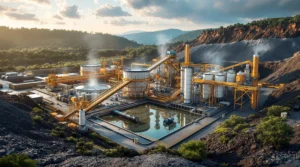
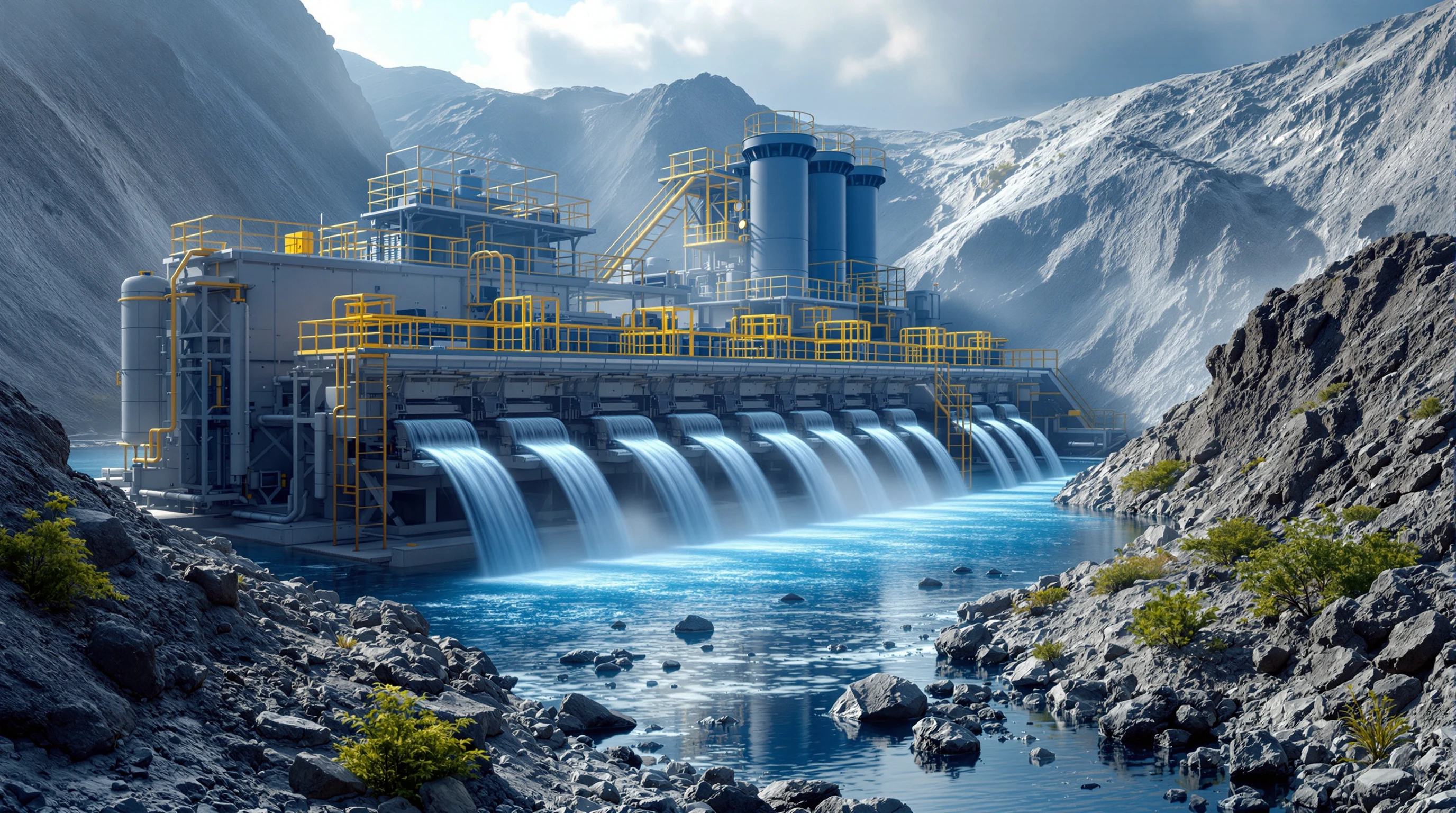
Learn how a mine water treatment plant uses ceramic filtration to recover water, manage tailings, and meet environmental standards for modern mining operations.
Quick Summary
A mine water treatment plant is a dedicated facility that removes suspended solids, dissolved metals, and other contaminants from mine-affected water through physical, chemical, and filtration processes, enabling water recovery, tailings management, and environmental compliance.
By the Numbers
- Integrated mining wastewater treatment technologies that combine two or more separation processes have been shown to enable high recovery of salts and water for reuse, improving the performance of mine water treatment plants (PubMed‑indexed review, 2024)[1].
- In Great Britain, 82 mine‑water treatment schemes maintained the capacity to treat 232 billion litres of mine water each year in 2025/26 (Mining Remediation Authority, 2026)[2].
- Large‑scale mines generate more than 200,000 tonnes of tailings per day, significantly increasing demand for advanced water recovery technologies (Spherical Insights and Consulting, 2026)[3].
- A U.S. mine water treatment plant treated 749 cubic meters of water during a three‑month period in 2025, compared with 201 cubic meters in the same period of 2024 (BQE Water, 2025)[4].
What Is a Mine Water Treatment Plant?
A mine water treatment plant is a dedicated facility that removes suspended solids, dissolved metals, and other contaminants from mine-affected water to enable safe discharge or beneficial reuse. Every mine water treatment plant is designed to address the specific chemistry and volume of water generated by mine dewatering, tailings management, and process runoff. These facilities are critical for meeting discharge permits, recovering water for reuse, and protecting local ecosystems. CEC Mining Systems Corp. manufactures the solid-liquid separation equipment that forms the core of many efficient mine water treatment plants, delivering technology that achieves filtrate quality below 200 ppm suspended solids.
The types of water entering a mine water treatment plant vary widely – from acidic drainage with high dissolved iron and sulfates to neutral tailings pond overflow. According to the Mining Remediation Authority (Great Britain), its network of mine‑water treatment plants prevented an estimated 3,712 tonnes of iron from entering watercourses in 2025/26 (Mining Remediation Authority, 2026)[2]. Such performance shows how a well-designed mine water treatment system preserves water quality and supports land regeneration.
Modern mine water treatment increasingly focuses on resource recovery. The Ministry of Coal (India) reported that public‑sector coal and lignite operations supplied approximately 3,963 Lakh Kilo Liters of treated mine water for domestic and irrigation use during FY 2024‑25 (Ministry of Coal, 2025)[5]. This reuse model shows how a mine water treatment facility becomes a water‑positive asset for surrounding communities.
Central to any effective plant is solid-liquid separation – the process of isolating solid particles from the liquid phase. Technologies like ceramic disc vacuum filtration, thickening, and screening form the backbone of the separation circuit. Without reliable solid-liquid separation, a mine water treatment plant struggles to meet discharge standards or recover water efficiently.
How Does Solid-Liquid Separation Improve Water Recovery?
Solid-liquid separation directly determines how much water is recovered and how clean that water will be. In a mine water treatment plant, this step takes the slurry or contaminated water and produces a clarified filtrate suitable for direct reuse or further polishing. The drier the solids cake and the cleaner the filtrate, the more water the plant returns to the process circuit – reducing freshwater intake and storage demands.
Conventional cloth-based vacuum filters produce filtrate with suspended solids in the range of 10,000 ppm or more, which often requires an additional clarification stage. In contrast, ceramic disc vacuum filters use microporous alumina membranes to capture fine and ultrafine particles, delivering filtrate with suspended solids between 50 and 200 ppm. This quality of filtrate supports immediate reuse in milling circuits, dust suppression, or cooling systems without secondary treatment.
The volume of material processed makes solid-liquid separation performance critical. According to industry data, large-scale mines generate more than 200,000 tonnes of tailings per day (Spherical Insights and Consulting, 2026)[3], all of which must be dewatered. CEC Mining Systems’ water and tailings management approach integrates ceramic disc filtration to achieve cake moistures 1.0‑4.0% drier than conventional vacuum filters, reducing the mass of saturated tailings sent to storage and improving site water balance.
Beyond water recovery, solid-liquid separation affects the entire tailings management strategy. A strong mine water treatment system that produces dry, stackable filter cake supports dry stacking and paste backfill – alternatives to conventional slurry impoundments that reduce geotechnical risk, footprint, and long-term closure liability. Improved filtrate clarity also reduces the loading on downstream treatment steps, cutting chemical consumption and energy use.
Which Technologies Drive Efficient Mine Water Treatment?
A high-performance mine water treatment plant draws on a suite of technologies, each chosen for the specific solids loading, particle size, and water chemistry it must handle. The core separation technologies found in advanced installations today include:
- Ceramic Disc Vacuum Filters: Using microporous alumina membranes, these filters achieve capillary-driven dewatering with up to 85% lower energy consumption than conventional vacuum filters. They are the foundation of many tailings dry stacking and paste backfill circuits.
- Horizontal Belt Filters: Ideal for heavy-duty washing and high-capacity dewatering, horizontal belt filters provide continuous counter‑current washing for processes that demand high wash efficiency and reliable cake discharge.
- Rotaspiral Screens: Trash screening and particle size separation ahead of leaching or flotation circuits protect downstream equipment, with low maintenance and energy requirements.
- Thickeners and Clarifiers: These maximize underflow density and overflow clarity, using flocculant addition to improve settling rates and reduce fines carry‑over.
Integrated systems that combine multiple separation processes are particularly effective. Research confirms that technologies pairing filtration with thickening or membrane separation yield high salt and water recovery, directly improving mine water treatment plant performance (PubMed-indexed review, 2024)[1]. CEC Mining Systems’ CX-Series Ceramic Disc Vacuum Filter, for example, integrates with flocculant mixing systems and thickeners to create a complete dewatering circuit tailored to a site’s mass balance.
Scale is another important factor. The CX12‑204 ceramic filter, with 204 m² of filtration area, provides the world’s largest ceramic filter footprint, enabling large‑capacity mining operations to deploy high-efficiency filtration without multiplying equipment counts. The modular design also supports phased capacity expansion as mine production grows.
Even residual moisture after filtration is addressed with complementary drying technology. The MIR Steel Belt Dryer combines vacuum and medium‑wave infrared radiation to achieve precise final moisture for concentrates destined to smelter specifications, without dust or vibration. This downstream step ensures the mine water treatment facility meets export-grade product quality requirements.
What Are the Operational and Regulatory Considerations?
Operating a mine water treatment plant is both a technical and regulatory challenge. The cost of treatment is a primary consideration for project economics. A U.S. Department of Energy case study found treatment costs of approximately $9.14 per cubic meter, with electricity intensity around 15 kWh per cubic meter of water treated (U.S. DOE, 2025)[6]. These figures highlight why technology choices that cut energy use – like ceramic disc filters – directly reduce the opex line of a mine water treatment system.
Regulatory pressure continues to mount in water‑constrained mining jurisdictions. In Chile’s Atacama region and the Peruvian Andes, water scarcity drives strict discharge limits and mandates for water reuse. In Western Australia and southern Africa, evolving tailings management regulations increasingly favor filtered, dry‑stackable tailings over conventional ponds. A mine water treatment facility that delivers a stackable filter cake and high‑quality filtrate helps operators meet these requirements while maintaining production.
Operational reliability is equally important. Continuous filtration cycles without frequent cloth failures reduce downtime and maintenance. CEC Mining Systems designs its ceramic membrane plates to last up to 24 months per campaign, eliminating the monthly cloth change schedules common with conventional filters. The company’s bench and pilot testing services generate filterability data that de‑risks the engineering of a mine water treatment plant from the earliest feasibility stages, giving operators confidence in design parameters.
Comprehensive operational readiness programs – including HAZID/HAZOP assessments, operator training, and the first hundred days of post‑commissioning support – ensure that when the plant starts, the team is prepared. Ongoing remote monitoring and predictive analytics further maintain optimum performance, catching process deviations before they become downtime.
What is the purpose of a mine water treatment plant?
A mine water treatment plant removes suspended solids, dissolved metals, and other contaminants from mine-affected water to permit safe discharge, enable water reuse, and comply with environmental regulations. By recovering clean filtrate and producing dry, manageable solids, it reduces the environmental footprint of mining operations.
How does ceramic disc filtration improve mine water treatment?
Ceramic disc filtration improves mine water treatment by using microporous alumina membranes that draw water through capillary action while retaining ultrafine particles. This technology delivers filtrate with suspended solids as low as 50‑200 ppm and reduces energy consumption by up to 85% compared to conventional vacuum filters, making it a highly efficient component of a mine water treatment system.
What factors influence mine water treatment plant costs?
Treatment costs depend on water chemistry, flow rate, solids loading, and the technology selected. A U.S. DOE study reported treatment costs around $9.14 per cubic meter and electricity usage of 15 kWh/m³. Technology choices that lower energy consumption and extend media life – such as ceramic disc filters – significantly reduce overall operational expenditure.
Can treated mine water be reused?
Yes, treated mine water is reused for process circuits, dust suppression, irrigation, and even community supply. In India, coal and lignite public‑sector undertakings supplied nearly 4,000 Lakh Kilo Liters of treated mine water for domestic and irrigation purposes in FY 2024‑25, demonstrating the reuse potential of a well‑designed mine water treatment facility.
Comparing Solid-Liquid Separation Approaches
Selecting the right solid‑liquid separation technology is a pivotal decision for any mine water treatment project. The table below compares three common approaches used in mine water treatment plants, highlighting key performance and cost drivers.
| Technology | Filtrate Quality (Suspended Solids) | Typical Energy Consumption | Media Life | Ideal Use Case |
|---|---|---|---|---|
| Conventional Cloth Vacuum Filter | >10,000 ppm | High (conventional vacuum) | 1‑4 weeks | Low‑value tailings, coarse particles |
| Ceramic Disc Vacuum Filter (CECMS CX‑Series) | 50‑200 ppm[2] | <85% of conventional[2] | Up to 24 months | Tailings dry stacking, paste backfill, concentrate filtration |
| Pressure Filter (Filter Press) | 10‑50 ppm | Moderate (hydraulic power) | 6‑12 months | Ultra‑low moisture in small batches |
For continuous, high‑volume operations, the ceramic disc vacuum filter stands out for its combination of low energy use, long media life, and a filtrate quality that eliminates the need for downstream clarification. This profile directly supports the OpEx reduction goals critical to modern mining.
CEC Mining Systems: Your Partner for Mine Water Treatment
CEC Mining Systems Corp. is a Canadian manufacturer that has installed and supported over 650 solid-liquid separation systems in eight countries since 2011. With ISO 9001 and ISO 14000 certifications, the company delivers turn-key mine water treatment plant solutions built around its proprietary CX‑Series ceramic disc vacuum filter technology.
We approach every project as a boutique, single-point-of-contact engagement, assembling a multidisciplinary team that stays with the project from bench‑scale testwork through detailed engineering, procurement, construction, and commissioning. Our ceramic disc filtration technology achieves 30‑40% lower CapEx and OpEx than conventional vacuum filters, with filtrate quality below 200 ppm and cake moisture 1.0‑4.0% drier – directly reducing paste binder costs and improving water recovery.
Whether you are planning a greenfield tailings dry stacking plant, upgrading a brownfield concentrate filtration circuit, or integrating filtration into a paste backfill operation, CEC Mining Systems offers flexible project modalities – equipment supply, EPC, EPCM, or BOOT – to match your execution strategy. Learn more about how your operation can benefit by visiting our About Us page or using our Find Your Solution tool to identify the right technology for your challenge. Contact us at +1 604 685 7823 or info@cecminingsystems.com to start a conversation.
How to Select a Mine Water Treatment Plant in 4 Steps
1. Characterize Water Quality and Volume
Collect representative samples of all water streams entering the plant and quantify flow rates across seasonal extremes. Accurate characterization of pH, dissolved metals, total suspended solids, and particle size distribution is necessary to size equipment correctly and select compatible materials of construction.
2. Evaluate Solid‑Liquid Separation Technologies
Compare options based on filtrate quality targets, cake moisture requirements, and total lifecycle costs. Ceramic disc filtration is the optimal choice for mainstream tailings and concentrate dewatering due to its low energy consumption and ability to produce filtrate ready for direct reuse without secondary treatment.
3. Conduct Bench and Pilot Testing
Test the shortlisted technology with actual site water in a controlled laboratory setting. Pilot‑scale runs confirm design parameters, such as filter duty, cake release characteristics, and chemical consumption, de‑risking the full‑scale mine water treatment plant before detailed engineering begins. CEC Mining Systems’ in‑house CCMR laboratory in Kamloops, BC provides this service as an integrated part of project development.
4. Partner with an Experienced Technology Provider
Select a partner that offers complete lifecycle support – from feasibility and process design through commissioning and remote operational monitoring. A single‑point‑of‑contact provider reduces interface risks and ensures the mine water treatment system is delivered on budget, on schedule, and with full operational readiness.
Before You Go
The demand on a mine water treatment plant is growing as operations push into water-scarce regions and tailings storage regulations tighten. Technologies that deliver reliable solid‑liquid separation, high filtrate quality, and low life‑cycle costs are no longer optional – they are central to securing a mine’s environmental license to operate and to controlling long‑term water management costs. CEC Mining Systems’ ceramic disc filters have shown 30‑40% savings in CapEx and OpEx while producing filtrate quality that supports direct reuse.
To explore how a purpose‑built mine water treatment plant with ceramic filtration can improve your water recovery and tailings management, contact CEC Mining Systems at +1 604 685 7823 or info@cecminingsystems.com, or visit our Contact page to start a project inquiry.
Learn More
- Mining Wastewater Treatment Technologies. PubMed.
https://pubmed.ncbi.nlm.nih.gov/38317979/ - Mining Remediation Authority performance report 2025/26.
https://britishuplift.co.uk/environment/great-britain-mine-water-treatment-232-billion-litres/ - Water and Wastewater Management for the Mining Market. Spherical Insights.
https://www.sphericalinsights.com/reports/water-and-wastewater-management-for-the-mining-market - BQE Water quarterly report 2025.
https://markets.ft.com/data/announce/full?dockey=600-202505291700CANADANWCANADAPR_C3567-1 - Ministry of Coal, Government of India press release, March 2025.
https://www.pib.gov.in/PressReleasePage.aspx?PRID=2114309 - Mine Water Use, Treatment, and Reuse in the United States. U.S. DOE.
https://www.osti.gov/servlets/purl/1834735