Rotary vacuum filtration offers high-efficiency solid-liquid separation for mining tailings dewatering and water recovery. Discover how ceramic disc filters reduce OpEx and improve water reuse.
Article Snapshot
Rotary vacuum filtration is a continuous solid‑liquid separation process that uses vacuum‑driven pressure differentials across a rotating filter medium to draw liquid through, depositing a filter cake. In mining, it enables high‑efficiency dewatering, substantial water recovery, and lower operating costs compared to conventional methods.
Market Snapshot
- Global vacuum rotary drum filter market revenue stood at US$730 million in 2024 (Congruence Market Insights, 2024)[1]
- Projected to reach US$1,046.1 million by 2032, growing at a 4.6% CAGR (Congruence Market Insights, 2024)[1]
- A ceramic rotary vacuum disc filter at a South African gold mine achieved a processing rate of 120 tonnes per hour with 12% cake moisture (Boyun Industrial Filtration Solutions, 2025)[2]
What Is Rotary Vacuum Filtration and How Does It Work?
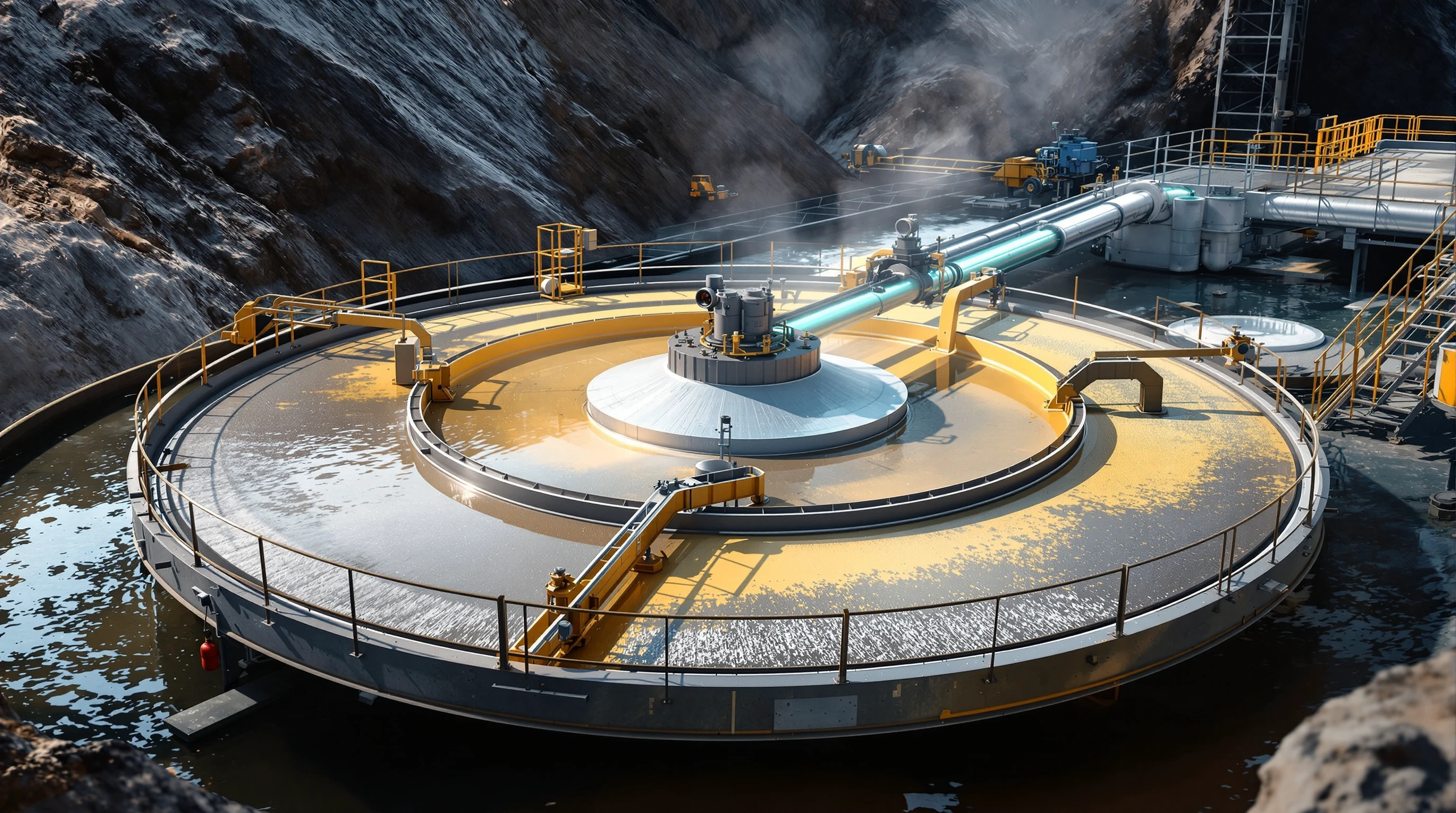
Rotary vacuum filtration is a continuous mechanical dewatering process in which a rotating filter medium submerged in a slurry tank is subjected to vacuum (negative pressure) inside the drum or discs, drawing liquid through the filter and leaving a solid cake on the surface. The vacuum sucks liquid – referred to as filtrate – through the filter medium, while solids build up as a cake that is subsequently discharged by scraping or back‑flushing. Rotary vacuum filters come in two primary configurations: rotary drum filters, where the filter medium wraps around a cylindrical drum, and rotary disc filters, where multiple filter segments rotate on a central shaft through the slurry bath.
Modern rotary vacuum disc filters, powered by advancing membrane technology, now handle feed flows of 12–15 m³/m²/h and specific solids throughputs of 8–10 t/m²/h, extending their applicability to high‑capacity concentrate and tailings duties (Australian Centre for Geomechanics, 2013). The introduction of microporous ceramic membranes in the disc format has significantly improved performance: the membranes’ fine pores (0.75–3.0 microns) create strong capillary action, yielding a cleaner filtrate and a drier cake than conventional cloth‑based alternatives. As a result, rotary vacuum filtration integrated with ceramic disc technology is becoming the standard for water‑conscious mining operations worldwide.
Key Advantages of Rotary Vacuum Filtration for Mining Operations
Rotary vacuum filtration delivers major operational benefits to mining sites, particularly in tailings dewatering and process water recovery. One of the most compelling advantages is the drastic reduction in filtrate suspended solids. Unlike conventional cloth filters that often allow solids carry‑over exceeding several thousand ppm, ceramic rotary vacuum filters achieve filtrate turbidity below 200 ppm of total suspended solids using a 1.5‑micron pore size membrane, as demonstrated in a fine flotation tailings application (CEC Mining Systems, 2017). This clarity allows direct water reuse in the process circuit without secondary clarification or treatment.
Energy consumption is another differentiator. Ceramic disc rotary vacuum filters consume up to 85% less energy than conventional vacuum filters because the microporous structure requires far lower vacuum pump power while still maintaining a high vacuum degree. Process engineer Elizabeth Wood confirms, “When in operation, the filter can recover 13 m³/hr of clear filtrate from the tailings underflow. This filtrate is returned to the gravity circuit where it offsets approximately 25% of total fresh water consumption.” — Elizabeth Wood, CEC Mining Systems. This level of water recovery directly lowers freshwater demand and reduces the load on tailings storage facilities.
Operational reliability also stands out. Ceramic membranes have a lifespan of up to 24 months per campaign, eliminating the frequent cloth‑change downtime that plagues conventional filters. Combined with a 30–40% reduction in both capital and operating expenditures – achieved through a lean, digital supply chain and lower energy and maintenance costs – rotary vacuum filtration with ceramic discs provides a compelling business case for mines pursuing both cost control and sustainability targets.
Ceramic Disc Rotary Vacuum Filtration vs. Conventional Rotary Vacuum Filters
When comparing dewatering technologies, the differences between ceramic disc rotary vacuum filtration and traditional cloth‑based rotary drum vacuum filters stand out sharply in moisture control, water quality, and long‑term operating cost. Ceramic disc technology surpasses conventional cloth filters across multiple key performance indicators, as independent evaluations and site data show.
A South African gold mine case study illustrates the gap: a ceramic vacuum disc filter achieved 12% cake moisture, well below the industry average of 18% for conventional filters (Boyun Industrial Filtration Solutions, 2025). The fine‑pore ceramic membrane also delivered 30% water recovery for direct reuse – an outcome that conventional units cannot match without additional thickening or clarification stages. Independent analysts at Porvoo Mining Technology note that “the vacuum ceramic disk filter consistently achieves the lowest moisture content, enabled by its ability to maintain a high vacuum degree (0.09–0.098 MPa) and its fine‑pore structure, while ceramic disk filters often produce filtrate with suspended solids below 50–200 ppm, enabling direct water recycle back to the process.” — Porvoo Mining Technology editorial team. Our own CX-Series Ceramic Disc Vacuum Filter technology delivers similar results, routinely achieving filtrate below 200 ppm TSS and cake moisture as low as 16% w/w in fine tailings.
| Metric | Ceramic Disc Rotary Vacuum Filter | Conventional Rotary Drum Vacuum Filter |
|---|---|---|
| Filter Cake Moisture | 12% (Boyun, 2025)[2] | Industry average 18% (Boyun, 2025)[2] |
| Filtrate Suspended Solids | Below 200 ppm TSS (CECMS, 2017)[4] | Often requires secondary clarification |
| Water Recovery for Reuse | Up to 30% of circuit water (Boyun, 2025)[2] | Minimal without additional treatment |
How Rotary Vacuum Filtration Supports Sustainability and Water Stewardship
Rotary vacuum filtration is more than a dewatering tool – it is a cornerstone of sustainable mining water management. By producing a clear, solid‑free filtrate, ceramic disc filters allow mines to return water directly to the mineral processing circuit, cutting freshwater withdrawals and reducing the volume of water that must be managed in tailings storage facilities. In the fine tailings case, recovered filtrate offset 25% of the circuit’s total fresh water requirement, with no secondary treatment needed (CEC Mining Systems, 2017).
The environmental benefits compound when the drier filter cake is considered. Lower moisture content (12–16% vs. 18%+ for conventional filters) allows tailings to be dry‑stacked, eliminating the need for large, risky tailings ponds and reducing the facility’s physical footprint. Dry stacking not only lowers geotechnical risk but also supports progressive reclamation, aligning with tightening regulations in water‑constrained jurisdictions like Chile’s Atacama Desert, Peru’s Andean operations, and Western Australia. By enabling Water and Tailings Management that recovers water, reduces storage risk, and lowers overall environmental impact, rotary vacuum filtration technologies directly address the ESG priorities that investors and regulators now demand from modern mines.
Your Most Common Questions
What is the difference between ceramic disc and conventional rotary vacuum filtration?
Ceramic disc rotary vacuum filters achieve filtrate turbidity below 200 ppm TSS and cake moisture of 12–16%, while conventional cloth‑based rotary drum filters produce higher moisture and require extra clarification.
How does rotary vacuum filtration help mining sites save water?
Rotary vacuum filtration helps mines save water by recovering 25–30% of process water as reusable clean filtrate, offsetting fresh water demand and reducing tailings pond volume.
What maintenance does a rotary vacuum filter require?
A ceramic disc rotary vacuum filter requires periodic acid wash and ultrasonic cleaning to maintain membrane permeability, as well as routine inspection of vacuum pumps and seals; the ceramic elements last up to 24 months between major servicing.
What are typical operating costs for a rotary vacuum filtration system?
Ceramic rotary vacuum filtration systems cut operating costs by 30–40% versus conventional filters, using 85% less energy and eliminating cloth replacements, while delivering drier cake and cleaner filtrate.
Comparison: Ceramic Disc vs. Conventional Rotary Vacuum Filtration
When evaluating dewatering options, operators weigh ceramic disc rotary vacuum filters against conventional cloth‑based rotary drum vacuum filters. The table above captures key performance differences backed by published case‑study data and independent analysis, showing ceramic disc technology’s clear lead in moisture control, filtrate quality, and direct water recycling capability. These advantages translate into lower operating costs, reduced freshwater need, and safer tailings management.
CEC Mining Systems Corp. – Your Partner in Rotary Vacuum Filtration
CEC Mining Systems Corp. (CECMS) is a Canadian manufacturer dedicated to advancing rotary vacuum filtration through proprietary ceramic disc‑vacuum technology. Our flagship CX-Series Ceramic Disc Vacuum Filter is at the core of our turn‑key tailings dewatering, concentrate filtration, and paste backfill solutions. With over 650 systems installed in eight countries, we bring battle‑tested reliability to projects in water‑constrained jurisdictions from Chile to Western Australia.
We operate under ISO 9001 and ISO 14000 certifications, and our in‑house subsidiary CCMR provides bench‑scale and pilot‑plant testwork in Kamloops, BC – giving your project accurate filterability data from the earliest feasibility stage. Our expertise spans the full project lifecycle: engineering studies, EPC/EPCM/BOOT execution, commissioning, and ongoing operational support through our Remote Access and Operational Services program. To help mines achieve sustainability goals while lowering costs, we integrate ceramic disc rotary vacuum filtration with Water and Tailings Management strategies that recover water for reuse and enable dry stacking.
Stay connected with the latest in solid‑liquid separation: Follow CEC Mining Systems on LinkedIn. Contact our team at info@cecminingsystems.com to discuss your filtration challenges or request a preliminary evaluation.
Practical Tips for Maximizing Rotary Vacuum Filtration Performance
Implement these best practices to get the most value from your rotary vacuum filtration system:
- Optimize slurry feed density to achieve uniform cake formation and maximize throughput; consistent feed conditions help ceramic membranes maintain high filtration rates.
- Schedule regular acid wash and ultrasonic cleaning cycles according to the manufacturer’s recommendations to keep membrane pores open and ensure sustained filtrate clarity below 200 ppm.
- Use pilot‑scale testwork to validate filterability before committing to full‑scale equipment – Bench and Pilot Testing – giving you the data and confidence to power your project from the earliest stages.
- Conduct periodic Brownfield Audits and Optimization – manage risks before they emerge and identify opportunities to improve filtration performance; routine reviews can extend campaign life and reduce operating cost creep.
The Bottom Line
Rotary vacuum filtration, especially when combined with ceramic disc technology, improves tailings management and water recovery for modern mining operations. It delivers drier cake, crystal‑clear filtrate, energy savings, and a smaller environmental footprint – all while offering a competitive cost advantage over conventional cloth filters. To see how ceramic rotary vacuum filtration improves your water balance and reduces operating costs, connect with our engineering team at info@cecminingsystems.com. We will work with you to select the right solution and support your project from first sample to full‑scale production.
Learn More
- Vacuum Rotary Drum Filter Market Report. Congruence Market Insights.
https://www.congruencemarketinsights.com/report/vacuum-rotary-drum-filter-market - Disc Vacuum Filter – BOYUN Industrial Filtration Solutions – Ceramic Vacuum Disc Filter Case Study.
https://bydiscfilter.com/disc-vacuum-filter/ - Vacuum disc filters go beyond. Australian Centre for Geomechanics.
https://papers.acg.uwa.edu.au/d/2355_68_Hahn/68_Hahn.pdf - Fine Flotation Tailings Dewatering: Reducing Water Consumption and Improving Mill Throughput. CEC Mining Systems.
https://cecminingsystems.com/wp-content/uploads/2017/06/Fine-Flotation-Tailings-Dewatering-Case-Study.pdf - Vacuum Ceramic Disk Filter vs Belt Filter Press vs Rotary Drum Filter Performance Comparison for Mining Dewatering Applications. Porvoo Mining Technology.
https://porvoo.com.cn/blog/vacuum-ceramic-disk-filter-vs-belt-filter-press-vs-rotary-drum-filter-performance-comparison-for-mining-dewatering-applications/