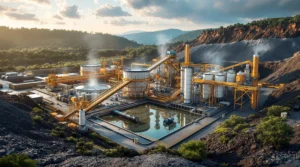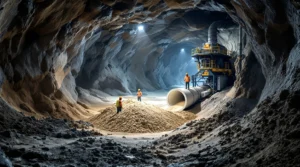
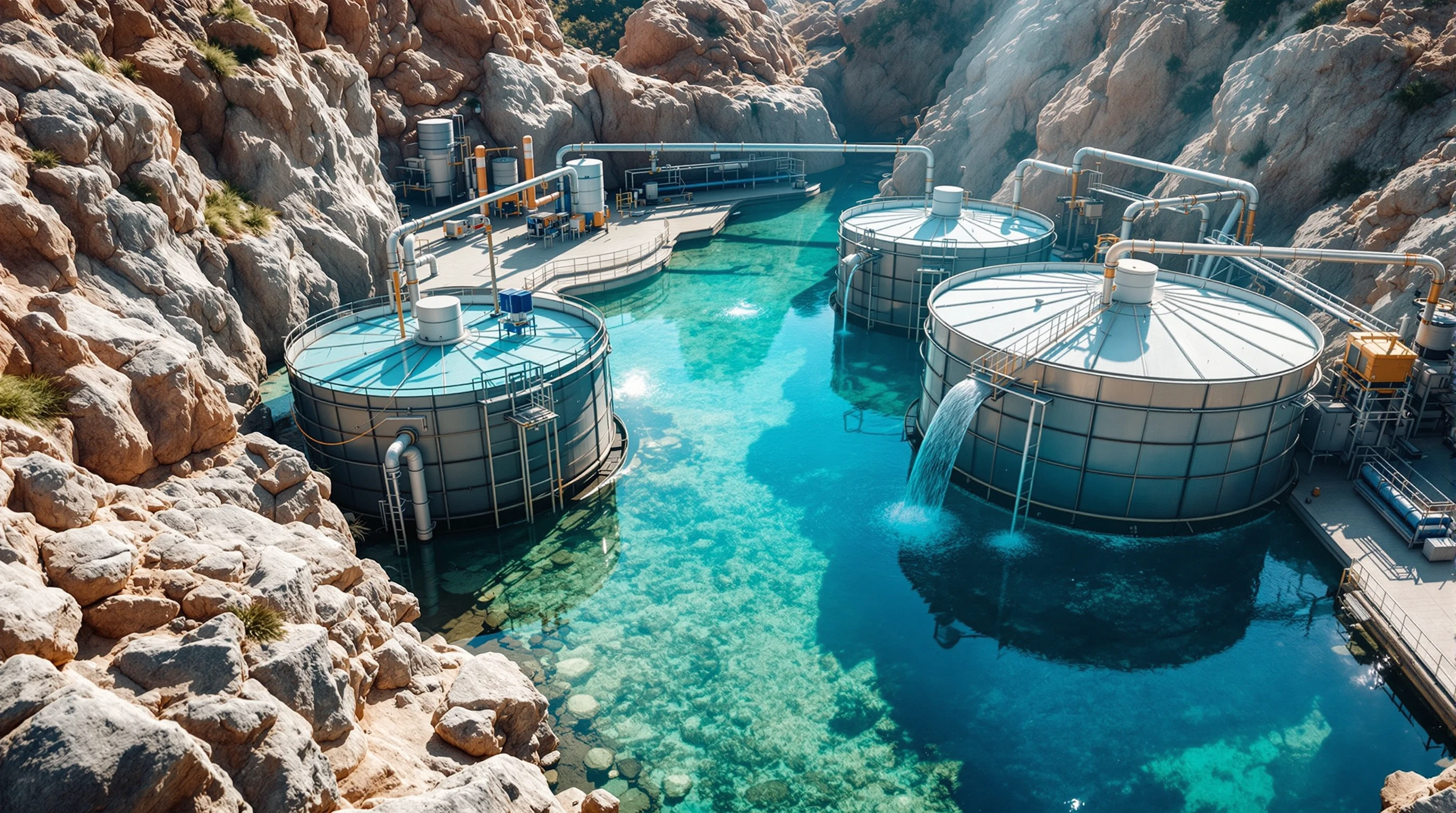
Mine water treatment is the process of removing contaminants from water affected by mining operations – this guide covers technologies, regulations, and how modern filtration systems protect water resources and support site water reuse.
Quick Summary
Mine water treatment is the controlled removal of dissolved metals, suspended solids, acidity, and other contaminants from water generated by or affected by mining activity. Effective treatment protects receiving waterbodies, enables process water reuse, and ensures regulatory compliance across active and legacy mine sites worldwide.
Mine Water Treatment in Context
- The global mining water treatment systems market was estimated at USD 4,751.0 million in 2024 and is projected to reach USD 7,845.8 million by 2033 (Grand View Research, 2026). [1]
- In 2025 to 2026, the Mining Remediation Authority operated 82 treatment schemes with capacity to treat up to 232 billion litres of mine water annually (Mining Remediation Authority, 2026). [2]
- The Mining Remediation Authority treated 28 billion litres of mine water during 2025 to 2026 and prevented 3,712 tonnes of iron solids from entering watercourses (Mining Remediation Authority, 2026). [2]
- In England alone, 93 billion litres of mine water were treated in 2025 to 2026 (Mining Remediation Authority, 2026). [2]
What Is Mine Water Treatment?
Mine water treatment is the engineered removal of contaminants – including dissolved heavy metals, suspended solids, acidity, sulfates, and radionuclides – from water that has contacted ore bodies, waste rock, or tailings at active and legacy mine sites. CEC Mining Systems Corp. addresses mine water treatment challenges through advanced solid-liquid separation systems designed to recover process water, reduce tailings storage risk, and protect surrounding environments. Whether applied to acid mine drainage, process water recycling, or tailings dewatering, mine water treatment sits at the intersection of operational efficiency and environmental compliance.
Mine water becomes contaminated through two principal mechanisms. The first is contact with sulfide-bearing minerals – particularly pyrite – which oxidizes in the presence of water and oxygen to generate sulfuric acid and release dissolved iron, copper, zinc, arsenic, and other metals. This reaction, known as acid rock drainage (ARD) or acid mine drainage (AMD), is one of the most pervasive environmental challenges in the global mining industry. The second mechanism is direct contact with process chemicals used in ore recovery, including cyanide in gold leaching operations and reagents used in flotation circuits.
Mine water treatment applies to three broad categories of water: active mine water pumped from underground workings or open pits during operations; process water recovered from tailings, thickeners, and filtration circuits for reuse in the plant; and legacy mine water discharging from abandoned underground mines long after operations have ceased. Each category presents distinct contaminant profiles and treatment requirements, but all demand effective removal of suspended and dissolved constituents before water can be safely discharged or reused.
A Grand View Research analysis estimated the global mining water treatment systems market at USD 4,751.0 million in 2024, with projection to USD 7,845.8 million by 2033 (Grand View Research, 2026) [1] – a trajectory driven by tightening environmental regulations, water scarcity in major mining jurisdictions including Chile’s Atacama region, Peru, and Western Australia, and growing ESG accountability among mining companies and their investors.
How Does Mine Water Treatment Work?
Mine water treatment works by sequencing physical, chemical, and biological unit operations to remove specific contaminants in the order that maximizes process efficiency and minimizes cost. The selection and sequencing of treatment steps depends on feed water chemistry, target effluent standards, available footprint, and whether the treated water will be discharged or reused in the process circuit.
The most widely applied treatment train for acid mine drainage begins with neutralization: lime or limestone is added to raise pH and precipitate dissolved metals as hydroxides or carbonates. The resulting metal-laden precipitate is then separated from the clarified water using sedimentation, thickening, or filtration. Clarified water receives secondary treatment – such as ion exchange, reverse osmosis, or biological sulfate reduction – before discharge or reuse. The solid residuals (sludge or filter cake) require separate management, either in a tailings facility, lined containment, or as a recoverable by-product where metal concentrations are sufficient.
For operating process circuits, mine water treatment focuses on recovery and reuse of water from the tailings stream. Tailings leaving a concentrator carry 60-80% water by mass. Thickeners recover the bulk of this water as overflow, while vacuum filtration or pressure filtration further dewaters the thickened underflow to produce a filter cake with moisture low enough for dry stack placement or paste backfill. Water and Tailings Management systems designed around ceramic disc vacuum filtration recover process water to below 200 ppm suspended solids – a quality suitable for direct return to plant circuits without further polishing.
Passive treatment systems offer a lower-cost alternative for legacy mine sites with lower flow rates and contamination loads. Constructed wetlands, permeable reactive barriers, and successive alkalinity-producing systems (SAPS) use natural biological and geochemical processes to neutralize acidity and remove metals over time. These systems require less energy and chemical input than active treatment but must be carefully sized for flow variability and are unsuitable for high-volume or high-strength mine water streams.
The Mining Remediation Authority’s 2025-2026 annual report illustrates the scale of active mine water treatment infrastructure maintained for legacy mine sites. As stated in that report: “During 2025 to 2026 we maintained and operated our 82 mine water treatment schemes so that we can treat up to 232 billion litres of mine water to prevent pollution of drinking water, rivers and the sea.” (Mining Remediation Authority, 2026) [2]
Why Is Mine Water Treatment Critical for Modern Mining?
Mine water treatment is critical for modern mining because untreated mine water discharging to rivers, groundwater, and coastal areas causes irreversible ecological damage, triggers regulatory enforcement, and creates long-term liability that outlasts the productive life of a mine by decades or centuries. Regulatory frameworks across major mining jurisdictions – including Canada’s Metal and Diamond Mining Effluent Regulations, Peru’s environmental standards (ECA Agua), and Australia’s National Environment Protection Measures – set enforceable limits on pH, total suspended solids, heavy metals, and other parameters that mine operators must meet before discharging any water off-site.
Water scarcity adds a second dimension of urgency. Mining jurisdictions in northern Chile, southern Peru, Mexico, and Western Australia operate under severe freshwater constraints, where both groundwater extraction limits and competition with agricultural and community water use make process water reuse an operational necessity rather than an optional sustainability measure. Mines that cannot recover and recycle sufficient process water face production constraints that directly affect mine economics. Effective mine water treatment – and specifically, high-quality water recovery from tailings – enables operations to maximize internal water recycling and reduce freshwater intake.
Tailings storage facility (TSF) failures represent a third driver. The Brumadinho and Samarco tailings dam failures in Brazil, along with numerous smaller events across Latin America, Africa, and Asia, have fundamentally changed the risk calculus for conventional wet tailings impoundment. Filtered tailings dry stacking – which depends entirely on upstream mine water treatment to remove sufficient water from the tailings stream – eliminates the stored water volume that makes conventional TSFs geotechnically hazardous. Regulatory pressure in Brazil, Chile, and several other jurisdictions now mandates or strongly incentivizes filtered tailings for new projects.
The scale of the environmental protection role played by mine water treatment infrastructure is substantial. The Mining Remediation Authority reported that in 2025 to 2026 it “prevented 730 tonnes of iron solids from entering water courses” through its treatment operations (Mining Remediation Authority, 2026) [2] – and that figure covers only a portion of the authority’s schemes in one reporting period. Across the global industry, mine water treatment prevents contamination of drinking water sources, preserves aquatic ecosystems, and protects communities that depend on rivers and groundwater downstream of mine sites.
Solid-Liquid Separation in Mine Water Treatment
Solid-liquid separation is the technical core of mine water treatment, and the choice of separation technology directly determines both the quality of recovered water and the handleability of the dewatered solid residue. In modern mineral processing circuits, solid-liquid separation encompasses thickening, vacuum filtration, pressure filtration, and horizontal belt filtration – each suited to different combinations of throughput, particle size, and target moisture.
Thickening is the first stage of solid-liquid separation in a tailings or process water circuit. High-rate or paste thickeners use flocculant addition to aggregate fine particles, settling them as a dense underflow while returning relatively clear overflow water to the plant circuit. Thickener overflow quality – measured in mg/L of total suspended solids – determines how much of the process water can be recycled without further treatment. Well-operated thickeners reduce the water content of a tailings slurry from 70-80% to 40-50% before the underflow is transferred to downstream filtration.
Vacuum filtration using ceramic disc technology represents the most energy-efficient route from thickened tailings slurry to filter cake suitable for dry stacking. Unlike conventional cloth-based vacuum filters – which draw liquid through a woven filter medium requiring frequent replacement – ceramic disc vacuum filters use microporous alumina membranes with pore sizes in the 0.75 to 3.0 micron range. Capillary forces within the ceramic membrane hold the filter cake in place and allow the vacuum to draw filtrate through while retaining particles far finer than conventional cloth can capture. The result is filtrate quality below 200 ppm suspended solids – clean enough for direct circuit return – and filter cake moisture 1.0-4.0% drier than conventional vacuum filtration at comparable throughput.
The CX-Series Ceramic Disc Vacuum Filter – proprietary ceramic membrane filtration technology for tailings dewatering, concentrate filtration, and paste backfill with 30-40% CapEx/OpEx savings versus conventional technologies operates continuously without the cloth replacement cycles that cause planned and unplanned downtime on conventional installations. Ceramic membranes last up to 24 months per campaign, substantially reducing operating labor and consumables cost. For large-capacity tailings dry stack projects, the modular CX12-204 – the world’s largest ceramic filter with 204 m² of filtration area – enables the economies of scale needed to match high production rates without multiplying filter unit counts.
Horizontal belt filtration complements ceramic disc technology in applications where counter-current washing efficiency is the primary driver – for example, in coal tailings or mineral processing circuits where wash water recovery and cake washing quality affect downstream product specifications. The Horizontal Belt Filter – heavy-duty washing and high-capacity dewatering for demanding mineral processing applications provides continuous throughput and strong cake discharge in demanding mineral processing environments.
Where mine water treatment extends to concentrate filtration and drying, the solid-liquid separation train incorporates steel belt drying technology to achieve final product moisture specifications below what filtration alone delivers – particularly for concentrate export or smelter feed contracts that impose tight moisture limits. Integrating vacuum filtration with infrared drying eliminates dust generation and enables precise moisture control across variable feed conditions.
Your Most Common Questions
What contaminants does mine water treatment need to remove?
Mine water treatment removes dissolved heavy metals, suspended solids, acidity, sulfates, cyanide, and radionuclides – the specific mix depending on ore type and processing method used at the site. The contaminant profile depends on the mineralogy of the ore body and surrounding rock, the chemicals used in ore recovery, and whether the water originates from an active operation or a legacy abandoned mine. Acid mine drainage – generated when sulfide minerals oxidize in contact with water and oxygen – is the most widespread contamination pathway and produces a water chemistry dominated by dissolved iron, sulfate, and low pH, often accompanied by copper, zinc, arsenic, and manganese. Process water from gold leaching circuits contains elevated cyanide. Water from uranium mines requires attention to radionuclide concentrations. Effective mine water treatment programs begin with thorough characterization of the feed water chemistry so that treatment technology selection – neutralization chemistry, solid-liquid separation method, polishing technology – is matched to the actual contaminant load rather than a generic standard. Regulatory discharge limits define the minimum treatment performance required, but mines targeting process water reuse need to achieve cleaner water quality than discharge standards require, particularly for suspended solids, which interfere with flotation reagent performance and thickener flocculant efficiency.
What is the difference between active and passive mine water treatment?
Active mine water treatment uses engineered chemical dosing, mechanical aeration, and powered separation equipment to treat contaminated water, while passive treatment relies on natural biological and geochemical processes without continuous chemical or energy input. Active treatment systems – including lime neutralization, thickeners, vacuum filters, and reverse osmosis – handle high-volume, high-strength mine water reliably and consistently, making them the standard approach for operating mines with large water volumes and stringent discharge requirements. Active systems require trained operators, chemical supply chains, and ongoing energy input, but they are precisely tuned to meet tight effluent standards regardless of seasonal variability in flow or contaminant concentration. Passive treatment systems – such as constructed wetlands, anoxic limestone drains, and permeable reactive barriers – are better suited to legacy mine sites with lower flow rates where long-term treatment is required after the mine has closed and active management infrastructure has been removed. Passive systems have low operational cost but require significant land area, respond slowly to changes in feed water chemistry, and do not achieve the effluent quality needed for stringent regulatory standards. Most large active mines use a combination of both approaches: active treatment for the main water circuit during operations, transitioning to passive systems for residual seepage management during reclamation and closure.
How does mine water treatment support tailings dry stacking?
Mine water treatment supports tailings dry stacking by removing sufficient water from the tailings slurry to produce a filter cake with low enough moisture content to be placed, compacted, and stacked safely without generating free water or geotechnical instability. Tailings dry stacking – the practice of filtering tailings to a handleable solid and stacking them in a geotechnically engineered landform – eliminates the stored water volume that makes conventional tailings storage facilities (TSFs) susceptible to catastrophic failure. The tailings filtration process uses vacuum or pressure filtration following thickening to reduce cake moisture to the 15-22% range (wet weight basis) needed for stable dry stack placement. Ceramic disc vacuum filtration achieves this moisture target with lower energy consumption than pressure filtration and delivers filtrate quality below 200 ppm suspended solids for direct process water reuse. Dry stacking significantly reduces the physical footprint of tailings storage, eliminates the risk of a conventional TSF water breach, and allows progressive rehabilitation of the stacked tailings surface during mine operation. In water-constrained jurisdictions such as Chile’s Atacama Desert and Peru’s high Andes – where regulatory pressure on freshwater use and community concern about TSF safety are both intense – filtered tailings dry stacking has become the preferred tailings management approach for new greenfield projects.
What role does solid-liquid separation play in mine water treatment?
Solid-liquid separation is the central unit operation in mine water treatment, removing suspended and precipitated solids from water to produce both a clarified liquid stream and a dewatered solid residue that can be safely managed. Every active mine water treatment process depends on effective solid-liquid separation: after neutralization chemistry precipitates dissolved metals as solid hydroxides or carbonates, those solids must be separated from the treated water before it can be discharged or reused. In tailings management circuits, solid-liquid separation – through thickening and filtration – recovers process water from the tailings slurry, reducing freshwater demand and enabling dry stack placement. The quality of solid-liquid separation directly determines two critical outcomes: the clarity of the recovered water (measured in mg/L of total suspended solids) and the moisture content of the separated solid (the filter cake). Ceramic disc vacuum filtration delivers filtrate below 200 ppm suspended solids and filter cake moisture 1.0-4.0% drier than conventional vacuum filtration – measurable performance advantages that translate directly into better water reuse quality and more stable dry stack construction. In paste backfill circuits for underground hard rock mines, effective solid-liquid separation upstream of the paste plant reduces cake moisture and therefore cuts cement binder demand in the paste mixture, delivering ongoing cost savings over the operating life of the installation.
Comparing Mine Water Treatment Approaches
Mine water treatment projects must choose among several technology approaches, each with distinct performance, cost, and operational profiles. The table below compares four common approaches across the key decision criteria relevant to mining operations.
| Approach | Best Fit | Water Recovery Quality | Energy Intensity | CapEx/OpEx | Suitability for Dry Stacking |
|---|---|---|---|---|---|
| Lime Neutralization + Conventional Sedimentation | AMD treatment, legacy sites | Moderate (hundreds to thousands ppm TSS) | Low-Moderate | Low CapEx, moderate OpEx (sludge management) | Low – produces dilute sludge requiring further dewatering |
| Thickening + Conventional Cloth Vacuum Filtration | Active mine tailings dewatering | Moderate (>1,000 ppm TSS typical) | Moderate | Moderate CapEx, higher OpEx (cloth replacement) | Moderate – cake moisture higher than ceramic filtration |
| Thickening + Ceramic Disc Vacuum Filtration | Tailings dry stacking, concentrate filtration, paste backfill | High (<200 ppm TSS) [3] | Low (up to 85% lower energy than conventional vacuum) | 30-40% lower CapEx/OpEx than conventional filters [3] | High – 1.0-4.0% drier cake enables stable stack placement |
| Passive Treatment (Wetlands / SAPS) | Legacy mine closure, low-flow seepage | Variable – site and season dependent | Very Low | Low CapEx, minimal OpEx | Not applicable – produces no filter cake |
CEC Mining Systems and Mine Water Treatment
CEC Mining Systems Corp. (CECMS) delivers mine water treatment solutions through proprietary ceramic disc vacuum filtration technology and full-lifecycle project execution – from bench-scale testwork through EPC commissioning and post-startup operational support. Established in 2011 and headquartered in Vancouver, BC, CECMS has installed and supported over 650 systems in eight countries, bringing ISO 9001 Quality Management and ISO 14000 Environmental Performance certification to every project it delivers.
The CX-Series Ceramic Disc Vacuum Filter is the technical foundation of CECMS’s mine water treatment and tailings management offering. Using microporous alumina ceramic membranes with pore sizes from 0.75 to 3.0 microns, the CX-Series achieves filtrate quality below 200 ppm suspended solids – water clean enough for direct return to the plant circuit – while producing filter cake moisture 1.0-4.0% drier than conventional vacuum filtration. The system consumes up to 85% less energy than conventional vacuum filter installations and operates continuously without the cloth replacement cycles that drive unplanned downtime in conventional plants. For large-capacity projects, the modular CX12-204 – the world’s largest ceramic filter at 204 m² of filtration area – enables economies of scale that make ceramic filtration cost-competitive at the highest production rates in the industry.
CECMS supports mine water treatment projects through every phase of development. The Bench and Pilot Testing service – giving you the data and confidence to power your project from the earliest stages – uses the company’s CCMR laboratory in Kamloops, BC to characterize tailings filterability and generate validated design inputs for filter sizing, water balance modelling, and capital cost estimation. For clients advancing to project execution, the Engineering Studies, Turnkey and Integrated Plant Supply service – saving time, reducing costs, and building greater efficiency through full-cycle project execution covers conceptual engineering, FEED, procurement, construction, and commissioning under EPC/EPCM/BOOT delivery modalities.
For operating plants seeking to improve mine water treatment performance, CECMS offers Brownfield Audits and Optimization – managing risks before they emerge and identifying opportunities to improve filtration performance across existing installations. Mining companies in Latin America, Western Australia, West Africa, and Canada have used CECMS brownfield audits to identify filtration circuit bottlenecks, reduce filter cake moisture, and improve process water recovery – translating directly into lower freshwater intake and reduced tailings storage costs. Contact CEC Mining Systems at info@cecminingsystems.com or +1 604 685 7823 to discuss your mine water treatment challenge.
How to Implement Mine Water Treatment in 5 Steps
Step 1: Characterize Your Mine Water
Collect representative samples from all mine water sources – underground pumping, open pit sumps, thickener overflow, and tailings decant – and commission a comprehensive water chemistry analysis covering pH, total dissolved solids, total suspended solids, dissolved metals, sulfate, cyanide, and any site-specific contaminants relevant to your ore mineralogy. This characterization is the non-negotiable foundation for all downstream technology selection and sizing decisions, and shortcuts here directly increase project risk.
Step 2: Define Your Treatment Objectives
Establish whether your treated water will be discharged to receiving waterbodies, reused in the process circuit, or both – because each end use imposes different quality requirements on the treatment system. Regulatory discharge standards define the minimum performance floor, while process reuse targets (particularly for suspended solids and reagent carry-over) are more stringent. Defining clear, measurable targets at this stage allows technology selection to be driven by performance requirements rather than default equipment choices.
Step 3: Conduct Bench-Scale and Pilot Testwork
Run bench-scale filtration and settling tests on representative samples before committing to equipment selection or sizing – testwork generates the filterability data, thickening rates, and filter cake moisture values that inform equipment sizing, water balance modelling, and capital cost estimation. For tailings dry stacking projects, pilot-scale testing at throughputs representative of the planned operation reduces scale-up risk and provides performance guarantees that can be incorporated into equipment supply contracts. CCMR’s laboratory in Kamloops, BC offers this testwork capability with AI-assisted benchmarking to accelerate the path from sample to preliminary design parameters.
Step 4: Select and Integrate Treatment Technologies
Select the treatment technology train – thickening, filtration, neutralization, polishing – based on testwork results and treatment objectives, then integrate the selected technologies into a coherent process flowsheet with defined water balance, reagent consumption, and solid residue management plan. For tailings dewatering circuits, the sequence runs: feed preparation, thickening with flocculant addition, vacuum or pressure filtration, and filtrate polishing if required before circuit return. Technology integration at this stage must account for the solid residue – filter cake must have a defined destination, whether a dry stack, paste backfill plant, or lined containment.
Step 5: Commission, Monitor, and Optimize
Commission the mine water treatment plant with structured operator training, process parameter baseline establishment, and a defined performance test period before declaring commercial operation – then maintain performance through regular monitoring of key indicators including filtrate turbidity, filter cake moisture, and thickener underflow density. Remote monitoring and predictive analytics tools provide early warning of performance drift before it escalates to a process upset or regulatory exceedance. Scheduled brownfield audits every two to three years identify optimization opportunities as feed conditions change over the mine life.
The Bottom Line
Mine water treatment is not a peripheral compliance activity – it is a core engineering discipline that determines whether a mining operation can sustain its water balance, manage its tailings safely, meet its environmental obligations, and protect the communities and ecosystems around it. From acid mine drainage neutralization to ceramic disc vacuum filtration for dry stack tailings management, the technologies and practices covered in this guide represent the current state of practice across the global industry.
The market trajectory – from USD 4,751.0 million in 2024 toward USD 7,845.8 million by 2033 (Grand View Research, 2026) [1] – reflects the growing recognition that mine water treatment is a fundamental investment in project viability, not an optional cost. If you are evaluating mine water treatment options for a new project or seeking to improve performance at an operating plant, CEC Mining Systems is ready to help. Reach out at info@cecminingsystems.com, call +1 604 685 7823, or visit the contact form to start the conversation.
Sources & Citations
- Mining Water Treatment Systems Market Report. Grand View Research.
https://www.grandviewresearch.com/industry-analysis/mining-water-treatment-systems-market-report - Mining Remediation Authority Annual Report and Accounts 2025 to 2026 Performance Report. Mining Remediation Authority.
https://www.gov.uk/government/publications/mining-remediation-authority-annual-report-and-accounts-2025-to-2026/mining-remediation-authority-annual-report-and-accounts-2025-to-2026-performance-report - CX-Series Ceramic Disc Filtration Technology. CEC Mining Systems Corp.
https://cecminingsystems.com/technologies/ceramic-disc-filtration/